
Popular Posts


Recent Comments
 | James on Why Cessationism is Unbiblical… |
 | Nate on The Problems with the Lutheran… |
 | Franciskus – p… on Francis – the Charismati… |
 | Riverbelle on The Problem with “Sacram… |
 | Russell on Why Churches Should Abandon St… |
Networks





Why Jesus Doesn’t Like Inheritance
 It isn’t surprising that Jesus often is surprising, but I find this response of His particularily fascinating in that it’s defenitely not what I would expect someone else to say:
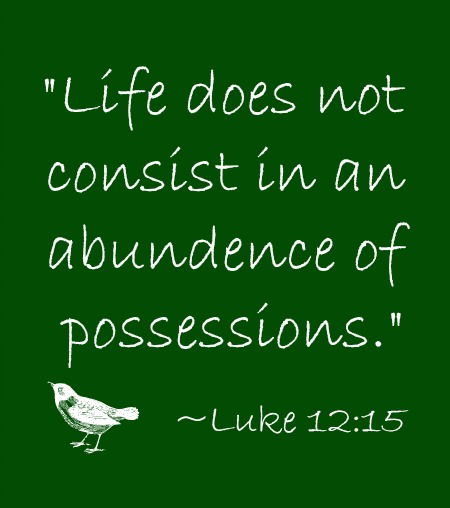
Someone in the crowd said to him, “Teacher, tell my brother to divide the inheritance with me.” Jesus replied, “Man, who appointed me a judge or an arbiter between you?” Then he said to them, “Watch out! Be on your guard against all kinds of greed; life does not consist in an abundance of possessions.” (Luke 12:13-15)
Most pastors, rabbis or other kind of leaders I know of would never, ever, give such an answer. They would politely obey the person and strongly encourage the person’s brother to share their inheritance equally. We all want to be fair, right? But Jesus firstly questions why the person views Him as a judge or an arbiter, secondly He warns the whole crowd for greed and for wanting an abundance of possessions.
See, if it’s fair to split an inheritance equally, how much more fair isn’t it to split all the world’s wealth equally? Jesus practiced community of goods with His disciples (John 13:29), and the church continued to do so when He had levitated into Heaven (Acts 2:44-45). But the inheritance of the world is private, those with rich parents inherits more than those with poor parents. Since the world doesn’t have the Jubilee economic system that Old Testament Israel was supposed to have, there is no mecanism to stop this other than tax, which in most cases doesn’t create much equality (in Sweden we used to have an inheritance tax, but the conservative “Christian democratic” government abolished it). (more…)
Irenaeus of Lyons (120-202) on the Miraculous Gifts of the Holy Spirit

Irenaeus
As I mentioned last week I’m reading Jeff Doles’ Miracles and Manifestations of the Holy Spirit in the History of the Church, and it’s amazing to see what God has been doing continously in His church throughout world history. The book is basically only made up by quotes from older works, and it gives clear proof that cessationism – the idea that miraculous spiritual gifts ceased with the apostles – hardly existed before Luther and Calvin. For example, take a look at what Irenaeus of Lyon, the second century bishop who was a disciple to Polycarp – who in turn was a disciple of John the evangelist – says concering miraculous gifts when he refuted the Gnostics in his famous work Against Heresies:
“Those who are in truth His disciples, receiving grace from Him, do in His name perform [miracles], so as to promote the welfare of other men, according to the gift which each one has received from Him. For some do certainly and truly drive out devils, so that those who have thus been cleansed from evil spirits frequently both believe [in Christ], and join themselves to the Church. Others have foreknowledge of things to come: they see visions, and utter prophetic expressions. Others still, heal the sick by laying their hands upon them, and they are made whole.
Yea, moreover, as I have said, the dead even have been raised up, and remained among us for many years. And what shall I more say? It is not possible to name the number of the gifts which the Church, [scattered] throughout the whole world, has received from God, in the name of Jesus Christ, who was crucified under Pontius Pilate, and which she exerts day by day for the benefit of the Gentiles, neither practising deception upon any, nor taking any reward from them* [on account of such miraculous interpositions]. For as she has received freely from God, freely also does she minister [to others]**. (Against Heresies, book 2, chapter 32, section 4)
Dear Christian, Please Sincerely Love All Muslims

About a month ago, Charisma News published an article called “Why I Am Absolutely Islamaphobic” by Gary Cass as an op-ed. The article is now removed since quite a lot of people were upset over the fact that Cass wants to steralize, deport and kill Muslims. You can still view the article on Cass’ website, and it’s not a pleasent reading. He collectively describes all Muslims as potential mass murders and says that there are only three “solutions” to the Muslim problem:
- Conversion to Christianity,
- “D.A.M.N.: Depart All Muslims Now.” (his words) or;
- War.
Cass immediately rules out option 1 because, in his opinion “History does not record a mighty move of God in saving masses of Muslims. I believe the scriptures militate against mass Muslim conversions.” Which means that he wants us to depart all Muslims, and wage war against them. “First trust in God, then obtain a gun(s), learn to shoot, teach your kids the Christian doctrines of just war and self defense.”
Oh, did I mention that he wants to “force them all to get sterilized” as well?
As a charismatic Christian, I think it’s totally unacceptable that Charisma lets this awful, hateful piece of shit on their website, and I think that they are extremely weak and cowardly to not issue an apology or any other sort of comment to the fact that the article is now removed. Cass’ Christian Islamophobia is one of the most extreme I’ve seen, but it’s unfortunately not rare in charismatic and evangelical circles nowadays to hear hate, prejudice and xenophobia towards Muslims. In my country, the racist party Sweden Democrats grew tremendously in the latest election, and since they build their politics on Islamophobia it has become more common these days that Christians dare to express hostility towards Muslims more clearly than before.
No more boasting about human leaders!

John Wimber, Heidi Baker, Jesus and me 🙂
We’ve all met these kinds of people, haven’t we:
Brothers and sisters, I could not address you as people who live by the Spirit but as people who are still worldly—mere infants in Christ. I gave you milk, not solid food, for you were not yet ready for it. Indeed, you are still not ready. You are still worldly. (1 Corinthians 3:1-3a, NIV)
Yeah, those worldly Christians who can only eat spiritual baby food. It’s comfortable to believe that Paul is talking about people that weren’t like me, that haven’t read the Bible as much as me and that are way more sinful than me, right? But what is it really that Paul is adressing?
You are still worldly. For since there is jealousy and quarreling among you, are you not worldly? Are you not acting like mere humans? For when one says, “I follow Paul,” and another, “I follow Apollos,” are you not mere human beings? What, after all, is Apollos? And what is Paul? Only servants, through whom you came to believe—as the Lord has assigned to each his task. I planted the seed, Apollos watered it, but God has been making it grow. (3:3-6)
Oops. I’ve read this countless times, but today I realized that I’ve been a worldly baby for a very long time. I’ve put a lot of pride in human leaders and traditions – whether its John Wimber, Shane Claiborne, Anabaptism or something else.
And of course, I do think that they’re all more Biblical than, say, the Lord’s Resistance Army in central Africa, but I have gotten more uncomfortable with identifying myself too much with one denomination or theological stream, because I see the Spirit moving in so many of them. Isn’t it ironic that many Protestant denominations have got their name from individuals – Calvinism, Lutheranism, Mennonitism – precisely what Paul warned us for! We should not focus on the gardeners, but the one who makes the church grow, God Himself.
That being said, leaders are of course not useless: (more…)
Three Awesome Books on Wealth, Miracles and Community of Goods

I got three amazing books in my hand that I can’t wait to read! Let me introduce them to you:
Rich Christians in an Age of Hunger: Moving from Affluence to Generosity by Ron Sider
Being one of the most popular books during the Jesus Movement in the 70’s, and according to Christianity Today, it’s the seventh most influential book that have shaped evangelicals. Sider goes against the commonly held view that it’s absolutely fine for Christians to be rich while thousands of people are starving to death, using Bible study, statistics on economic inequality and examples of radical Christian groups that have taken the economic teachings of Jesus seriously. Sider’s ideas are very similar to those I express in my series God vs Wealth, but to this point I have actually never read him – I got my ideas directly from the Bible.
A reader called Kelly writes on GoodReads:
“I was really floored by this book. The author first presents some startling and informative statistics on world hunger and poverty, where we have been and what is projected. Then he talks about God’s intense love for the poor, and that if we want to “be imitators of God” we must as Christians learn to share in that love. I left this book really wanting to do more to make a difference… even with specific ideas how! The best thing about this book was also the worst thing – sooo much information. Never before have a seen a pastor… talk so intelligently about ALL facets of poverty. Politics, economics, environment, sociology, religion – these topics were all included in great detail and from a Christian perspective. I have not seen anything more complete out there. That said, it was also very overwhelming (as it probably should be).”
Heidi Baker, the Widow and the Love of Jesus

Heidi Baker praying for a deaf woman
Earlier this year, Iris Global in Mozambique reported about the devestating floods that struck Mozambique, leaving hundreds of thousands of poor people in big need. Iris has been working hard ever since to rebuild homes and helping local communities develop, while they are also praying for the sick, preaching the Gospel and even raising the dead. Recently, they publiched a video showing the movement’s leader Heidi Baker buying a bed for a widow called Louisa, whose house has been destroyed in the floods:
It’s very touching to see the genuine care of Heidi and the overflowing joy of Louisa. Earlier this year, Heidi wrote a newsletter saying: (more…)
When the Holy Spirit leads us to satan

Today I was preaching in my house church Mosaik on Luke 4, and I’d like to share with you the unique relationship between the Holy Spirit and satan that is presented there. Not relationship in the sense that light has anything to do with darkness, but in the sense that when you are baptised in the Holy Spirit, He may take you to where satan lives to beat him up:
Jesus, full of the Holy Spirit, left the Jordan and was led by the Spirit into the wilderness, where for forty days he was tempted by the devil. He ate nothing during those days, and at the end of them he was hungry. The devil said to him, “If you are the Son of God, tell this stone to become bread.” Jesus answered, “It is written: ‘Man shall not live on bread alone.’ ”
The devil led him up to a high place and showed him in an instant all the kingdoms of the world. And he said to him, “I will give you all their authority and splendor; it has been given to me, and I can give it to anyone I want to. If you worship me, it will all be yours.” Jesus answered, “It is written: ‘Worship the Lord your God and serve him only.’”
The devil led him to Jerusalem and had him stand on the highest point of the temple. “If you are the Son of God,” he said, “throw yourself down from here. For it is written: “ ‘He will command his angels concerning you to guard you carefully; they will lift you up in their hands, so that you will not strike your foot against a stone.’ ” Jesus answered, “It is said: ‘Do not put the Lord your God to the test.’ ” When the devil had finished all this tempting, he left him until an opportune time.
(Luke 4:1-13)
In prior to this, Jesus was baptised by John in the Jordan river, and at the same time He was baptised in the Holy Spirit by God the Father, who spoke in an audible voice and called Him His beloved Son. And note that Jesus was then led by the Spirit into the wilderness, where He fasted for forty days until He finally got hungry, and was tempted by the devil. The Spirit sent Jesus to satan.
How to Transform a Mainline Church into a Christian Community

Worship in New Creation Christian Community, Jesus Army, United Kingdom
In this third and final part of “extreme church makeover”, we will look at how a mainline, conventional church that doesn’t practice community of goods like the church of the apostles (Acts 2:43-44), can be transformed into a church that does practice community of goods like the church of the apostles. Because of my trip to the Jesus Army in the UK – that practices community of goods – in August I have already written a lot recently about sharing everything and explained why it isn’t impossible and why the example of the apostolic church in Jerusalem should be followed rather than ignored. Hence, I won’t go into that in this blog post.
Let us instead discuss the practical part – how can we deliver mainline churches from the claws of mammon so that they practice economic equality instead of inequality? In my previous posts, where I’ve talked about how to make a mainline church evangelize on the streets and how to transform a mainline church into an organic house church, the practical applications have come in the form of bullet points in the end, which honestly is because I felt it necessary to explain why these reforms are needed so that in the end, I didn’t have too much time discussing the practice (I usually don’t want to spend more than one hour on blogging per day).
What I think is important to note when it comes to all of these three reforms, or restorations rather, is that they are indeed entirely possible. That is, I am fully convinced that we could see thousands – millions even – of churches around the world going back to the apostolic structure of mandatory evangelism, organic simplicity and community of goods. Just look at the charismatic movement. 120 years ago, most Protestant churches believed that miraculous gifts had ceased, and very few included healing, prophecy or speaking in tongues at their meetings. Now, this is the standard in millions of Protestant churches around the globe. When the Holy Spirit spreads revival, the church can change very fast.
How to Transform a Mainline Church into an Organic House Church
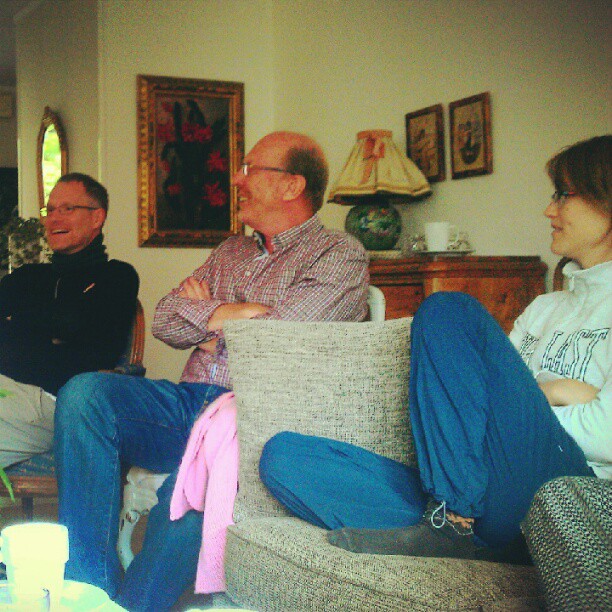
Sunday service in my church, Mosaik
In my last blog post I discussed how we can inspire and exhort mainline churches to make evangelism as mandatory and natural as Sunday services, since the apostolic, biblical church evangelized in the streets, synagogues and temple courts probably even more than they met for internal meetings in the homes, based on how church life is described in the gospels and in the book of Acts. Today I want to talk about how we can inspire and exhort mainline churches to become house churches, i.e. to sell their expensive building and form organic, discipleship training communities that gather in houses as well as on the streets.
It’s no secret that the Biblical church was a house church movement, Luke says that they gathered in the homes as well as in public (Acts 2:46), Paul talks about the church that meets in Prisca’s and Aquila’s house (Rom 16:3-5). In fact, there are no evidence of any church buildings at all earlier than the late third century. While some things are a bit ambiguous when it comes to the early church, this is not one of them: the early church was a house church movement.
Now, Christians who belong to building churches* are often quite eager to explain why this does not by any means show that churches should organize themselves in homes rather than in expensive buildings. The most popular theory is that the early church was forced to meet in homes rather than in church buildings because of persecution. And there is defenitely some truth to that. But this argument does not in itself contradict the position that house churches are better than building churches; devotion to Christ and a commitment to follow Him even to death was probably stronger during persecution compared to when persecution ended, but that doesn’t make devotion and commitment less valuable – rather, the contrary is true.
How to Make a Mainline Church Evangelize on the Streets

Me and some friends were out on the streets evangelizing yesterday, by handing out free pancakes and sharing the Gospel
I’m not a reformer, Im a restorer. While several intentions of the reformation were good, the emphasis on reform in itself doesn’t express what we really want the church to look like, and so I know several Lutherans who defend unbiblical teachings and changes with the claim that the church should be constantly reforming itself, which isn’t a very Biblical idea. Restorationist Christians on the other hand, like Anabaptists or Pentecostals, have emphasized that we should restore the Biblical church and thus has a clearly expressed goal with the reforms. Just by looking at the Holy Scriptures, we see how Jesus did church, how the apostles did church and how they thought that we should do church. And they didn’t call it “church”, since that’s obviously an extremely boring word, they called it the Way (Acts 9:2); the Lifestyle, basically.
The charismatic movement, which I am a part of, have used restorationism to resurrect a hunger for the baptism of the Holy Spirit and miraculous gifts. But there are some things that I think still needs to be restored in most charismatic churches: mandatory evangelism, organic simplicity and community of goods. I will explain more about what these three things mean and how they should be practically restored in mainline churches in three blog entries, this being the first.
So what do I mean with “mandatory evangelism”? Well, the apostolic church which was funded and lead by guys who knew Jesus personally had two sorts of meetings, or “services” if you like: “Every day they continued to meet together in the temple courts. They broke bread in their homes and ate together with glad and sincere hearts” (Acts 2:46). They both met in the homes and in the temple courts. The latter was the place where Jesus had His theological debates – it was a place where all the religiously interested came to worship God and discuss with each other. And the early Christians both join the Jews for prayer in the temple (Acts 3:1), and to heal them (3:6-10) and preach the Gospel to them (5:21).
Artificial Nationalism vs the Kingdom of God
“Their mind is set on earthly things. But our citizenship is in heaven. And we eagerly await a Savior from there, the Lord Jesus Christ” (Phil 3:19-20)
As Scotland is voting for indepencence, many Europeans try to figure out what the consequenses would be if the Scots did say yes (even if the no-side has been leading in the polls). Would other areas like Catalonia or the Basque country gain fuel for their fight for independence as well? Would the nationalism that sparks European fascism and racism just increase, with devastating consquences? Or would everything just proceed as normal?
When I was in the UK, I asked some people from the Jesus Army what they thought about the Scottish independence election. As Jesus people who focus on the Kingdom of God rather than earthly governments, neither had very strong opinions – even though one of them said he could understand the nationalists since he himself was of welsh origin, but he also had studied English history and language and Oxford and explained to me that the UK really is a mixture of so many people groups, linguistic influences and nationalities. And even if the Scots and Welsh are not as pluralistic as the English, they too are children of Adam just like everyone else.
From a Christian perspective, nationalism is very artificial. The Old Testament recognizes that there are different people groups, but they are all related to each other and there’s nothing wrong with Ruth the Moabite to become the grandmother of David or the Gentiles being included into the Kingdom of God. Paul says that we are citizens of Heaven, he is a Jew to the Jew but a Gentile to the Gentiles and he encouraged Jewish Christians to submit to the Roman dictator rather than fight for independence as zealots.
Nationalism is just an idea, and ideas change. In my country, we used to view people differently dependent on which county (which are called “lands”) they were born in, but now we all call ourselves Swedes. In the future perhaps we’ll all call ourselves Europeans, who knows. I don’t find one artificial definition better than the other. What is important is that we belong to the Kingdom of God, and the Kingdom is not dependent on race, nationality or language but whether we have given our lives to Jesus Christ.
How Should We Stop the Rise of European Racism?
 The last couple of days I have been busy, partly with a big evangelistic event and partly with following the Swedish elections. The result was dramatic: the xenophobic and racist Sweden Democrats party doubled their support and became our third biggest party, and since neither the progressive nor the conservative coalitions have majority because of the Sweden Democrats, our new prime minister Stefan Löfven has a lot of headaches in trying to figure out how to govern without relying on the racists.
Sweden is obviously not immune to the sad trend that has characterised European politics the last 20 years: xenophobic, racist and fascist parties are entering European parliaments and gain a lot of influence. There is basically no European parliament left without a party that wants to cut immigration drastically and that point out minorities like Muslims, Roma or Jews as a national problem. Some parties, like Golden Dawn in Greece or Jobbik in Hungary, are clearly neo-Nazi and uses the same rhetoric that Hitler used 80 years ago against ethnic, religious and social minorities.
Naturally, many Europeans are worried that history will repeat itself, and countless theories and ideas concerning how we will stop the rise of racism and fascism have been discussed. They often contradict each other: some say we should ignore them, others that we should debate against them; some say we should be more generous towards immigrants, others that we should kick out more immigrants. What way is the correct one? How should we as Christians respond?
In 2 Corinthians 10, Paul talks about waging spiritual warfare against arguments and theoretical strongholds that are hostile towards Christ: “though we live in the world, we do not wage war as the world does. The weapons we fight with are not the weapons of the world. On the contrary, they have divine power to demolish strongholds. We demolish arguments and every pretension that sets itself up against the knowledge of God, and we take captive every thought to make it obedient to Christ.” (2 Cor 10:3-5)
Revival Report from Maramba Healing Campaign, Zambia
 Cristopher Alam is a Pakistani-Swedish-American evangelist who is travelling around in Africa and Asia to preach the Gospel, heal the sick and cast out demons. He prioritizes to minister to the poor, and just the other day he wrote on his Facebook page about simple lifestyle:
“Wise Words from the Apostle Paul:
Perverse disputings of men of corrupt minds, and destitute of the truth, supposing that gain is godliness: from such withdraw thyself. But godliness with contentment is great gain. For we brought nothing into this world, and it is certain we can carry nothing out. And having food and raiment let us be therewith content.
But they that will be rich fall into temptation and a snare, and into many foolish and hurtful lusts, which drown men in destruction and perdition. For the love of money is the root of all evil: which while some coveted after, they have erred from the faith, and pierced themselves through with many sorrows. But thou, O man of God, flee these things; and follow after righteousness, godliness, faith, love, patience, meekness. Fight the good fight of faith, lay hold on eternal life, whereunto thou art also called, and hast professed a good profession before many witnesses. 1 Tim 6:5-12″
Just recently, Alam has been on a healing and Gospel campaign in Maramba, Zambia, and experienced countless miracles and salvations. Here is an excerpt of all the images and texts he published on Facebook:

Maramba, Livingstone, ZAMBIA. Our Gospel Crusade here began tonight. A large crowd came out to hear the Gospel preached. Thousands responded to the altar call to receive Jesus and then many were healed….. A girl who was deaf since she was a baby received perfect hearing. Another girl who had badly blurred vision was received perfect sight. Others were healed in their legs ad different parts of their bodies. Demon possessed people were set free.
All Glory to our Lord Jesus! This was our first night. Let us join together in faith for great things from God during the rest of this week! (more…)
Movie Review: Holy Ghost
There are three things that basically all Christian youths I know of here in Sweden are aware of: Hillsong music, Shane Claiborne’s books, and Darren Wilson’s F-movie trilogy: Finger of God, Furious Love and Father of Lights. These charismatic documentaries are extremely popular among the kids I hang around with, I have seen them all and love them. Finger of God focused on amazing miracles like manna appearing from thin air and dead people being raised, Furious Love focused on exorcism and bringing the love of God to the darkest places, and Father of Lights focused on the heart and nature of the heavenly Father and how His supernatural actions bring people to faith in Him. Two days ago, Darren Wilson released a new documentary in the same style and format: Holy Ghost.
The concept is simple: no script, no plans, just going wherever the Spirit leads. Wilson and his team travels to the Mormons in Salt Lake City, the Hindus in Varenasi and the wealthy in Monte Carlo to see what the Holy Spirit will do. Without spoiling too much, I can reveal that you will witness some really crazy stuff – countless salvations, healings and prophetic foretellings. One of my favourite moments was when two street healing evangelists recieved tons of words of knowledge about a guy in Salt Lake City – sharp, specific bits of information concerning his problems – and he got healed from a ten-year-old injury as well!

The film discusses the nature, character and role of the Holy Spirit, cessationism and the Western split between the Word and the Spirit (which from a Swedish perspective is quite unusual, here the split is rather between Christians who believe in both the Word and the Spirit and Christians who believe in neither), and how Christian culture and art must be less cowardly and dare to be real and wild. One of the most memorable parts of the film is when the documentary crew follows Head and Fieldy from the metal band Korn together with street healing evangelist Todd White, as they pray for people who are entering the Korn concert.
TESTIMONIES – live performance at the Uttini Festival
A few months ago me and my friends Andreas and Sandra were invited to a local music festival to sing a few songs about the Jesus Revolution. TESTIMONIES was the first song we sang, and it’s the first one in our – God-willing – coming album. You can listen to and download it on Soundcloud.
 Now here’s some testimonies that will fill you all with awe
‘Cause nothing is impossible for the almighty God
The testimonies are a sign of His amazing grace
Let’s turn to Mr Hip-hopper and listen to what he says.
There’s no wonder-worker like Jesus Christ
He gave sight to the blind and turned water to wine
Five breads were sufficient for five thousand guys
When He was crucified, He just went alive
He taught His disciples to do the same
To cast out demons and heal the lame
To prophesy, speak in tongues and life proclaim
They could even raise the dead in His holy Name
TESTIMONIES!
The dynamic living witness of the power of the Holy Spirit
TESTIMONIES!
Gotta love em keep em spread them on
The author

Micael Grenholm, a Swedish charismactivist, apologist and author.
A Living Alternative

God vs Inequality

 Charismactivism