
Popular Posts


Recent Comments
 | James on Why Cessationism is Unbiblical… |
 | Nate on The Problems with the Lutheran… |
 | Franciskus – p… on Francis – the Charismati… |
 | Riverbelle on The Problem with “Sacram… |
 | Russell on Why Churches Should Abandon St… |
Networks





Seven Deadly Sins of Europe 5: Xenophobic Pride
As the election to the European Parliament gets closer, I want to highlight some of the biggest European sins that unfortunately are not very present in the political debates.

Immigrants travelling dangerously, since it is illegal for them to go via airplane to Europe
Let us, as usual, look at the New Advent Catholic Encyclopedia to get a definition of today’s deadly sin: “Pride is the excessive love of one’s own excellence… By it the creature refuses to stay within his essential orbit; he turns his back upon God, not through weakness or ignorance, but solely because in his self-exaltation he is minded not to submit. His attitude has something Satanic in it.”
I would say that Europe is overflowing with pride. It is because of their pride that European politicians promote economic inequality with Europe at the top, and because of pride they oppress the poor through neo-colonialism, destroy the planet and refuse to give enough aid so that poor people die abroad. And if that wasn’t enough, pride creates xenophobia, racism and evil migration policies.
It’s not any big news that xenophobia and racism is spreading across Europe. Xenophobic parties want to stop immigration of people from the so called third world, they are hostile towards Muslims and want to limit freedom of religion, and they emphasize their own culture and nation (which always is very pathetic in Europe since basically all countries here have changed culturally, geographically and politically over and over again since the fall of the Roman empire).
Seven Deadly Sins of Europe 4: Activist Sloth
As the election to the European Parliament gets closer, I want to highlight some of the biggest European sins that unfortunately are not very present in the political debates.

The Feeding Programme at Iris Ministries South Africa
Sloth means, according to the New Advent Catholic Encyclopedia, “disinclination to labour or exertion […] The narrow way stretches wearily before [the slothful] and his soul grows sluggish and torpid at the thought of the painful lifejourney. The idea of right living inspires not joy but disgust, because of its laboriousness.” Sloth is sinful laziness, the slothful is ignorant of the needs of the world and passive when other need their help. It isn’t rest from activism, but refusal to even start being active in the first place. And this is definitely something the European Union is guilty of when it comes to foreign aid.
When discussing aid giving, we have to remember that according to Jesus, generosity shouldn’t be measured in how much you give but how much you have left. While others were impressed of the big money the rich were able to donate in Luk 21:1-4, Jesus pointed out that the two coins a widow gave was all she had, and thus she gave more. It easy to think that the rich give a lot when you see the big numbers they are able to spare, but if you look at what they still keep for themselves it’s usually not as impressive.
According to Concord Europe, the member countries of the European Union gives around 50 billion euros every year to foreign aid. One could think that’s a lot of money – and indeed it helps a lot of people – but since the total GDP of the EU is 16 trillion euros, the amount of aid is actually minimal. Many European countries, together with other rich nations, pledged in 1970 that they would give at least 0,7 % of their GDP, but 40 years later only a few keep this promise.
Seven Deadly Sins of Europe 3: Environmental Gluttony

Image from http://www.ecology.com
As the election to the European Parliament gets closer, I want to highlight some of the biggest European sins that unfortunately are not very present in the political debates.
The New Advent Catholic Encyclopedia describes gluttony as “the excessive indulgence in food and drink. The moral deformity discernible in this vice lies in its defiance of the order postulated by reason, which prescribes necessity as the measure of indulgence in eating and drinking.” It is opposite of contentment and fasting. Gluttony is exetremely common in Europe and the rest of the so called Western world, not only in its original food sense but also when it comes to consuming other goods. In fact, consumerism is the defining social end economic order in modern Europe.
Consumerism is caused by the economic envy of Europe which sees endless economic growth as the main political goal, and it is because of this consumerism we see the horrible greedy neo-colonisalism where Europe enslaves poor workers in Asia and Africa. But not only does consumerism oppress poor workers, it also destroys the environment. It becomes increasingly clear that the world’s climate, water, forests, air, flora, fauna and more get polluted and destroyed by sinful humanity. The environment is a broad topic so let me just focus on the main environmental issue of our time: climate change.
I don’t want to spend so much time refusing climate skeptic’s arguments since that has already been done by others – check this website to find good replies to what they say. We have to agree that man-made climate change is a fact, and that it is caused by inequality and injustice. As the video above shows, it is mostly rich countries that has caused climate change due to their industrial pollutions while it is the poor countries that will suffer the most from climate change’s consequences. Climate change is thus not just one of the biggest market failures, but also one of the biggest neo-colonial strikes against the global south. Europe gets rich through pollution and let the poor countries pay the expensive, life-costing bill.
Seven Deadly Sins of Europe 2: Neo-Colonial Greed
As the election to the European Parliament gets closer, I want to highlight some of the biggest European sins that unfortunately are not very present in the political debates.

Greed, or avarice, is acoording to the New Advent Catholic Encyclopedia “the inordinate love for riches. Its special malice, broadly speaking, lies in that it makes the getting and keeping of money, possessions, and the like, a purpose in itself to live for… In so far asavarice is an incentive to injustice in acquiring and retaining of wealth, it is frequently a grievous sin.” Greed is of course the natural consequence of the economic envy that I see in Europe today. And its consequences are enormous, brutal and extremely sinful.
We’ve all heard about colonialism; how Europe took control of territories all around the world and exploited the indigenous people, took their resources and ruled their societies. And many think this is something that lies in the past. But let me introduce you to the neo-colonialism that Europe (together with other rich countries like the US, Australia and China) are practicing again to gain wealth and influence in a very greedy fashion. There are many types of neo-colonialism, involving politics, culture and even religion, but since we’re discussing greed here we will focus on economics.
1. The use of cheap, exploited labour in the globalized economy. It is no secret that the big, multinational companies of the West use cheap labour in the majority world – our coffee is made in Ghana, our toys in China, our clothes in Bangladesh, etc. There are countless examples of how workers in the supply chains for these companies are suffering due to horrible working conditions; mimimal wage, forced labour, long working days, health risks and environmental destruction. There are even examples of child labour, slavery, and child slavery. Surprisingly, it’s totally legal to sell goods in Europe that has been produced during horrible working conditions, slavery and by child labour, even if those practices are illegal within Europe. Furthermore, even if the working conditions would be decent the whole system of hiring cheap labour while enjoying big profits in the West only promotes global inequality and injustice. (more…)
Seven Deadly Sins of Europe 1: Economic Envy

At the end of this month the people of the European Union will elect its members for the European Parliament, and I would like to take this opportunity to discuss European politics. Europe has a tragic, sinful history of war, racism, colonialism, oppression and imperialism – and even though the EU thankfully has made its member countries less prone to wage war against each other there are still many sins present in the European society. In a blog series I would like to cover what I see as the seven deadly sins of Europe that we Europeans have to deal with.
The seven deadly sins has its origins among the monastic desert fathers in the fourth century. As the monks and nuns escaped civilization and were lonely with God in prayer, they discovered the darkness of their own soul as their hearts made them lust for evil. The seven deadly sins are emotions rather than actions, since the desert fathers discovered that they unfortunately continued to sin even as they were not doing very much except praying and weave baskets. The seven deadly sins are thus not the most harmful sins – and hardly the deadly sins John talks about in 1 Jn 5:16-17 – but the sins that according to the desert fathers are the hardest to cure.
One of these sins is envy, or jealousy. The New Advent Catholic Encyclopedia defines it as: “a sorrow which one entertains at another’s well-being because of a view that one’s own excellence is in consequence lessened. Its distinctive malice comes from the opposition it implies to the supreme virtue of charity.” A loving person rejoices when it goes well for one’s brother or sister; a jealous person is, well, jealous. Envy requires egoism and a desire for success and possessions.
Resurrecting Mini Churches

Meeting in my house church Mosaik
We’ve all heard about megachurches – enormous congregations with thousands of people that sometimes looks like big stadiums. Their pastors become famous and their services become giant shows. I won’t dig into the criticism against mega churches – many has done so before me – but I want to question what we usually believe is a “normal church”. You know, the one that has around 100-200 members, a pretty little church building and a youth group, children’s group and gathers families on sundays. I’m very critical to those as much as to the mega churches.
See, “normal” churches are mega churches in miniature. The services are shows where people are expected to sit down and listen most of the time. Except for some singing in the start and some prayer in the end, one should be passive in church. And quiet. Furthermore, the building costs a LOT of money – and most church members are fine with that. In fact, most of them don’t even know what it costs but they trust their clergy to handle it for them. Now, the funny thing with buildings is that they’re mostly very unflexible. If the church attendance shrinks, the church building becomes increasingly expensive until it’s not useful to have it the same size anymore. If church attendance grows – we have to build a bigger church! Which would make most pastors and priests very excited. But again, that costs TONS of money!
In fact, the goal of many church leaders is for their church to grow, and grow, and grow until they basically looks like a mega church. I’ve heard several talk dreamingly about how they heard about this awesome pastor who started his church with a tiny bit of followers but now leads a mega church. Of course, every respected pastor or priest would say that the main goal of the church is to lead people to Christ and give them eternal life, but then it would be pretty neat if the church also grew bigger, and bigger, and bigger. So we have to rebuild the church building again, and again, and again.
Living Liberation Through Worship

This is a contribution for reflection for the Wild Goose Festival
A lot of Christian activists detach themselves from the Bible, evangelicalism and a devoted life to God. I know of so many Christians that used to be passionate about Jesus, then after they started working for peace and justice, they started to question their faith and it grew colder. I even know of some becoming atheists. I fear that Christian activism is one of the main secularizing movements in the church today.
Of course, it is with pain I’m writing this. As you can tell from my blog title, I’m a Christian activist myself. For over five years I’ve been telling fellow Christians to love their enemies, share all they have with the poor, end oppression and care for the creation. I am very critical to the lack of activism within evangelicalism, but I’m convinced that it isn’t because they read the Bible too much or take Jesus too seriously – on the contrary, they ignore large parts of God’s Word even though they claim to believe in it. Much like the pharisees in the time of the gospels.
If we do take Jesus and the Bible seriously, we’ll sell everything we have and give the money to the poor (Mk 10:21). We’ll never fight back but turn the other cheek(Mt 5:40-48). We’ll give to everyone that asks us (Lk 6:30). And not only that, we’ll heal the sick and raise the dead (Mt 10:8), prophesy and speak in tongues (Acts 2:6-21) and preach the Gospel to the whole world (Mt 28:18-20). If you follow Jesus, you can’t separate peace and justice from miracles, evangelism, Bible study or prayer. It’s all connected.
(more…)
How to Create Global Economic Equality: The Costa Rica Solution
I found this weird clip today where Canadian capitalist Kevin O’Leary says that it’s fantastic that 85 rich folks owns the same amount of money as the 3,5 billion poorest people on earth. Yeah, he literally says that he “applauds it”, because then the poor gets the motivation to become like the extremely rich. The reporter is stunned, she stands in silence and then just says “really?” O’Leary affirms his crazy applause of global inequality and says “don’t tell me that you want to redistribute wealth again, that’s never gonna happen!”
O’Leary’s statement is incredibly stupid on so many levels, but the thing is that many people in the West do agree with him. Many thinks inequality is not so bad. I’ve debunked many of their arguments in Seven Reasons Why Inequality Sucks, but if I am to comment shortly on O’Leary’s line of thought I would just want to say that:
- Firstly, everyone cannot become as rich as the richest one percent simply because there aren’t enough resources – if everyone lived like the avarage American we would need five earths.
- Secondly, poor people often work harder than rich people, so there is no correlation between hard work and wealth – a lot of wealth is inherited either financially or socially.
- Thirdly, economic inequality is contrary to a belief in that all human beings are equal and have equal rights to a descent life – if we truly believe that all people are created in the image of God, we cannot tolerate economic inequality.
As this clip shows, global economic inequality is enormous. 2 % of the world’s population owns half of its resources. The world’s rich countries are taking more money from the poor than vice versa due to unfair trade rules and tax flight. This is contrary to the Biblical vision. Luke 3:11 says that the one who has two of something should share with those who have nothing, 2 Cor 8:13-15 says that the goal of charity is equality, Acts 2 and 4 shows us that the early church practiced economic equality through community of goods. We need global economic equality. But how should we achieve it?
TESTIMONIES – with Lyrics
Many of you seemed to like my song God is a Criminal so I’ve written some more – I actually got eight songs now about miracles, activism and radical Christianity. One of them is called TESTIMONIES, a pretty funny country/hip hop song about some miracles that either friends of mine have experienced or that I’ve simply read about. Here it comes:
Now here’s some testimonies that will fill you all with awe
‘Cause nothing is impossible for the almighty God
The testimonies are a sign of His amazing grace
Let’s turn to Mr Hip-hopper and listen to what he says.
There’s no wonder-worker like Jesus Christ
He gave sight to the blind and turned water to wine
Five breads were sufficient for five thousand guys
When He was crucified, He just went alive
He taught His disciples to do the same
To cast out demons and heal the lame
To prophesy, speak in tongues and life proclaim
They could raise the dead in His holy Name
TESTIMONIES!
The dynamic living witness of the power of the Holy Spirit
TESTIMONIES!
Gotta love em keep em spread them on
The Miracle of the Resurrection of Christ
Paul summed up the Gospel like this:
“For what I received I passed on to you as of first importance: that Christ died for our sins according to the Scriptures, that he was buried, that he was raised on the third day according to the Scriptures, and that he appeared to Cephas, and then to the Twelve. After that, he appeared to more than five hundred of the brothers and sisters at the same time, most of whom are still living, though some have fallen asleep. Then he appeared to James, then to all the apostles, and last of all he appeared to me also, as to one abnormally born.”(1 Corinthians 15:3-8).
As you can see, Paul thinks that at the core of the Gospel lies Jesus’ death for our sins, His burial and His resurrection. And among these three, the resurrection receives most attention. He lines up everyone he knows of that has seen the resurrected Jesus, including himself. Then he goes on discussing the resurrection in the rest of the chapter.
Likewise, Paul, Peter and others who preach the Gospel in the book of Acts often emphasize the resurrection even more than they emphasize the cross. This used to confuse me, since the atonement happened on the cross. It was on the cross that Jesus died for our sins and defeated the devil – the cross is at the core of all atonement theories. The resurrection is great of course, Jesus is alive hallelujah, but shouldn’t the death of Jesus be the focus of the apostles rather than His resurrection?
(more…)
Holy Communion Requires Holy Community

Today, millions of Christians around the world are remembering the first last supper and celebrate holy communion themselves. However, all to often communion has become something different than what Jesus intended. I would like to take this opportunity to stress the importance of community when celebrating communion.
The famous text in 1 Cor 11 that most churches quotes when celebrating communion, has an interesting remark that is not quoted very often concerning the extent of the Eucharistic food and the socioeconomic status of the participants:
So then, when you come together, it is not the Lord’s Supper you eat, for when you are eating, some of you go ahead with your own private suppers. As a result, one person remains hungry and another gets drunk. Don’t you have homes to eat and drink in? Or do you despise the church of God by humiliating those who have nothing? What shall I say to you? Shall I praise you? Certainly not in this matter! (1 Cor 11:20-22)
Now, modern churches surely avoids the embarrassing situation of people getting drunk after receiving communion simply by just offering a little sip. But they aren’t solving the hunger problem by just offering a tiny biscuit. When I became a Christian, 1 Cor 11 confused me since I honestly believed that the communion ritual my Lutheran church celebrated was the actual one that Jesus instituted. But obviously it isn’t – the Biblical communion was a real meal.
(more…)
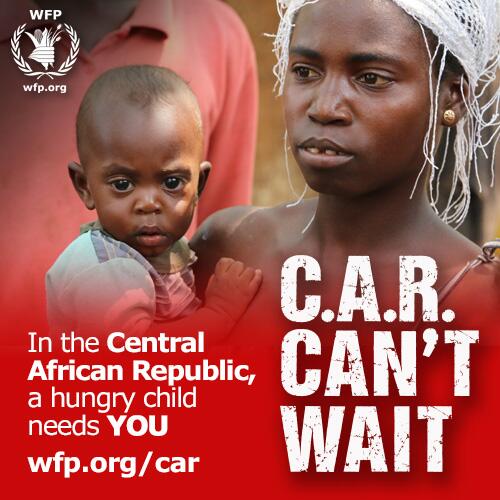
Eight Things You Should Know about the #CARcrisis
- There’s a hashtag called #CARcrisis. It’s used on Twitter.
- It has nothing to do with cars. It’s about the crisis in the Central African Republic, a republic in central Africa that has about the same size as Ukraine.
- The CAR crisis is one of the biggest humanitarian catastrophe on the planet right now. Due to the ongoing conflict, thousands have died, hundreds of thousands are refugees, millions need urgent humanitarian assistance.
- The UN fears that the conflict soon will escalate into a genocide. Similar hate propagande that was used in the Rwandan genocide is used in CAR today.
- The people that may commit the genocide are mostly Christians. And the victims are mostly Muslims. Yeah, sorry if I turned your prejudices on their heads there.
- The conflict escalated when the Muslim rebel group Seleka took over the government, but they’re not in the government anymore. They left in in January 2014. But the conflict is still going on by ex-Seleka members fighting the mostly Christian militia anti-balaka.
- The new president of CAR is a chick, and she’s awesome. Catherine Samba-Panza is committed to peace, justice and women’s rights, and urges both the Muslim and Christian militias to drop their weapons and stop planning genocide.
- You can save lives in CAR. Just give a generous amount to World Food Programme and spread the word.
When Conspiratists View a Sixth Century Fragment as More Reliable than the First Century Gospels

The Gospel of Jesus’ Wife
Two years ago, professor Karen L. King at Harvard Divinity School announced that they had found an ancient papyrus fragment where Jesus is saying that He has a wife. Needless to say, it caused a lot of controversy; apologets, academics, the Vatican and others said that the document was a modern fraud. One of the arguments for this was that the text seems to be based on the Gnostic Gospel of Thomas, and includes a typo made in modern times in a PDF document (!).
However, just a few days ago Harvard announced that the document had been subject to radiocarbon analysis and spectroscopy, and it turned out that both the papyrus and ink indeed were ancient, being produced somewhere between 659-859 AD. Professor King guessed that the original text, from which this papyrus was copied, could have originated in the second to fourth centuries, but this is speculation and not something the radiocarbon analysis show.
Harvard’s press release states that “[t]he fragment does not in any way provide evidence that the historical Jesus was married, as Karen L. King, the Hollis Professor of Divinity at Harvard Divinity School (HDS) has stressed since she announced the existence of the fragment in the fall of 2012.” King has said “don’t say this proves Dan Brown was right.” Rather, she sees this as an interesting contribution to our understanding of how Christians and pseudo-Christians viewed celibacy in the early church.
(more…)
The Blind See and the Deaf Hear in Sire, Ethiopia
“The blind receive sight, the lame walk, those who have leprosy are cleansed, the deaf hear, the dead are raised, and the good news is proclaimed to the poor.” (Matt. 11:5).
My Facebook-friend Per Åkvist is a passionate evangelist that has seen a lot of miracles on his Joshua campaigns in eastern Africa. Two weeks ago they had a campaign in Sire, and my Facebook feed exploded with testimonies of God’s grace and healing power. Here are som photos Per published, with his comments in the captions.

Blind see, deaf hear, tumors is gone… many people had not the time to testify…

Blind see…

Blind see…
No Christus Victor Here – Atonement According to the Apostolic Fathers

Polycarp, disciple of John the apostle and a smart theologian who was burned alive for the sake of the Gospel
As promised in my last blog post about atonement theology, I want to share what I’ve found when researching the early church fathers’ view on the death of Christ. My countryman Gustaf Aulén wrote a book 83 years ago called Christus Victor when he argued that the church fathers didn’t believe in penal substitution but in a “classical” atonement framework which he calls Christus Victor, the victorious Christ.
The difference between the two views is essentially that while penal substitution emphasises that Jesus took the punishment for our sins on the cross, Christus Victor emphasises that Jesus defeated the devil and his wicked forces when he died on the cross. A form of Christus Victor which according to Aulén was popular during the age of the church fathers was the ransom theory, the idea that God sent Jesus as a “bait”, and when satan killed him he got hooked by the power of God like a sloppy wet fish.
Now, I don’t have any problems at all with the Christus Victor perspective. As a third wave charismatic, I think it suits well with the Kingdom message of the Gospels – Jesus is indeed at war with satan, which is evident in His healings, exorcism and finally His death and resurrection. The Bible clearly speaks about how Christ defeated the powers of darkness on the cross. So I do believe in Christus Victor. What I don’t believe is that this perspective by any means replaces the fact that Jesus took the punishment for our sins on the cross, which is also what the Bible teaches. As William Evans brilliantly argues, Christus Victor and Penal Substitution are not mutually exclusive and should be viewed as equally true perspectives rather than conflicting paradigms.
I also have a problem with that this blog and that blog and even Wikipedia as well as several books uncritically says that the majority of the church fathers believed in Christus Victor and that it was dominant for a thousand years before Anselm of Canterbury messed it up, and therefore we should not believe in penal substitution. Firstly, even if they emphasised Christus Victor we cannot conclude that they didn’t believe in penal substitution unless they say so, and as I wrote in my last blog post I think it’s really hard to deny penal substitution without ignoring large parts of the Bible.
The author

Micael Grenholm, a Swedish charismactivist, apologist and author.
A Living Alternative

God vs Inequality

 Charismactivism