Popular Posts


Recent Comments
 | James on Why Cessationism is Unbiblical… |
 | Nate on The Problems with the Lutheran… |
 | Franciskus – p… on Francis – the Charismati… |
 | Riverbelle on The Problem with “Sacram… |
 | Russell on Why Churches Should Abandon St… |
Networks





Justice: Same for All, Reward for Work or Something Else?
You rarely find someone who says that s/he is against justice, but you do find a lot of different definitions of justice. Here are five definitions of economic justice, together with my comments on which is the best from a Christian perspective:
1. Same for All
This is the idea that in a just and equal world, everybody has the exact same amount of money. There are hints towards this perspective in Lk 3:11 and 2 Cor. 8:13-15. However, this definition has received a lot of criticism simply because different people have different needs – people in poor countries without social safety nets need more money than people in rich countries, for example. This why not so many actually agree with this definition, even if we who try to promote equality are often accused of this while we really mean definition no. 2:
2. According to our needs
This is how the early church viewed economic justice: “All the believers were together and had everything in common. They sold property and possessions to give to anyone who had need.” (Acts 2:44-45) We can also see this in Ex. 16 where the people collect heavenly bread every day, and since the greedy are unable to store up a lot for themselves, everyone are able to collect what their family needs for that particular day. The socialist motto “From each according to his ability, to each according to his need” is based on the same line of thinking, but it was a biblical idea long before Marx was even born.
Joy and Power at London Jesus Day
Every year, the British charismatic hippie church known as the Jesus Army arranges London Jesus Day, a big evangelism event and a public celebration and worship service. Hundreds of people walk in a carnival style procession up to Trafalgar Square where they then worship, pray, dance, preach the Gospel and shout the name of Jesus from the rooftops. The latest London Jesus Day was just last Saturday, and here are some inspiring photos from both this year’s party as well as earlier years’:


European Anabaptism vs Global Pentecostalism #MennoNerdsOnRace
A few days ago, the Anabaptist blogging network MennoNerds, which this blog is a part of, arranged a webinar called Race, Mutuality and Anabaptist community. It was all recorded via Google Hangouts and can be watched in the video above. Unfortunately, I wasn’t able to join the discussion live since time here was around 2 AM, but we MennoNerds now have a chance to contribute to the conversion via our blogs, which is what I’m doing right now.
Christianity is a Middle Eastern religion and for the first 300 years, most of the important theologians (the so called “church fathers”) came from the Middle East, Northern Africa and what is now Turkey. The present churches in for example Egypt, Syria and Ethiopia have survived since the time of the apostles. But since the Western Catholic church distanced itself from and condemned the eastern and oriental churches, the experiences, stories and theology of non-white Christians became peripheral. To this very day, it is common among Western Christians to identify themselves with and be inspired by Christian streams from Western Europe: Catholicism, Anglicanism, Calvinism, Lutherism, Anabaptism, Quakerism, Methodism, Salvationism, Baptism, and so on.
It gets increasingly problematic when people of European descent expect other people to submit to these European interpretations of the teachings of Jesus when they are born again, i.e. asking them to become “Lutherans” or “Anabaptists”. Don’t get me wrong, I love Anabaptism and identify myself with the movement, and I think that people like Drew Hart does an excellent job in outlining “Anablacktivism” and interpreting the Anabaptist message about justice and peace from an African-American perspective. Truth is that all of the church streams I mentioned above are global today – Catholicism is biggest in Latin America which their Argentinian pope signifies, Anglicanism is bigger outside England and the biggest Lutheran denomination in the world is Mekane Yesus in Ethiopia.
These voices need to be recognized and influential within these church streams. Yet, we cannot get away from the fact that if you want to get to the roots of the movement, as A.O. Green likes to do, you’ll have to read what a bunch of white, European men wrote. And that’s a bit boring, isn’t it?
(more…)
New Chaos in Iraq: Support Christian Peacemaker Teams!

Gene Stoltzfus, founder of Christian Peacemaker Teams, in Iraq
Iraq is experiencing renewed conflicts since rebels have taken control over Mosul, the country’s second largest city, and are now heading for Baghdad. Civilians are dying and suffering and we are probably witnessing the start of a new humanitarian crisis in the Middle East. As we all know, Iraq has experienced the horrors of war in over a decade, and the Western invasion obviously hasn’t created stability and peace but on the contrary, it has increased conflict and instability. But the rulers of this world are simple-minded and violent, so don’t get surprised if political and military leaders will argue once again for more war in Iraq as a response to the problem with war in Iraq.
We Christians belong to another Kingdom though and it’s our responsibility to love our enemies and speak life and hope into violent and hateful hearts. This is the goal of Christian Peacemaker Teams (CPT). CPT were created when Ron Sider spoke in the 1984 World Mennonite Conference about the need of active Christian pacifists that not just refuse to use violence but actually establishes peace through active non-violence. He said:
Those who have believed in peace through the sword have not hesitated to die. Proudly, courageously, they gave their lives. Again and again, they sacrificed bright futures to the tragic illusion that one more righteous crusade would bring peace in their time. For their loved ones, for justice, and for peace, they have laid down their lives by the millions.
Why do we pacifists think that our way — Jesus’ way — to peace will be less costly? Unless we Mennonites and Brethren in Christ are ready to start to die by the thousands in dramatic vigorous new exploits for peace and justice, we should sadly confess that we really never meant what we said. We did, of course, in earlier times. In previous centuries, we died for our convictions. But today we have grown soft and comfortable. We cling to our affluence and our respectability.
Unless comfortable North American and European Mennonites and Brethren in Christ are prepared to risk injury and death in nonviolent opposition to the injustice our societies foster and assist in Central America, the Philippines, and South Africa, we dare never whisper another word about pacifism to our sisters and brothers in those desperate lands. Unless we are ready to die developing new nonviolent attempts to reduce international conflict, we should confess that we never really meant the cross was an alternative to the sword. Unless the majority of our people in nuclear nations are ready as congregations to risk social disapproval and government harassment in a clear ringing call to live without nuclear weapons, we should sadly acknowledge that we have betrayed our peacemaking heritage. Making peace is as costly as waging war. Unless we are prepared to pay the cost of peacemaking, we have no right to claim the label or preach the message.
What a Truly Pentecostal Church Looks Like
Yesterday, on Pentecost day, I had the honour to preach in my dear house church Mosaik. We’re always outside in the park during the summer, and this Sunday we had som English speaking visitors – so for the first time in a year I preached in English. And since a friend of mine recorded it all, it’s now available for you guys!
I started with talking about the Pentecostal language miracle, when one is able to speak existing languages that one hasn’t studies, and gave some testimonies about when this has happened in modern times. This was also what my last blog post was about. Then, I talked about how Peter, in his Pentecostal sermon in Acts chapter 2, really emphasises miracles when he talks about Jesus. He presents the Messiah by saying “Jesus of Nazareth was a man accredited by God to you by miracles, wonders and signs, which God did among you through him, as you yourselves know” (Acts 2:22). Then he goes on with “God has raised this Jesus to life, and we are all witnesses of it. Exalted to the right hand of God, he has received from the Father the promised Holy Spirit and has poured out what you now see and hear. (vv. 32-33). Thus, Peter proves that Jesus is the Messiah by pointing at His miraculous ministry, His resurrection and the miracles His Spirit does.
The people “were cut to the heart” (v. 37) when they heard this and asked Peter what they should do, and he answered “Repent and be baptized, every one of you, in the name of Jesus Christ for the forgiveness of your sins. And you will receive the gift of the Holy Spirit.” (v. 38). 3000 people did so, and suddenly the apostolic league of disciples had become a mega church – but not in the modern sense, since they lacked a church building. They were a charismatic, evangelistic house church movement that spread rapidly, as Luke famously portrays:
They devoted themselves to the apostles’ teaching and to fellowship, to the breaking of bread and to prayer. Everyone was filled with awe at the many wonders and signs performed by the apostles. All the believers were together and had everything in common. They sold property and possessions to give to anyone who had need. Every day they continued to meet together in the temple courts. They broke bread in their homes and ate together with glad and sincere hearts, praising God and enjoying the favor of all the people. And the Lord added to their number daily those who were being saved. (Acts 2:42-47)
The International, Pentecostal Miracle of Tongues

Happy Pentecost! This weekend, millions of Christians all across the globe are celebrating the baptism of the Holy Spirit and the birth of the apostolic church. Pentecost has always been very important for me, I started this blog on Pentecost day 2012, writing about the meaning of Pentecost. This is because the apostolic Pentecost as it is described in Acts 2 combines everything I like: charismatic fire, economic communism, universal evangelism and overall simplicity, fellowship and joy.
It all started when the wonderful Holy Spirit descended with fire and the international gift of tongues:
When the day of Pentecost came, they were all together in one place. Suddenly a sound like the blowing of a violent wind came from heaven and filled the whole house where they were sitting. They saw what seemed to be tongues of fire that separated and came to rest on each of them. All of them were filled with the Holy Spirit and began to speak in other tongues as the Spirit enabled them.
Now there were staying in Jerusalem God-fearing Jews from every nation under heaven. When they heard this sound, a crowd came together in bewilderment, because each one heard their own language being spoken. Utterly amazed, they asked: “Aren’t all these who are speaking Galileans? Then how is it that each of us hears them in our native language? (Acts 2:1-8, NIV)
In my experience, this is quite a common miracle. When the early Pentecostals met at the Azusa Street revival in Los Angeles to enjoy the restoration of spiritual baptism, many claimed that people actually started to speak real languages. In the October issue 1906 of The Apostolic Faith, the official publication of the Azusa Street church, the following article is included:
Sister Hutchins has been preaching the Gospel in the power of the Holy Spirit. She has received the baptism with the Holy Ghost and the gift of the Uganda language, the language of the people to whom she is sent. A brother who has been in that country understands and has interpreted the language she speaks. Her husband is with her and her niece, who also has been given the African language.
The Mission and Vision of the Jesus Army
I’ve written several times about the Jesus Army, a charismatic, evangelical church in the United Kingdoms that is known for its active evangelism and social work. It is one of the extremely few churches I know of in Europe that practices community of goods, where everybody share everything so that there is no longer any rich nor poor. Around one quarter of Jesus Army’s members live this way in around 60 community houses that are called New Creation Christian Community. The Jesus Army is mainly a house church movement, where people gather for worship in the community houses or other homes, but during the last decade they have also built Jesus Centres which are places for social ministry to help immigrants, homeless people and others.
I’m very inspired by this church! It’s a remnant of the amazing Jesus hippie revival in the 70’s and a church that is very similar to the Biblical church of Acts, that also was a house church movement that practiced community of goods. Today, I got a confirmation that it’s possible for me and my friend Frida to come and visit the Jesus Army in August. It’s the second time I’m visiting the Army and I’m so excited! My dream and prayer is that the Holy Spirit will use me to plant more Jesus churches, in Sweden and elsewhere.

To celebrate this, here are some central documents from Jesus Army’s website, describing who they are:
About the Jesus Fellowship
The Jesus Fellowship Church, which is also known as the Jesus Army, is an evangelical Christian church with a charismatic emphasis and Baptist roots. The church aims to be a contemporary expression of historic Christianity. It is orthodox in doctrine, and upholds the established Christian creeds. Details of the church are listed in the UK Christian Handbook and the English Church Census. It is linked with other churches and groups in the UK and overseas through the Multiply Christian Network, and is a member of the Evangelical Alliance UK.
The Gang of God in India and Sweden

I have a facebook friend called Niklas Frihaven who’s really on fire for Jesus. He has a facebook page called Gang of God where he regularly posts testimonies about healing and salvation from wherever God calls him to be. This is genuine, homemade excitement about the Holy Ghost, and I’d love to share some of what he has posted:
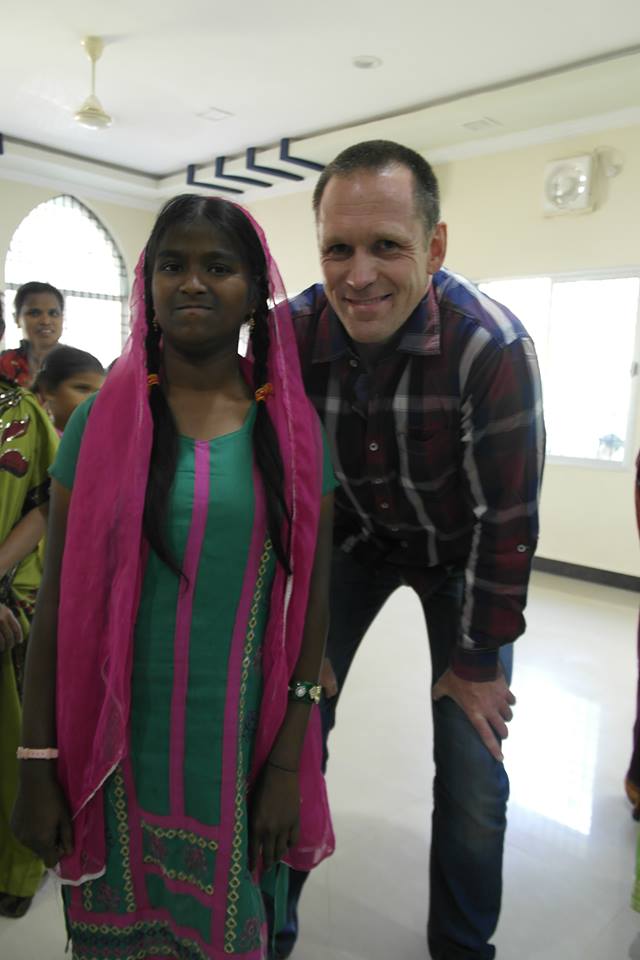
Niklas with the healed girl
Wonders and Miracles in India
Much happened during our two weeks in India, want to share some testimonies .
An old woman had such pain that her back, she looked like a fishhook , during prayer , she became straighter and straighter , not completely straight but still free from pain and about 10 cm longer , Thank you Jesus!
Another woman had a large painful outgrowth like a tumor on the left hip , after the first pray the pain was gone, after the second prayer while we were talking to her the outgrowth disappeared right before my eyes, Halleluja!!!
I am so thankful to God that I get to experience all this , totally me and Dina got to be there when some 550 people were completely free of pain , disease , disability and psychological distress .
The girl in the picture was a bit special miracle , her mother brought her to the church, she was mute and deaf since birth , we prayed for her , and immediately she began to hear and then she started to say her first words ever , was so beautiful to see her happiness when she said her first word, JESUS!
Is Costa Rica Heaven on Earth?
My dear friend Andreas Lundström who helped me make my new E-book God vs Inequality also made this video for me. It’s based on this blog post about how Costa Rica is a good example of a country that combines a long life expectancy with a small ecological foot print. Most people are quite happy to live there, and they are managing to do so wighou destroying the environment very much. Also, their GDP per capita is about the same as the gross world product per capita: 13,000 dollars a year. If everybody lived like the average Costa Rican, wealth would be evenly distributed, while if everybody lived like the average American, we would need five planets.

As I have shown people this clip, some have been skeptical. They dig up facts about inequality within Costa Rica, or its horrible sex tourism, or its crima rate, and argue “look Micael, Costa Rica isn’t much of a paradise, is it?” And of course I’m not arguing that it is a sinless state, because such do not exist – the only perfect country is the Kingdom of Heaven. But you can’t get away from the fact that Costa Rica disproves the idea that you need to be rich to have a long happy life, or that it’s impossible to enjoy life without trashing the planet. This is also the case with Kerala in India, a state that combines good health care and education with very low GDP per capita.
The point of the video is that rich countries must get poorer and give away much more of their money to create a fair and sustainable world. Many rich people don’t like this biblical idea because the love for money is a root to all evil (1 Tim 6:10), but Costa Rica show us that low GDP doesn’t mean that you’ll die when your 40 – Costa Rica has a longer life expectancy than the United States! So if you want a fair and sustainable world, live on less than 13 000 dollars a year and give the rest of your money to the poor. God bless you.
Free E-Book: God vs Inequality

My blog series God vs Wealth has been quite popular, partly because it’s a bit controverisal, partly because I think many share my ideas about economic equality. In a world where the richer get richer while the poor are dying, many Christians realize that Jesus was critical towards the rich and modeled something that would both abolish poverty and wealth, since the two are dependent upon each other. I have returned to this topic several times on this blog, and a couple of weeks ago I got the idea that I perhaps should collect these texts in one volume. Today, I can present to you my first e-book ever: God vs Inequality!
You can download the whole book as a PDF right here: God vs Inequality. It contains all ten parts in the God vs Wealth series, as well as its sequal God vs Poverty and several other texts published on this blog like Should Christians Wear “Formal” in Church?, It’s Time for All Christians to Become Vegetarians and Seven Reasons Why Inequality Sucks. Everything is illustrated by some beautiful photos I captured when I was in South Africa last year (or, to be honest, random stuff I’ve taken from Google Images) and put into an amazing layout by my dear friend Andreas Lundström.
Feel free to spread the document on, print it out and copy-and-paste, I claim no copyright. If you want it in iBook-format, which is what Andreas used to create it with, just send me an e-mail to micael.grenholm(a)gmail.com. If you discover some typos or have general comments about the content, feel free to comment below.
Also I’m very excited about the “real” book A Living Alternative that I have co-authored together with my MennoNerd friends, which will be released this fall. For now though, enjoy God vs Inequality!
Is Europe Encountering a New Holocaust?

Islamophobic propaganda from Front National
Yesterday’s election to the European Parliament was a shock to many people: the clear winners are the far-right, xenophobic and racist parties. Parties that want to decrease or stop non-Western immigration, and whos representatives say the most insane things about Muslims, Jews, homosexuals and other minorities:
Jean-Marie Le Pen, founder of french party Front National that won a stunning 24 % of the french vote, has famously questioned the facts concerning the holocaust and has said that the gas chambers were a minor detail of world war two. And just a few weeks ago he said that the Ebola epidemic might solve the “migration problem” by killing non-Europeans. Jean-Marie led Front National for almost 40 years until he handed over the leadership to his daughter three years ago. She has distanced herself from her father’s antisemitism, instead the party is now extremely islamophobic and wants to stop non-Western immigration to France.
In the United Kingdoms, UKIP won a victory similar to Front National, and while they are not very antisemitic they are very hostile to immigrants. Their leader Nigel Farage has made racist statements concerning Romanians, he only wants to welcome Christians from Syria and not Muslims, and the party is overflowing with hostile stereotyping of non-British nationalities.
The depressing list could go on and on. The Danish People’s Party, that also had a success in the European election yesterday, wants to totally stop Muslim immigration, which obviously is clear religious discrimination. The Austrian FPÖ, which for a long time was lead by neo-Nazi Jörg Haider and which wants to stop immigration to “protect the cultural identity of Austria”, got 20% of the Austrian votes. And then we got the really bad guys: Jobbik from Hungary whose supporters say that the Roma people will die, that wants to register all Jews because they view them as a “national security risk” and that send neo-Nazis to the European Parliament. And of course Golden Dawn, who got 10 % of the Greek votes – their representatives deny the holocaust and quote the Protocols of the Elders of Zion in the Greek parliament. And oh, their flag is very similar to the Germanic Nazi swastika.
Reading the Bible with the Poor

Anelisa and Benjamin, two of Christi's three children
My church has a small house group in an area of our town that is experiencing some problems: many are poor, kids hang around in gangs and from time to time there is a riot when the youth destroy people’s cars in protest. We want to reach out to the people in this area and love to invite new people to our group. We especially love to connect with Muslims and share what Jesus has done for us with them.
Two months ago a Romanian family moved nextdoors. I have known this family for years and it ess actually I who helped them get the apartment. They are Roma and has been suffering from discrimination both in Romania and in Sweden. For a long time they were forced to beg on the streets, but the father, Christi, really try to get a job. By the grace of God, he has learned fluent Swedish with hardly any education.
We invited them to our house group. The children have an endless amount of energy, but finally we managed to read the Bible. We read through the Gospel according to Luke, and we had now come to chapter 6. I started to read in Swedish, and Christi continued in Romanian:
Looking at his disciples, Jesus said: “Blessed are you who are poor, for yours is the kingdom of God. Blessed are you who hunger now, for you will be satisfied. Blessed are you who weep now, for you will laugh. Blessed are you when people hate you, when they exclude you and insult you and reject your name as evil, because of the Son of Man. “Rejoice in that day and leap for joy, because great is your reward in heaven. For that is how their ancestors treated the prophets.
“But woe to you who are rich, for you have already received your comfort. Woe to you who are well fed now, for you will go hungry. Woe to you who laugh now, for you will mourn and weep. Woe to you when everyone speaks well of you, for that is how their ancestors treated the false prophets. (Luke 6:20-26)
What it Means to be Anabaptist, and Why You Should be One

An Anabaptist being martyred in 16th century Europe
As many of you know, I am glad to be a part of the MennoNerds network, an international blogging community made up by people who are nerdy about Mennonite and Anabaptist theology. The Anabaptists were the central figures in the radical reformation during the 16th century. While Luther and Calvin opposed Catholic teaching they still wanted to kill people and were opposed to freedom of religion. Anabaptists however both criticized Catholic teaching and the Catholic church model when one baptizes entire countries, gather people in cathedrals and kill those who don’t agree with you.
The Anabaptists were of course persecuted and killed both by Catholics and Protestants. However, some survived and can today be found in three main groups: the Amish who dress funny and live environmentally friendly, the Hutterites who dress funny and have everything in common, and the Mennonites who dress boringly and write blogs about Anabaptism.
My fellow MennoNerd Tyler M. Tully has written an excellent introduction to Anabaptism, where he also defines three core distinctives that define Anabaptist theology. These three are, in short:
- Jesus Centered– Jesus stands as the lens by which Anabaptists read the entire Bible, and the exemplary by which we engage all theology.
- Free Church of Confessing, Baptized Disciples – the Anabaptists were opposed to infant baptism partly because it wasn’t Biblical, and partly because it created a society where your nationality, not your faith, defined you church membership, and that was opposed to freedom of religion
- Agents of God’s Shalom – Anabaptists are pacifists committed to non-violence, but not only do we want an absence of war but also a presence of Shalom, justice and harmony.
Seven Deadly Sins of Europe 7: War-Waging Wrath
As the election to the European Parliament gets closer, I want to highlight some of the biggest European sins that unfortunately are not very present in the political debates.

Weapons used in the Libyan civil war of 2011. Many of them were produced in Europe.
It is finally time to end this series. It has been a bit risky to focus so extensively on Europe on a blog with readers from all around the world, but I hope you have seen that these seven deadly sins are relevant to know about for most people. For my readers in the majority world (Africa, Asia and Latin America): I want you to know that I am strongly opposed to the neo-colonialism, environmental destruction and activist sloth of my continent that hurt you countries so badly, which is why I try to highlight this now that there is an election to the European Parliament. And for my readers in non-European rich countries: I hope you realize that these deadly sins are present in you countries as well, unfortunately.
Anyways, let us turn to the final sin: wrath, or anger. Our good ol’ friend New Advent Catholic Encyclopedia simply defines it as “The desire of vengeance… It becomes sinful when it is sought to wreak vengeance upon one who has not deserved it, or to a greater extent than it has been deserved, or in conflict with the dispositions of law, or from an improper motive. The sin is then in a general sense mortal as being opposed to justice and charity.” We have already seen how Europe kills non-European through lack of aid or by destroying the climate, but Europe also executes violent wrath in a much more direct way: through selling arms to dictatorships and countries at war.
Compared to its American cousin in the Wild West, Europe often portrays itself as a much more peaceful and friendly part of the world. But historically, Europe has been an extremely violent country, with hundreds of wars that have changed the borders of European countries over and over again. And of course, Europe was the main playgrounds for the two of the most bloody wars in history: the first and second world war. Thankfully, this violent era ended with the creation of the European Union. Increased trade and diplomacy has made Europe a much more peaceful place than ever before.
Seven Deadly Sins of Europe 6: Lust for Immorality
As the election to the European Parliament gets closer, I want to highlight some of the biggest European sins that unfortunately are not very present in the political debates.
Lust is not that hard to define. The New Advent Catholic Encyclopedia defines it as “The inordinate craving for, or indulgence of, the carnal pleasure which is experienced in the human organs of generation. The wrongfulness of lust is reducible to this: that venereal satisfaction is sought for either outside wedlock or, at any rate, in a manner which is contrary to the laws that govern marital intercourse.” Lust is exetremely common in the Western world today. Sexism, pornography and nudity is abundant as never before.
 In Denmark, an absurd video was published by their own parliament that tries to convince the youth to vote through violence and sex. The video caused outrage even in Denmark, but this country is very liberal when it comes to sex and nudity.
Blachman is sent on national television where a nude woman has to be silent while the host Blachman talks about her body together with a male guest. They will also start to air “2 blowjobs, thank you“, where a male host buys sex from prostitutes to guide the audience in the totally legal danish sex trade. And one of the biggest fishing magazines in Denmark publishes “fish porn”, a picture of a nude woman holding a fish in every number, just to get more readers.
We could go on and on describing the nudity in Italian and Spanish television, on the sexism in most countries’ commercials and how sex generally is accepted as something fun to do with many different people. The church has often criticised this, but often in a clumsy way. And when it comes to the politicians, nothing is done.
The author

Micael Grenholm, a Swedish charismactivist, apologist and author.
A Living Alternative

God vs Inequality

 Charismactivism