
Popular Posts


Recent Comments
 | James on Why Cessationism is Unbiblical… |
 | Nate on The Problems with the Lutheran… |
 | Franciskus – p… on Francis – the Charismati… |
 | Riverbelle on The Problem with “Sacram… |
 | Russell on Why Churches Should Abandon St… |
Networks





Were the Apostles Mistaken in Having Everything in Common?
It’s YouTube Friday and the latest entry on the Holy Spirit Activism YouTube channel is this short interview with Huw Lewis, apostolic leader in the Jesus Army, where he explains why the JA practice community of goods. Community of goods means sharing possessions so that nobody is rich and nobody is poor and was being practiced by Jesus and the apostles (Jn 13:29) and in the first church in Jerusalem (Acts 2:44-45). Huw, I and many others think that it is a very good way of living and we encourage all believers to pray about joining a Christian community.
However, there are Christians who think that community of goods isn’t something good but rather, that the apostles were naïvely mistaken when they started to share their possessions. I found an article arguing for this at biblestudytools.com, an article that is used as the official explanation to what community of goods is about and that has received one of the top spots when you search for “community of goods” on Google. It’s horribly bad though so please let me criticise it for you.
All rich people or some?
In Acts 2:44, it is said that, in the infant church at Jerusalem, “all that believed were together, and had all things common,” and (Acts 4:34 f) “as many as were possessors of lands or houses sold them, and brought the prices of the things that were sold, and laid them at the apostles’ feet.” The inference from this, that there was an absolute disposal of all the property of all the members of the church, and that its proceeds were contributed to a common fund, has been disputed upon the ground that the example of Barnabas in selling “a field” for this purpose (Acts 4:37) would not have been mentioned, if this had been the universal rule. The thought conveyed is that all believers in that church held their property as a trust from the Lord, for the benefit of the entire brotherhood, and, as there was need, did as Barnabas.
The author of this article, H.E. Jacobs, almost immediately begins to argue that the Biblical community of goods was not required for all believers in Jerusalem to participate in. This is indeed a difficult task since Acts 4:34 says that all who had property sold it and gave it to the apostles so that they redistributed the money equally. And all really means all. Now, believers who didn’t own property such as widows probably weren’t obligated to give (instead, their participation in the common purse was by receiving) but Barnabas is rather used as an example of one among all the property owners who sold everything to introduce him to the readers. Likewise, Jesus’mother and brothers are mentioned in Acts 1 to highlight some of who were praying, not to say that the others weren’t praying.
Putting Away the Sword of Self Defense: Scriptural Reflections of a Pentecostal Pacifist
This article is one of the best defenses for Christian pacifism I have read, written by Pentecostal pastor Eric Gabourel. It was originally posted on the website of his church, Live Oaks Community Church in New Orleans.

Who would Jesus kill?
At the last Passover Seder Jesus told His disciples that if they didn’t have a sword to sell their cloaks and buy one (Luke 22:36). This statement is often abused by Christian just war theorist to advocate Christian participation in war. Those who take the position that Jesus was telling His disciples to be prepared for battle or for self-defense only emphasize this phrase from the passage. To have an appropriate assessment of this statement one must treat the entire text of Luke 22:7-53.
Before Jesus tells His disciples to buy swords He calls them to recollect the instance when He told them to go out and preach the Gospel without carrying purse, bag, or sandals (Luke 22:35; Luke 10:4). He then asks them what they lacked when they were sent out to live by faith. Naturally they said “nothing” because of God’s sustaining power that responds to human faith in a lifestyle of radical simplicity and abandonment. Jesus’ teachings on worry and anxiety (Luke 12:24-34) states that we should not be concerned about human necessities: food, shelter, clothing, because these are the things that pagans run after. Moreover, He tells His followers to, “Sell their possessions and give to the poor” (Luke 12:33). Therefore, Jesus in telling his disciples to now carry a purse and a bag was not telling them to expunge what He initially taught them. Jesus was telling them to do these things as a symbol of the impending crisis that was to ensue.
Jesus telling His disciples to carry possessions wasn’t a contradiction just as His prayer on the Mount of Olives wasn’t. In this prayer we also witness the tension of the crossroads that Jesus was standing at. He asked the Father, “if you are willing, take this cup from me” (Luke 22:42). This prayer does not imply that Jesus was trying to avoid His salvific mission to bear the sins of the world. His prayer stresses the overwhelming burden that He was about to bear. He knew and understood His task. That’s why He continued to pray, “yet not my will, but yours be done” (Luke 22:42). The tension was so intense that Luke states that Jesus’ sweat was like drops of blood falling to the ground (22:44).
Happy Birthday Anabaptism!

Today is the 490’s birthday of Anabaptism, the radical, biblical, pacifist and restorationist Christian movement that consists of millions of Jesus believers around the globe, including me. You may have heard my little song about what Anabaptism is already but it won’t hurt to listen to it again, eh?
So here’s the story about how Anabaptists came to be. The 16th century Protestants were far from the first who rebelled against the Catholic church and its unbiblical teaching, but they weren’t as radical as the Hussites or Waldensians had been. In fact, neither Luther nor Calvin wanted to restore the Biblical church completely but rather, they argued that Biblical practices they didn’t like had “ceased” (I talked about this two posts ago).
They had no problem with unbiblical practices like the state church system, though. Luther and Calvin are called magisterial reformers because they didn’t want to separate the church from the state but, on the contrary, relied on the secular state powers to liberate themselves from Rome.
The Boy Who Didn’t Visit Heaven Doesn’t Make Heaven Visitations Impossible
 Biggest Christian news story of the week: The boy who came back from Heaven didn’t come back from Heaven. In fact, Alex Malarkey never left earth in the first place, he now says in a public letter:
I did not die. I did not go to heaven.
I said I went to heaven because I thought it would get me attention. When I made the claims that I did, I had never read the Bible. People have profited from lies, and continue to. They should read the Bible, which is enough.
Tyndle Publishing House stopped producing the book and deleted its facebook page and web page pretty immideately after Alex’ released his statement. All this created a lot of debate about the authencity of other books about supernatural experiences, particularly “heavenly tourism”. Once again, cessationist Christians join hand with atheists and skeptics in refuting all charismatic litterature, claiming that this shows that books like this are a fraud. And by books like this we’re obviously thinking about the other book about another boy who shares his visions of Heaven in Heaven is for Real, published the same year (2010) as The Boy Who Came Back from Heaven. (more…)
Why You Cannot Be Cessationist and Claim to Restore the Biblical Church at the Same Time
In this video, I present my chapter “Charismatic Anabaptism: Combining Signs and Wonders with Peace and Justice”, which is included in the new anthology A Living Alternative. In the chapter I argue that Christians should use the miraculous gifts of the Holy Spirit in order to promote nonviolence and economic equality. To defend this thesis, I use the Bible, church history as well as modern testimonies.
The church historical part can be a bit mind-blowing to some – not many Anabaptists know that their movement initially was very charismatic, with an emphasis on prophetic visions, healing and miracles. Likewise, most Pentecostals and charismatics are unaware of that the early Pentecostals were pacifists and criticised capitalism. Even though they are hardly connected historically, early Anabaptism and early Pentecostalism were extremely similar, which I interpret as the work of the Holy Spirit, whom both movements wanted to be influenced by.
Both Anabaptism and Pentecostalism are restorationist, that is, they want to restore the New Testament church. Now, Calvinism and Lutheranism – Protestant movements that also originated during the 16th century reformation just like Anabaptism, that were far more positive to violence, economic inequality and pesecution than the Anabaptists – also argued that they restored the Biblical church, basing their theology on “Scripture alone” instead of relying on Catholic unbiblical tradition. (more…)
A Christian Response to the Charlie Hebdo Attacks

When Jesus said “Love your enemies”, He didn’t add “except terrorists”. On the contrary, it was probably them He had in mind. Charismatic activist Bob Ekblad has written an excellent piece on how Christians should respond to the horrible terrorist attack against Charlie Hebdo in Paris, which I quote a large portion of below. I have nothing to add except a little cartoon about Jesus’ amazing enemy love.
How might followers of Jesus respond to this escalation of hatred and violence? Jesus warned his disciples: “You will be hearing of wars and rumors of wars. See that you are not frightened, for those things must take place, but that is not yet the end” (Matthew 24:6). Jesus expects his listeners to be aware that history is heading toward increasing tension and to resist the natural tendencies toward hard- heartedness or violence.
“Because lawlessness is increased, most people’s love will grow cold. But the one who endures to the end, he will be saved. This gospel of the kingdom shall be preached in the whole world as a testimony to all the nations, and then the end will come” (Matthew 24:12–14). Anyone listening to Jesus is told to not be fearful, but to get on with the highest priority work—announcing the Gospel of the Kingdom. What is this Gospel?
It most certainly does not include Christians identifying with or justifying swift and effective retaliation, increased surveillance, growing suspicion, incarceration, hatred against Muslims, or fear. When James and John ask Jesus if they should call down fire from heaven to consume the Samaritans who refused them entry as they traveled toward Jerusalem, Jesus rebukes them, saying: “You do not know of what spirit you are of. For the son of man did not come to destroy men’s lives but to save them” (Luke 9:55–56).
Malala + Holy Spirit Revival = Pandita Ramabai

Ramabai on an Indian post stamp
One of my favourite Pentecostal saints of all times is Pandita Ramabai (1858-1922), Indian activist, evangelist and holy roller. Over a hundred years before Malala she campaigned for women’s right to education, and she was extremely active in helping the poor and discriminated. Born in a Brahmite family in what is now the state of Karnataka, she started to study in an early age and learned Sanskrit along with sacred Hinduist texts, astronomy, physiology and more. This was controversial since she lacked a penis, but her father encouraged her as she learned more and more about society, religion and activism.
In 1883 she went to England and taught Sanskrit at an Anglican monastery in Wantage. There she was saved. “I realized,” she later wrote, “after reading the fourth chapter of St. John’s Gospel, that Christ was truly the Divine Saviour he claimed to be, and no one but He could transform and uplift the downtrodden women of India.”
As she returned to her home country, she bought a piece of land outside Pune and started a Christian social community for young widows called Mukti, Sanskrit for Liberation. She also helped people who were orphaned, disabled or homeless, and when a famine hit India in 1896, Ramabai rescued over a thousand people and brought many if them to the Mukti mission.
Ana-whaaat?! A Living Alternative Book Presentation
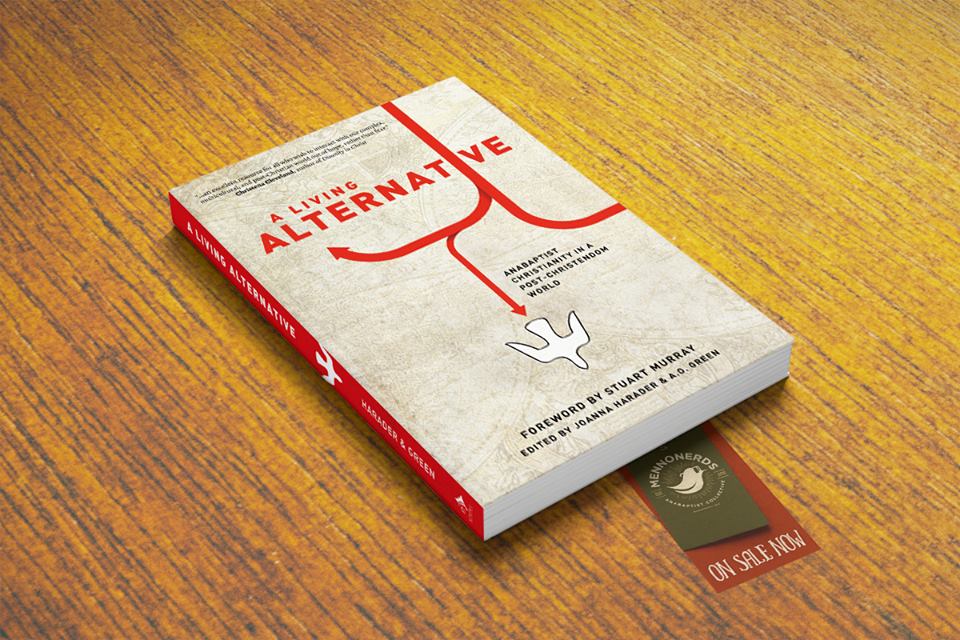 I’VE WRITTEN A BOOK chapter! The book is called A Living Alternative and it is awesome. Together with 19 other Anabaptists, I write about why ANABAPTISM is amazing!
“Ana-whaaat?!” you may ask, but watch this video and you will learn everything you need to know about Anabaptism through my epic song skills.
For more info about the book and how you can get it, go here. And if you like my YouTube videos, subscribe to my channel here. Bless you!
Why Jesus Wouldn’t Attend Anti-Muslim Demonstrations

A Cross painted in German colours at a Pegida anti-Muslim demonstration in Dresden
Jesus came in contact with several people who weren’t orthodox Jews, but rather were heretics or idolaters. We have the Samaritans, who had mixed Judaism with pagan influences, and who were forbidden to worship the Lord in Jerusalem. The Romans were colonialist immigrants from other parts of the empire, and even if some had become proselytes (like Cornelius, Acts 10), most of them worshiped the Roman idols of Jupiter, Mars and others. There were also adherents of other religions in the areas of Decapolis, where Jesus did some miracles (Mark 5).
How did Jesus relate to these idolatrous Gentiles? Well, He simply took control over a state, became President and deported them. Wait, He didn’t? Then at least He commanded His disciples to take control over a country and deport all the idolaters? Huh, He didn’t do that either?!
Not that those ideas didn’t float around in Jesus’ time. The Zealot movement and other radical Jewish groups wanted to fight against the Romans and drive those stupid colonialists back to Europe (which they also tried in 70 and 135 AD, and failed miserably). Many believed that this was what the Messiah was supposed to do. Jews had nothing to do with Samaritans (Jn 4:9), and vice versa, and when some Samaritans heard that Jesus was on His way to Jerusalem, they forbade Him to enter their village. Enraged, John and James suggested that Jesus should order a heavenly genocide from above, burning those heretics alive (Lk 9:51-54).
But Jesus rebuked them. He didn’t come to barbeque idolaters but to save them. He loved Samaritans, shared the Gospel with them and used a Samaritan as the good example in His famous parable about loving everyone indiscriminately (Jn 4, Lk 10). He told His Jewish disciples to love the Romans, pray for them, and walk the extra mile with them (Lk 6). Do to them as you would have them do to you (Mt 7:12). He didn’t fight to kick the Romans out of Israel. Instead, He was crucified by them, dying for their sins. On the cross, He shouted: “Father, forgive them, for they do not know what they are doing!” (Lk 23:34). (more…)
Heidi Baker: God Saved My Life
 In my last post I gave you a video with Heidi Baker, the apostle of love in Mozambique, and you seemed to like it! So here’s another video with Heidi Baker! For you who haven’t heard of her, she is the founder and director of Iris Global together with her husband Rolland, and she is passionately loving the poor and broken while experiencing amazing miracles like blind seeing, deaf hearing and people being raised from the dead, and while preaching the Gospel about eternal life in Jesus. She’s basically very biblical!
This video is from a conference last year here in Sweden where Heidi was preaching (a women’s conference in fact, don’t ask me how I got in 😉 ). In the video, Heidi shares how she was dying in a tropical flesh eating disease just a few years after she and Rolland had started their ministry in Mozambique. After the doctors said that they could do nothing for her, Rolland asked her if there was anything he could get her. She said “Give me running shoes!”
She demanded that she would be released from the hospital. The doctor cried and urged her to stay, but she comforted him and said that she needed to visit a specialist. She then signed a document where the hospital took no responsibility when she died, and she and Rolland flew to Toronto to preach at the Airport Vineyard revival. “It was the worst flight of my life”, Heidi says, but she knew that God called her to preach there.
In Toronto, John and Carol Arnott urged Heidi to rest and said that someone else could preach while she was taken care of by a doctor. “They were good friends to us… but they didn’t want me to die on their video. It would have been very bad for them.” Heidi jokingly says afterwards.
Heidi says that when she walked up to the pulpit in the church, she was totally, completely, miraculously healed by the power of the Holy Spirit. Now she says “I’m not afraid to die, and that’s a problemo for the devil!” So inspiring!
Check our Heidi’s whole sermon here. And again, check out her awesome missionary organization Iris Global.
Heidi and Rolland Baker’s Extremely Inspiring Christmas Greeting!
Praise God for Heidi and Rolland Baker! These wonderful missionaries in Mozambique are so passionate about the love of the Father, the Gospel of Jesus Christ and the miraculous power of the Holy Spirit, and their missionary organization Iris Global has experienced glorious revival for the last 20 years. Their Christmas greeting above was published a few days after Christmas (probably because of the amazingly beautiful editing) but who cares about that when the video is a masterpiece when it comes to inspiration, passion and faith?
Heidi shares how 2014 has been a challenge for Iris because of the horrible floods in Mozambique, but she is amazed by how God used countless radical disciples to serve, encourage and relieve the suffering population and bring the Gospel of hope and life. As I’ve written before on this blog, Iris experiences amazing miracles like the blind seeing and the deaf hearing while helping the poor and vulnerable with good, serious development assistance.

Since I’m a monthly donor to Iris I also got a physical Christmas greeting from the Bakers, this postcard with a nice worship CD. The reason they send their supporters worship music is so that their love for Jesus may increase, they say. I love it. They’re just great. God bless them!
The Top 5 Popular Posts on Holy Spirit Activism in 2014

Possibly a new logo for Holy Spirit Activism. Tell me if you like it!
As always, the WordPress “stats monkeys” has produced a summary of the past blog year that you can find here. I thank God that the blog is growing and pray that He will lead me and others to inspire more and more people to become radical, charismatic Jesus hippies, combining miracles with evangelism and activism.
Here’s the top five viewed posts during 2014:
1. The Kundalini Myth. This post was actually written in 2013, but people keeps finding it on Google, and it’s the most commented post on this blog as well as the most viewed one. Many Christians believe in Andrew Strom’s claim that large parts of the charismatic movement are influenced by the Hindu kundalini sect, but thankfully many are also questioning this ridiculous claim, and I hope that my blog post has convinced some that Strom’s Kundalini warning is a myth.
2. Compelled by Love Movie Review. This amazing documentary on the lives of Heidi and Rolland Baker and their ministry Iris Global was released in January, and although the audience may be somewhat limited thousands have found my movie review through Google. Maybe I should do some reviews more often? 🙂
3. Pope Francis: “The Charismatic Movement is Necessary”. I’ve written about Francis a couple of times, and even though I don’t agree with Catholic doctrine on several spots I think his passion for evangelism, poverty reduction, peacemaking and Spiritual gifts is absolutely awesome, since I’m also passionate about evangelism, poverty reduction, peacemaking and Spiritual gifts. In this post I highlighted his positive words about the charismatic movement in his famous meeting with journalists on the pope plane from Rio back to Rome, and the post sparked some controversy but also excitement. (more…)
A Mennonite Seminarian Turned Pentecostal Intern Re-Examines an Anabaptist Approach Towards Signs and Wonders
Deborah-Ruth Ferber reviews my chapter Charismatic Anabaptism: Combining Signs and Wonders with Peace and Justice, in our new book A Living Alternative. She’s very kind in her judgment! 🙂

 “Holy Spirit come with power, breathe into our aching night. We expect You this glad hour, waiting for Your strength and light. We are fearful, we are ailing. We are weak and selfish, too. Break upon Your congregation, give us vigour life anew.” (1)
“If you believe and I believe and we together pray, the Holy Spirit must come down and set God’s people free. And set God’s people free. And set God’s people free. The Holy Spirit must come down and set God’s people free.” (2)
“Praise the One who breaks the darkness with a liberating light. Praise the One who frees the prisoners, turning blindness into sight. Praise the One who preached the Gospel, healing every dread disease, calming and feeding thousands with the very bread of peace.” (3)
The words to these well-loved Mennonite hymns echoed across the room as we all stood to sing of the…
View original post 1,909 more words
Francis Shongwe – Raised from the Dead
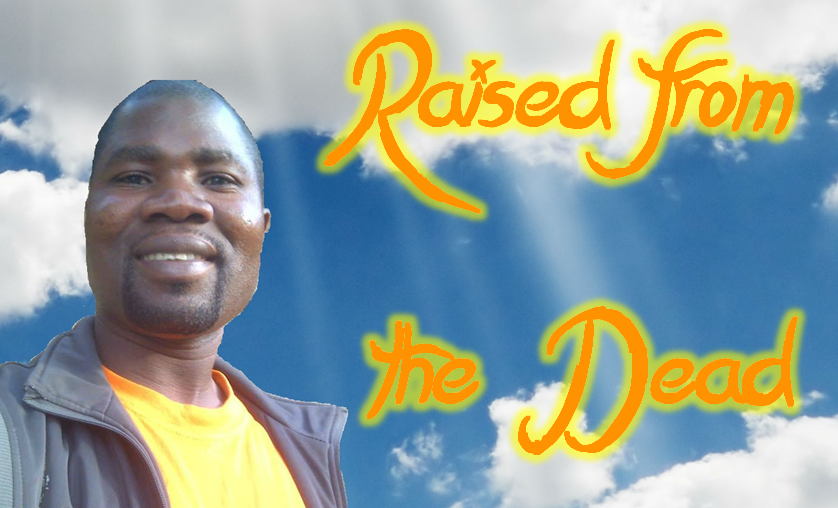
In September 2003, pastor Francis Shongwe was beaten to death by a violent gang in Backdoor, South Africa. He was an usher at a youth conference, and as the gang beat and kicked him he suddenly saw his body below him, and he went to Heaven. There, he saw countless people and angels worshipping the Lord, and he was so happy. Francis comes from a very poor neighbourhood with a lot of social problems, but he realized that there would be no more hunger or need in Paradise.
Suddenly, he heard a voice, calling his name. He then woke up in the mortuary in a hospital in Nelspruit, and discovered that pastor Surprise Sithole had raised him from the dead in the power of the Holy Spirit. As readers of this blog should know, this wasn’t the first time Surprise has raised a dead person.
Now, Francis actually cried and was very sad at first when he woke up, since he now was among all the troubles and poverty of the world again. However, he now realizes that because of his experience of Heaven, he preaches the Gospel about eternal life through Jesus Christ more powerfully than before.
When I visited South Africa last year, I interviewed Francis about his resurrection as you can see in the video above. I also talked to Surprise as well as several witnesses to how Francis was killed and then come back. Francis has been featured in the documentary Finger of God, and his testimony has been shared by Heidi Baker and others. I’m very grateful that I got the chance to meet him. Praise God for His resurrection!
Christ-like Christmas Contradicts Consumerism
 My blog post and YouTube video on rejecting consumerism and celebrating simple Christmas has gained attention. My friend Sunniva wrote in the comments about how she and her mother celebrates a simple Christmas:
We (read my mother and I) celebrate Christmas as an extended birthday. If we celebrate each others birthdays, we do so for Jesus so much more. Perhaps I will write a blog post how we do this, but for now: its a feast that’s Jesus-centered – anticipation begins at least a month before with old and home-made Christmasdecorations and greens from forest floor (no real tree-cutting here) appearing around the house bit by bit, with Christmas music, and by attending church in Advent-time.
On Christmas Eve we will decorate our home-altar with fairtrade-roses, fast from food and water till dark, sing Jesus-songs by the fire, go to Church, cook a vegetarian meal that’s 90 or so percent organically grown and which we present to Jesus before eating, watch the movie The Nativity (and Karl Bertil Jonsson’s Christmas is a must too, a modern Christmas Robin Hood story) and attend midnight mass, etc etc. We give each other a few meaningful presents to commemorate the joy, like fair-trade coffein-free chocolate and tea, something handmade and something useful etc (from this year not wrapped in paper but in a personal reusable gift-cloth-bag), while giving aid to the poor as well.
In short: Jesus is worth a splendid birthday celebration!
The only thing I miss is sharing this beautiful time with more people, wanting to be a minister so I can do that more easily. My dream is to arrange Christmas-retreats with simple feast-food and much prayer.
Jesus Army’s Forward blog has collected a number of different voices on the topic, that deals with the Christmas dilemma: Jesus’ birthday wasn’t celebrated very much in Biblical times (which is why we don’t know the actual date), rather, paganism has influenced the modern Christmas celebration quite a lot and today it’s a mindless consumption feast. At the same time, Christmas expresses love and community and many do connect it to Jesus. Here are some of the thoughts expressed by our fellow Jesus hippies as they try to deal with Christmas in a non-consumerist way: (more…)
The author

Micael Grenholm, a Swedish charismactivist, apologist and author.
A Living Alternative

God vs Inequality

 Charismactivism