Home » Church & Theology (Page 4)
Category Archives: Church & Theology
The author

Micael Grenholm, a Swedish charismactivist, apologist and author.
Heading to Jesus Army for a Training Year!
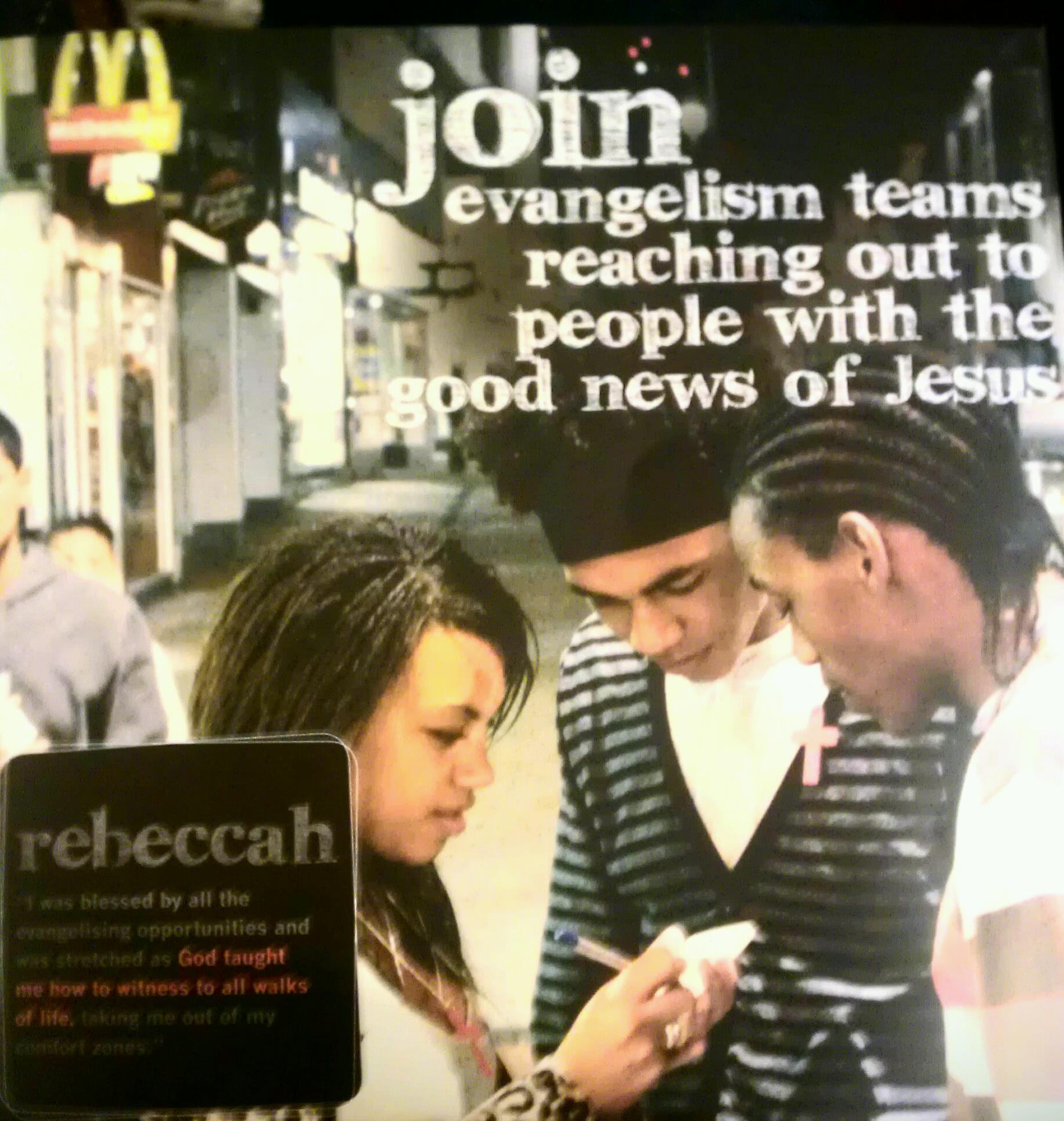
You who follow this blog know that I love a certain British church called the Jesus Army, since they combine Spirit-filled life with evangelical theology and community of goods. You may also know that I live in Sweden, which sadly lacks a Jesus Army. I am fully convinced that God calls me to join a charismatic community where nobody is rich and nobody is poor, and also to plant new charismatic communities across the world. For this I need training, and praise God – Jesus Army has a training year:
The Jesus Army Training Year internship involves practical discipling within a community lifestyle to equip you to be fruitful in your Christian walk and witness. It offers a unique opportunity for you to intern with other christians in a Jesus Fellowship intentional Christian community house for up to a year, being coached to live out a full-on Christian faith.
Today I received my pastor’s blessing to start the application process of doing a training year, summer 2016 to summer 2017. If I get accepted – and I pray that I will – you can expect more inspiration and teaching from this church on this website. I also pray for wisdom and guidance when it comes to what happens after the training year. I trust that God will reveal this to me as the training proceeds.
If you also think this sounds exciting, come and join me! Apply for a Training Year here.
7 Reasons Why House Churches are Awesome
Who needs buildings when you have homes? Here’s a video I made where I describe why I’m such a passionate promoter for house churches. The seven reasons are the following;
1. They’re biblical – Acts 2:46, 1 Cor 16:19, Col 4:15 and other passages tell us that the early Christians met in homes. The earliest archeologically discovered church, the Dura Europos church, was a house church. In fact, church buildings where people didn’t eat and sleep wasn’t constructed until the late third and early fourth century.
2. They’re utilized – again, people actually eat and sleep there. Most church auditoriums – the big room with a lot of pews – stands empty for the most part of the week. Homes, in contrast, are usually used daily.
3. They’re small – and this is a good thing! 1 Cor 14:26 tells us that everyone attending a church meeting should contribute with something. When was the last time you’ve experienced that? Frankly, you need a small group to have such a wonderful spiritual interaction. (more…)
The Problem with “Sacraments”

For many Christians, sacraments are really important. Catholics, Anglicans, Lutherans and others often emphasize how precious their sacraments are, and sometimes criticize other church traditions for not being “sacramental” enough. There is a lot of disagreement on what a sacrament is though: Catholic teaching states that there are seven sacraments, whereas most Protestants argue that there are two – baptism and communion – and eastern Orthodoxs usually claim that there are countless! The Catholic council of Trent states that both the Protestant and eastern Orthodox views are unacceptable, condemning anyone who says that there are “more, or less, than seven” sacraments.
This is just ridiculous. Jesus and the apostles never talked about “sacraments”. Yes, they baptized, broke the bread, annointed the sick and so on, but they never grouped these activities in one category of “sacraments”. Nothing in the Scriptures indicates that communion and baptism had any other role or importance than other things Jesus commanded His disciples to do, like helping the poor, pray and share the Gospel.
“Sacrament” is really a creative Latin translation of the Greek term mysterion, a word that does appear in the Scriptures never referring to church activities but to the Gospel (e.g. Col 4:3, 1 Tim 3:16). The one responsible for the translation was Tunisian church father Tertullian (155-240 AD), who often was creative with his translations (“sacrament” didn’t really mean mystery but rather referred to an oath), and he used it when describing baptism because he thought that baptism was a mystery.
So far so good. However, another African church father, Augustine, took some more freedoms with the word around 200 years later, using it as a category to include not just baptism but also communion, the Nicene creed and the Lord’s prayer. He was also the first arguing that a sacrament is a visible sign of invisible grace, which of course is true for those things but not exclusive to them – Bibles, sermons and a hug can also be visible signs of invisible grace. (more…)
China’s Early Pentecostals Practised Community of Goods

Check out this book for more info about the Jesus Family!
This is an excerpt from the first draft of my upcoming book on radical charismatic church history.
In the beginning of the 20th century, China was suffering from the Boxer uprising, where Mandarin nationalists revolted against European colonial influences, demanding that everything foreign, especially Christianity, should be thrown out. The Boxers were crushed by colonial forces but that didn’t put an end to the social unrest, and China continued to suffer from looting, violence and xenophobia. And yet, Pentecostalism spread rapidly throughout China, much thanks to the Holy Spirit and a guy called Mok Lai Chi (1868-1926) in Hong Kong.
Mok went to the slums of Wan Chai, preaching the Gospel and healing the sick. In 1908 he started a paper called Wuxunjie Zhenlibao, Pentecostal Truths, which was spread not just in Hong kong but across the mainland. Mok explained in the paper: “Hong Kong Pentecostal Mission is a Jesus church founded by the Chinese themselves, not a branch of any foreign churches planted in my nation.”
The Mission supported Bible classes and girl schools, as well as church planting. Mok Lai Chi both cared for people’s salvation and the social problems they experience here and now; protesting against the British colonial government in 1921 for allowing the rents in the city to be too high. (more…)
Celebrating Celibacy
What happened to celibacy in the Protestant church? As a new believer, when I first read the New Testament I quickly understood that marriage shouldn’t be prioritized by Christians. Paul writes:
Now to the unmarried and the widows I say: It is good for them to stay unmarried, as I do. But if they cannot control themselves, they should marry, for it is better to marry than to burn with passion…
I would like you to be free from concern. An unmarried man is concerned about the Lord’s affairs—how he can please the Lord. But a married man is concerned about the affairs of this world—how he can please his wife — and his interests are divided. An unmarried woman or virgin is concerned about the Lord’s affairs: Her aim is to be devoted to the Lord in both body and spirit. But a married woman is concerned about the affairs of this world—how she can please her husband.
I am saying this for your own good, not to restrict you, but that you may live in a right way in undivided devotion to the Lord. (1 Cor 7:8-9, 32-35)
Now, there’s nothing wrong with marrying, celibacy is just better. “He who marries the virgin does right, but he who does not marry her does better.” (v. 38) Now, some would argue that Paul’s words doesn’t apply to us today, since he may have spoken about a context of persecution or, as some argue, a false perception of that Jesus would come back any minute, based primarily on verse 29.
But persecution isn’t mentioned – and we should always be careful with building a Christianity that is unpersecuted since that tends to be very lame and unbiblical – and isn’t Jesus’ second coming even more immanent now than it was then? Furthermore, Paul’s reasoning about the celibate being undivided to the Lord is not dependent on either persecution or Christ’s return. (more…)

“That Ceased with the Apostles” Comedy Sketch
What if cessationists applied their reasoning to other things than miracles? Cessationism is the belief that miraculous gifts ceased with the apostles and that we don’t need them anymore now that we have the Bible. Many Christians sincerely believe this, especially conservative evangelicals in the US, but how would their arguments sound if they were applied to other things that the gifts of the Spirit? Yesterday, my friend Andreas Lundström and myself made a sketch about this:
Feel free to spread it on if you like it. And for you who like bloopers, here comes some bloopers:
Blessings!
Miracles Make Churches Less Boring

Örjan, an ordinary guy who has experienced tons of miracles
“The whole assembly became silent as they listened to Barnabas and Paul telling about the signs and wonders God had done among the Gentiles through them.” – Acts 15:12
I love this little Bible passage! At the apostolic meeting in Jerusalem, where it was to be decided what rules and customs should be followed by Gentile Christians, those who have assembled take a testimony break to hear about some miracles. This I believe was both because they illustrated a theological point given by Peter – that God is already working among the Gentiles even before they had been circumcised – and because miracles are very cool to hear about. Seriously, not many grow tired of hearing about miracles.
Right now, I’m at a Pentecostal conference in the northern parts of northern Sweden, where the sun never sets and penguins ride around on polar bears. I’m helping the aid organisation of Swedish Pentecostalism, PMU and collects money for Denis Mukwege’s Panzi Hospital in Bukavu, Congo. It’s my first time at the conference and it’s nice, the vegetarian food is a little meh and the topics being talked about at the meetings and seminars aren’t always that radical, but overall it’s OK.
I guess that for an outsider, at first glance, the conference is like any conference or festival – people drinking coffee and eating ice cream, chatting and laughing, going to concerts and lectures. Of course, the topics are Christian and the songs are to God, but that wouldn’t matter much for a nonbeliever. The real game changers I believe are partly the eternal issues about the afterlife and salvation, and partly signs and wonders telling us about the truth of these eternal issues. And God is working through many in Swedish Pentecostalism hallelujah, so testimonies about amazing miracles can pop up anywhere.
Why Did the Early Christians Go to the Synagogues?
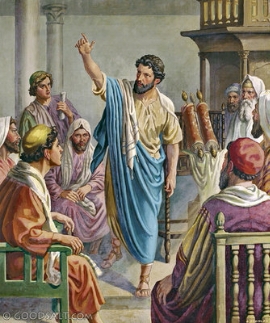
Was it really just to pray and worship with their Jewish brothers, or had they something else in mind?
I had a discussion with a friend the other day about church buildings; while I think that they are unnecessary for the most part and that we should focus on planting house churches instead, he enjoyed church buildings and saw no reason to diminish their role. One of his arguments for using church buildings was that the early Christians went to the temple and synagogues. My response was that they went to the temple and synagogues to evangelise.
Perplexed, he asked “Where in the Bible do Christians evangelise in synagogues?” Well, here’s a summary.
Jesus in the Synagogues
Let’s start with Christ. Luke 4:15 says that Jesus “was teaching in their synagogues, and everyone praised him.” Later, in verse 21 of the same chapter, we read: “He went to Nazareth, where he had been brought up, and on the Sabbath day he went into the synagogue, as was his custom. He stood up to read, He began by saying to them, ‘Today this scripture is fulfilled in your hearing.'”
Church Leadership Should be Small-Scale

My pastor Lotta (left) reads the Bible with some new visitors at a Sunday meeting in our house church Mosaik
Why do most churches train their leaders to take care of groups of hundreds or even thousands of believers, when Biblical pastors trained groups of 20 or 30 people?
I talked to an associate pastor some time ago, and he shared with me the burden of him having the pastoral responsibility for families in his church. Since that meant 80 people, he had constantly work to do, and he felt pressured for not spending enough time with each family. There were two other pastors in the church, but they were also overloaded with work concerning the youth and the congregation as a whole (which includes over 400 people). I asked the associate pastor if he could delegate some pastoral care to cell group* leaders, but he was unsure whether they would accept the challenge. Many Christians just expect the pastor to do the work for them.
It’s biblical to delegate. Exodus 18 tells us about how Moses’ father-in-law, Jethro, saw how Moses was being worn out with all the judging work, and so he recommended him to appoint God-fearing men to help him out, some having responsibility for a thousand people, other for one hundred, fifty and ten (Ex 18:20-21). When the apostles realized that they didn’t have time to help the poor, they appointed some other Spirit-filled people to do it (Acts 6:1-8). Leadership isn’t about doing everything yourself, but to inspire and give mandate to others so that they too can serve the Kingdom of God.
The Biblical church had various different types of leadership roles: apostles planted churches and had most authority in doctrinal disputes, evangelists preached the Gospel publicly and trained other disciples how to share their faith, prophets heard the voice of the Lord and brought important messages to the church, and teachers taught theology. And then we have presbyters, or pastors. (more…)
Why is there Something Rather than Nothing?

I was listening to a TED talk the other day on this topic by philosopher Jim Holt. In a detailed manner he described the puzzle of existence and explained why it cannot simply be “pushed back” one level by saying “big bang did it” or “the multiverse did it”, because the question is more fundamental than so: it is not just about why this or that happened but why anything happens, why there are whys.
As an atheist, he quickly also excludes God from the equation, saying that we then must explain what created God and that the universe is way to non-perfect and mediocre to have been created by an all-powerful, intelligent being.
What solution does Holt then himself have to the puzzle? I waited curiously to the end to hear it, but it was a bit of an anticlimax. Holt says that we can theoretically imagine three types of realities: (more…)
Where is Jason Westerfield?
It’s almost been one month since pastor Bill Johnson called evangelist Jason Westerfield out as a false prophet, but Jason has still not said anything about this publicly. Here, I talk about this and comments some of the comments I’ve received from my previous video and blog post about Bill and Jason. I hope and pray that Jason soon will announce that he does not believe in new age and that he confesses Jesus Christ as divine Son of God.

Why Catholic, Orthodox and Protestant Aren’t Good Christian Categories
In school, I learned that there are three major branches of Christianity: Catholic, Orthodox and Protestant Christianity. I haven’t questioned this until recently: why aren’t Orthodoxs called protestants, since they’ve rebelled against the Catholic church just as we have (or perhaps, from their perspective, Rome rebelled against them during the great schism)?
An argument against that is that the Orthodox church(es) claim, just like the Roman Catholic church, to be the uncorrupted church with direct historic lineage to the holy community of the Biblical apostles. Protestant churches, however, recognize that these churches are not that uncorrupted, but that false doctrines and practices has developed during the millennia.
In fact, many Catholics and Orthodoxs will admit that they believe in things that there is no evidence that the Biblical church believed in, but they will argue that when the church(es) introduced these things it was because it (they) had matured, and got to think about more fundamental things than how to survive persecution.
So basically, we have two streams of thought here: those who think that the church changed in a good way (which we, for simplicity’s sake, can call evolutionism) and those who think it changed in a bad way. Those who think the church changed in a bad way, usually propose that we should go back to the good way. This is commonly called restorationism or Christian primitivism, the idea that we should restore Christianity to its Biblical, primitive form. As many of you know, I am a restorationist Christian.
Does Bill Johnson rebuking Jason Westerfield prove that Bethel is New Age?
Two weeks ago something quite unusal happened: Bill Johnson, pastor in Bethel Church, Redding, which is one of the most influential charismatic churches in the US, opened his Sunday sermon with publicly warning against prophetic evangelist Jason Westerfield. Westerfield has been a student at Bethel, and both he and Johnson were filmed in the amazing charismatic documentaries Finger of God and Furious Love, that covers miraculous stuff that God is doing around the globe.
Now, Johnson said, “There has actually been a spiritual deception welcomed in his life to such a degree that it’s absolutely frightening. In over 40 years of ministry, I’ve never seen one individual being able to spiritually contaminate so many in one night…. The deception is crazy, there’s a real insanity involved.”
Darren Wilson, who has made the documentaries mentioned above, comments this on his Charisma blog (which I really recommend). He says that since Furious Love he hadn’t met Jason until a brief meeting two years ago, which perplexed him:
…the longer we talked, the more my heart sank. This wasn’t the same guy I had known. In fact, he was hardly recognizable to me anymore.
I won’t get into the particulars of our meeting or what we talked about, but suffice to say that Jason steered it into very odd and bizarre territory (aliens, interplanetary travel, etc.) and the whole time I just kept thinking, “What does any of this have to do with the gospel?“
3 Things to Keep in Mind When Reading the Bible
 This week I got the privilege of joining the MennoNerds vlogging relay race, where Anabaptist nerds like myself share stuff in YouTube videos. Last week, Steve Kymes talked about some of his favourite books, and so I continued with talking about the Book of Books, the Holy Bible. In the video, I present three points that I think are important when reading and interpreting the Bible, and I want to explain these in a bit more detailed manner here:
1. The Bible is a Prophetic Book
The single reason why Christian and Jews view the Biblical Scriptures as holy and divinely inspired, is because we believe that they are prophetically written. Prophecy simply means that God communicates to a human being, and that’s really what Paul is talking about when he says that the Scriptures are inspired by God (2 Tim 3:16).
Why is this important? Well, it’s a very good reason to why we today should “eagerly desire gifts of the Spirit, especially prophecy.” (1 Cor 14:1). When we understand prophecy we can better understand the Bible. Being a charismatic simply makes you a better Bible reader, in my opinion. (more…)
Coming This Summer: New Documentary about Community of Goods in the Jesus Army

When I visited the Jesus Army in the UK last year I filmed a lot – eight hours of footage to be exact – and already then I planned to make a documentary about their community of goods, where they share everything just like the apostles in the book of Acts. Then I found out that some Swiss brothers and sisters had decided to do the same and made an awesome documentary called Living in Community. At first I thought that meant that I didn’t need to do my documentary but still, I had eight hour of footage to do something with. So…
GET READY FOR AN AWESOME, SPIRIT-FILLED DOCUMENTARY THAT WILL BLOW YOUR MIND, COMING THIS SUMMER ON YOUTUBE
In a world filled with consumerism, individualism and atheism, a mighty Jesus revolution arises that practises community of goods. The Jesus Army is centred around 40 community houses where disciples of Jesus share a common purse so that nobody is richer than anyone else. When watching Everything in Common, you will get insight in how this is possible, what the people involved think about it and how you can start practising community of goods.
Everything in Common – coming to YouTube Summer 2015.
 Charismactivism