
Home » Posts tagged 'Bible Study' (Page 11)
Tag Archives: Bible Study
The author

Micael Grenholm, a Swedish charismactivist, apologist and author.
Why Cessationism is Unbiblical, Irrational and Boring

John MacArthur
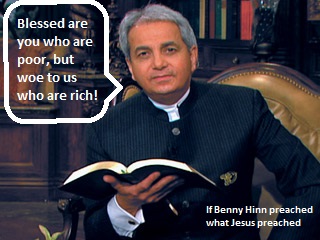
John MacArthur is one of the leading cessationist theologians of today (cessationist meaning someone who thinks the miraculous gifts of the Spirit have ceased), and you may remember his name from my post What if Jesus Preached what Modern Preachers are Preaching where I tried to show how stupid it would look if Jesus had said what MacArthur is saying. MacArthur’s teaching has been widely criticized by many, and one of the best rebutals is in my opinion Jack Deere’s Surprised by the Power of the Spirit, where he explains how he went from being a cessationist to a charismatic evangelical and where he basically brings up all cessationist arguments used by MacArthur and crushes them to little tiny pieces.
It seems like MacArthur has changed tactics since then. Right now he is organizing a conference called Strange Fire which isn’t arguing for cessationism so much as it is accusing the majority of the charismatic movement to be heretic, demonic and a dangerous cult. Nothing new, already G. Campbell Morgan said that Pentecostalism is “the last vomit of Satan”, so MacArthur is basically continuing an embarassing evangelical tradition of demonizing Christians who don’t agree with him.
MacArthur’s argument is of course ridiculous and its main accusation, that most charismatics offer false worship, is non-valid since even if you disagree with charismatics you have to admit that their worship to Jesus is extremely passionate compared to many other churches. But I’m not going to waste ink on arguing for the sanity of the charismatic movement but bring the discussion back to its original issue: the cessation or continuity of the gifts. In my opinion, it is cessationism that is truly “strange”, it’s an unbiblical, irrational and, quite frankly, very boring theology.
Cessationists do not argue that all gifts of the Holy Spirit ceased with the apostles, simply because knowledge, compassion and faith (Rom 12:8, 1 Cor 12:8-9) clearly are still around. Instead, they argue that the supernatural gifts of the Spirit have ceased while non-supernatural (like the ones I just mentioned) are still here. Problem is: this distinction is totally unbiblical. When Paul talks about Spiritual gifts he never categorised them in supernatural and non-supernatural, and he doesn’t label some cessational and others continual.
Christian Agnosticism vs Holy Spirit
Holy Spirit - not an agnostic
Christian agnosticism is when Christians claim that we cannot know what God wants. Some Christian agnostics apply their agnosticism to minor theological issues like what party we should vote for, or whether the church building should be white or brown. Others apply it to major theological issues, like what happens after we die or if Jesus really is the exclusive way to God. In the latter case, the line between Christian agnosticism and agnosticism, where you’re not even sure if God exists, is very thin.
I think that one of the major causes of Christian agnosticism is a lack of charismatic experience, i.e. Holy Spirit fire signs and wonders explosion BAM! I base this on the brilliant passage of 1 Corinthians 2:7-16:
We declare God’s wisdom, a mystery that has been hidden and that God destined for our glory before time began. None of the rulers of this age understood it, for if they had, they would not have crucified the Lord of glory. However, as it is written: “What no eye has seen, what no ear has heard, and what no human mind has conceived” — the things God has prepared for those who love him. (1 Cor 2:7-9)
Here, Paul does indeed talks about God’s mystery that He had hidden from humankind throughout the ages, referring to how Jesus is the Son of God who would save the world through a bloody death on the cross. Obviously, few had guessed that this was the way in which we would be saved, but now it is revealed. And how was it revealed? By the Holy Spirit!
These are the things God has revealed to us by his Spirit. The Spirit searches all things, even the deep things of God. For who knows a person’s thoughts except their own spirit within them? In the same way no one knows the thoughts of God except the Spirit of God. What we have received is not the spirit of the world, but the Spirit who is from God, so that we may understand what God has freely given us. (vv. 10-12)
God vs Poverty, part 1: Loving
As promised, here comes the first part of the new official sequel to God vs Wealth, creatively called God vs Poverty. While the former video series discussed whether a Christian should be rich or not (and found out that the answer was “not”), this series will look at what the Bible says about poverty reduction. It was filmed when I visited Iris South Africa (with a lot of wonderful children “helping” me with the shooting) and consists of five parts:
- Loving
- Giving
- Working
- Liberating
- Praying
In this first part, I argue that poverty reduction must be based on love and that one of the main economic problems in the world is that the rich don’t know the poor. South Africa is one of the most unequal countries in the world and the reason is of course that the rich separated themselves and refused to get to know the poor. When people from different socio-economic classes become friends, it will be impossible for the wealthy to ignore their needs and problems of the needy. Our generosity should not be excluded to people we know of course, but if we only know people with our own socio-economic status, something is terribly wrong. (more…)
Capitalism and the Sin of Self-Interest

Yesterday, IPCC presented the first part of their new report about climate change in Stockholm, Sweden, and it was yet another reminder of the horrible catastrophy we have put ourselves into. The economic system that created climate change and other environmental problem is structurally wicked and needs to change quickly if we are going to save the lives of all the people that are in risk of dying because of environmental destruction and natural disasters. We have to challenge and change capitalism.
All the bishops of the Lutheran Church of Sweden wrote an article in our biggest newspaper today where they argued that changing our lives in response to climate change is a spiritual matter that the church has to adress. I completely agree. In fact, I think the reason why the capitalist economic system has put us into this mess is because it is detached from Christian holiness.
Of course, not everyone think this is the case. I once read an article by a Christian who claimed that the Bible supports capitalism, and he challenged the “misconception” that capitalism is based on greed and thus is sinful. This is not the case, he said, because self-interest does not equal greed, but is something all people base their lives on. Whenever we eat a sandwich we do it out of self interest, and there is nothing wrong with that, he said.
The problem with this argument is that the Bible actually says that self-interest is wrong:
“Do nothing out of selfish ambition or vain conceit. Rather, in humility value others above yourselves, not looking to your own interests but each of you to the interests of the others.” – Phil 2:3-4
What if Modern Preachers Preached What Jesus was Preaching?
It’s finally here – the sequel to the extremely popular post What if Jesus Preached What Modern Preachers are Preaching! Get ready for…
What if Modern Preachers Preached What Jesus was Preaching?


Three Views on Speaking in Tongues
This is a guest blog by my dear Australian friend Andrew Meakins, whom I share Facebook page with.

Pentecostés. Óleo sobre lienzo, 275 × 127 cm. Madrid, Museo del Prado. (Photo credit: Wikipedia)
1) The Pentecostal view of tongues: Speaking in tongues is the initial evidence of the baptism in the Holy Spirit. The baptism in the Holy Spirit is a once only experience. Tongues is for every believer.
2) The Charismatic view of tongues: Speaking in tongues is a gift of the Spirit which usually accompanies the baptism in the Holy Spirit but not always. The baptism in the Holy Spirit is not a once only experience but a continual infilling that can manifest itself in different ways. Tongues are for every believer who desires the gift.
3) The Third Wave view of tongues: Speaking in tongues is a gift of the Spirit which sometimes accompanies the baptism in the Holy Spirit. The baptism in the Holy Spirit is not a once only experience but a continual infilling that can manifest itself in different ways. Tongues may not be for every believer but every believer is free to ask for it.
I’m inclined to go with the third wave view, because it’s more inclusive of all believers. There are some Christians who seemed to obviously be empowered by the Holy Spirit but never spoke in tongues (as far as we know). John Wesley is an example. The other benefit of the Third Wave view is it doesn’t put tongues as a measure of spirituality or maturity but simply as another gift that can edify us. On the other hand, I’m very grateful I was taught in the Pentecostal church initially because I was encouraged to earnestly desire to speak in tongues. Without that extra encouragement, I don’t think I would have pursued the gift. From my personal experience, the gift of tongues revolutionized my prayer life but having this gift doesn’t make me better than any other Christian.
Why John Piper is Wrong about Prophetic Dreams

John Piper (Photo credit: Wikipedia)
I wrote the other day about how thousands of Muslims become Christians because they claim to have seen Jesus in a dream. As I was googling “Muslims Jesus dream” to find testimonies about this to link to, I also came across criticism of this phenomena by reformed pastor John Piper. Piper says that he is “very suspicious” to these claims because the Biblical model of evangelism is not hearing the Gospel through dreams but through a preacher:
“Jesus coming to them in their head, preaching the Gospel to them that they have never heard of before, and believing and being saved… that I am suspicious of… big time,”
“The Gospel needs to be heard. How shall they believe unless they hear and how shall they hear without a preacher and how shall they preach unless they be sent. That’s a pretty significant argument in Romans 10… It says, how shall they preach unless they be sent? It doesn’t say, oh they can preach in a dream when they are not even there.”
I think there are several problems with this argument. First of all, dreams and visions are a very common way for God to communicate to people in the Bible. As Jack Deere write in his awesome book Surprised by the Voice of God:
According to the Bible, dreams and visions are the normal language of the Holy Spirit when God speaks to hos prophets. Numbers 12:6 says, “When a prophet of the Lord is among you, I reveal myself to him in visions, I speak to him in dreams.” Joel promised that one day drams and visions would be common among the people of God, saying, “And afterward, I will pour our my Spirit on all people. Your sons and daughters will prophesy, your old men will dream dreams, your young men will see visions. Even on my servants, both men and women, I will pour out my Spirit in those days” (Joel 2:28-29). The apostle Peter claimed that the coming of the Spirit on Pentecost began the fulfillment of Joel’s prophecy (Acts 2:16ff.).
God vs Wealth, part 9: The Prosperity Gospel
To read other parts of the series, go here.

Image from internetmonk.com
The prosperity gospel is a popular teaching in many Pentecostal and neo-Pentecostal churches. Even though there are a lot of different views on prosperity, the concept is usually understood as economic blessings that God wants to give all believers. If you have a strong faith in God, you’ll get rich. Godliness is a means to financial gain.
But what does the Bible say? Well, in 1 Tim 6:5, Paul speaks about “people of corrupt mind, who have been robbed of the truth and who think that godliness is a means to financial gain.” So the prosperity gospel is simply corrupt and untrue. He goes on saying:
But godliness with contentment is great gain. For we brought nothing into the world, and we can take nothing out of it. But if we have food and clothing, we will be content with that. Those who want to get rich fall into temptation and a trap and into many foolish and harmful desires that plunge people into ruin and destruction. For the love of money is a root of all kinds of evil. Some people, eager for money, have wandered from the faith and pierced themselves with many griefs. (vv. 6-10)
Should Christians Wear “Formal” in Church?

Around the world, many people dress “properly” when they go to church, meaning wearing expensive stuff like suits, dresses, and jewelry. Especially pastors and preachers are expected to wear expensive. I don’t like this for the following reasons:
1. The poor are alienated. Some people are basically so poor that they don’t afford a suit, and the preachers silently distances themselves from them. I know a man in Sweden who told a minister “Thank you so much that you wear normal clothes when you preach, I always feel excluded when the pastor wears a suit.” Clothes are symbols, and “formal” clothes are symbols of wealth. It just doesn’t match with James 2:1-7.
2. It’s based on the thought that church is something you “go to” at a specific time at a specific day, while the Scriptures says that the believers are the church at all times. We are not in God’s house more when we are dressed up in church compared to when we are naked in the shower. Thus, it doesn’t make sense to wear differently than usual when you “go to church” because you ARE the church 24/7.
3. Above all: it’s simply not biblical to dress expensive when you go to church. Some people try to create a theology around it, claiming that it’s honoring God and stuff. But the Bible never says that, and we never read that the disciples dressed in a certain way during their meetings. The only time the New Testament talks about expensive clothes and jewelry is when it forbids us to wear it (1 Timothy 2:9, 1 Peter 3:3)!
God vs Wealth, part 8: Were Jesus and Paul Rich?
To read other parts of the series, go here.
 I always get confused when some Christians argue that Jesus was rich, since it is like claiming that Donald Trump is poor. How can you think that a homeless, jobless foot-walking preacher was wealthy? Have they found a hidden Bible verse that states that Jesus had a mansion somewhere, despite saying that “the Son of Man has no place to put his head” (Mt 8:20)? Have they found an ancient document that shows that He actually owned a jet plane? My Bible says that he was totally aid-dependent, recieving His support from women and sharing everything with His disciples, practicing community of goods (Lk 8:1-3, Jn 13:29).
But the main argument for the rich Jesus is His seemless garment. John 19:23-24 says:
When the soldiers crucified Jesus, they took his clothes, dividing them into four shares, one for each of them, with the undergarment remaining. This garment was seamless, woven in one piece from top to bottom.
“Let’s not tear it,” they said to one another. “Let’s decide by lot who will get it.”
This happened that the scripture might be fulfilled that said,
“They divided my clothes among them
and cast lots for my garment.”
I’ve seen countless articles and heard many sermons that use this passage to prove that Jesus was rich, since they claim that a seemless garment must have been the clothing of the wealthy. I’m not sure if I would call a homeless, jobless, foot-walking guy who didn’t have anything but a shirt rich though. And more importantly, I can’t find any evidence that only rich people had seemless garments. The Bible sure never says it. And it isn’t hard to create seemless clothing. All you really need to do is to cut a hole in a blanket and ta daa – you got a seemless poncho.
Is the Bible Supporting Capitalism or Communism?

The other day a friend sent me this article, written by Swedish economist Paul Segerstrom, about “what the Bible teach about economics”. The title should rather have been “Why capitalism rocks and communism sucks, and here’s some Bible quotes to prove my point”. It isn’t well written and it is using very weak arguments. I still want to comment it though, since it is an oppurtunity for me to share what I think about capitalism vs communism (hint: I think the Kingdom is better than both of them).
In summary, Segerstrom is saying that the Old Testament is teaching great respect for private property, especially in the tenth commandment (“you shall not covet… anything that belongs to your neighbor” – Ex 20:17). The Old and New Testament is a unity and both Paul and Jesus were teaching about the ten commandments, thus they also defended private property. Of course, we should be generous in charitable giving to the poor, Segerstrom is careful to emphasise this – still he doesn’t like equality but says that good ol’ Abraham proves that we can and should be richer than others.
Segerstrom is stating several times that some Bible verses indeed can be used to support socialism “if taken out of their context”. However, he is not commenting any of them. He’s not even mentioning the community of goods in Acts 2 and 4, something you would expect from a real study about “what the Bible says about economics”. It gets really awkward in the section “What does Jesus teach about economics?” (p. 13) where Segerstrom quotes Matthew 19:18-19 to show that Jesus wants us to follow the ten commandments, but doesn’t even mention verse 21 in the same chapter where Jesus is commanding the rich man to sell everything he has and give to the poor – nor any other of Jesus’ countless economic teachings!
The Book of Psalms

The Book of Psalms
The book of Psalms is a devotional worship section of the Bible. It records some of the most intimate prayers and worship songs of Biblical saints. When we read the book of Psalms, it is as though we are stepping into God’s house and reading his private love letters. There is something very sacred about them. They reveal not only the character and yearnings of the sender but also the receiver. Reading these verses, not only gives us encouragement to speak to God with boldness and honesty, but also gives us a glimpse of the magnificence of our God through his communication with these saints.
In Psalms, God is portrayed as omnipotent and omnipresent. He is the creator of all things. He is full of love and has compassion for all he has created. As a ruler, he is just. He has deep concern for the world and listens to the righteous, forgiving those who humbly repent of their sins and turn to him.
By praying the eloquent words of the Psalms, we are able to bare our souls to God in a spirit-led way that brings healing and encouragement, especially in times of personal crisis.
The book reveals that Biblical saints did not just think positive and be happy, when faced with doubt and depression but expressed their honest feelings and confessed their transgressions. In doing so, they brought everything that weighed upon their souls into the light, both their joys and sorrows.
God wants an honest relationship with us, not a false one. He does not value us singing empty words of praise if that is not what we’re really feeling. Although we should praise him at all times, even when full of doubt and disillusionment, we should not pretend to be happy if we are not. In a superficial relationship, people will put on a smile and talk about things which they feel will be acceptable to each other but in an intimate friendship, people will bare their souls to one another. It is clear that the writers of the Psalms, not only bared their souls to God, but were also aware of God’s feelings towards them, which shows us they were trusted friends of God.
By Andrew Meakin http://outreach7.webs.com/
Joseph

This is the story of Joseph.
Joseph was the son of Jacob who was the son of Issac, who was the son of Abraham who God had made a covenant with that his descendants would be as numerous as the stars.(Genesis 15:4) Joseph was son number 11, Jacob had 12 sons(Genesis 35:23-26). Joseph’s brothers hated him because Jacob favoured Joseph and gave him a coat of many colours. (Genesis 37:3-4).
One night God sent Joseph a dream and in this dream, he and his brothers were binding sheaves of grain, when all of a sudden, his sheave arose and stood upright, while his brothers sheaves gathered around his and bowed down to it. The dream showed him he would one day rule over his brothers. So when he woke from that dream, he immediately shared it with excitement with his brothers, who not surprisingly did not share his enthusiasm and they hated him even more. Then he had another dream in which the sun, the moon and 11 stars bowed before him, representing his father and mother and 11 brothers. When he shared this dream, even his father was offended. (Genesis 37:5-10).
So his older brothers went out to feed the flock. Jacob told Joseph to go and see how his brothers were doing. So Joseph went searching for his brothers and finally found them but when they saw him coming from a distance they said “Here comes that dreamer! Let’s throw him into a pit and say a wild animal devoured him, than ripped off his coat of many colours and threw him into a deep pit to die. Then we’ll see what becomes of his dreams!” So when he came, they grabbed him, ripped off his coat of many colours and threw him in a pit. (Genesis 37:19-23).
The Gospel told entirely from Old Testament prophesy

5:2)
“Therefore the Lord himself shall give you a sign; Behold, a virgin shall conceive, and bear a son” (Isaiah 7:13)
“For unto us a child is born, unto us a son is given: and the government shall
be upon his shoulder: and his name shall be called Wonderful, Counsellor, The
mighty God, The everlasting Father, The Prince of Peace. Of the increase of his
government and peace there shall be no end, upon the throne of David, and upon
his kingdom, to order it, and to establish it with judgment and with justice
from henceforth even for ever. . . . ” (Isaiah 9:6-7)
“Who hath believed our report? and to whom is the arm of the LORD revealed? For
he shall grow up before him as a tender plant, and as a root out of a dry
ground: he hath no form nor comeliness; and when we shall see him, there is no
beauty that we should desire him. He is despised and rejected of men; a man of
sorrows, and acquainted with grief: and we hid as it were our faces from him; he
was despised, and we esteemed him not. Surely he hath borne our griefs, and
carried our sorrows: yet we did esteem him stricken, smitten of God, and
afflicted. ” (Isaiah 53:1-4)
God vs Wealth, part 7: The Woman with the Alabaster Jar

Image from theepottershand.com
In the previous parts of my God vs Wealth series, I’ve explained why I’m convinced that Christians neither should be rich nor spend money on unnecessary stuff like luxury, beauty products and entertainment. There’s a common counter argument against this though: the woman with the alabaster jar.
In Matthew 26, Mark 14 and John 12, we read about this woman who poured out really expensive perfume from her alabaster jar on Jesus’ body. The disciples get upset and tell her that that perfume could have been sold for a lot of money, which could have been given to the poor.
However, Jesus’ defends the woman and calls her act “beautiful”. Countless (rich) Christians have told me that this is the proof that there are times when we don’t have to give our money to the poor but spend them on luxury instead. If it was okay for Jesus, and He was sinless, why would it be a problem if we from time to time enjoyed some extravagance and glamour?
My answer to that is that this text cannot be applied to any situation today whatsoever. I’ll show you what I mean. Firstly, we have to realize that the disciples are doing something very logical if we think about the teaching Jesus already has given them. He commanded them in Lk 12:33 to sell everything they have and give the money to the poor – of course they get upset when a woman refuses to do the same with an extremely expensive perfume (it says that it was worth 300 denarii – a year’s wage for the avarage worker).

