
Home » Church & Theology (Page 8)
Category Archives: Church & Theology
The author

Micael Grenholm, a Swedish charismactivist, apologist and author.
The Problems with the Lutheran Augsburg Confession

Illustration of the Confession by Wenceslaus Hollar
I was raised in the Lutheran Church of Sweden, the biggest church in my country, formerly state-church, with around seven million members of whom 85 % according to a recent poll don’t believe in Jesus. When I was saved in 2006, Martin Luther was one of my spiritual heroes. As I read the Scriptures and compared it to Catholicism I realized that they had added a lot of stuff that Jesus and the apostles never talked about, and I thought Luther was one of the first to realize that and to resurrect the original Gospel. Arguing that Scripture should be the only source to theology and pointing at Paul’s emphasis on justification by faith and grace, he criticized the unbiblical Catholic indulgence and several unbiblical doctrines. I thought Luther was awesome.
As I learned more about Luther and Lutheranism however, I started to realize that perhaps he wasn’t entirely biblical either. In fact, he changed the order of biblical books according to his personal opinion, placing the letter of James, one of my favourite biblical books, last because it didn’t make sense with his interpretation of sola fide. And he was a quite violent man, justifying wars, capital punishment, persecution against Jews and execution of Anabaptists. In fact, as I discovered the existance of Anabaptists and their radical, pacifist Jesus-centered theology, I realized that Luther was not the only one protesting against Catholic errors, and far from the best.
I hope to return to my criticism of Luther in a future post, but right now I want to turn to the Augsburg Confession, one of the most important Lutheran documents that actually is one of the primary faith documents of the Church of Sweden, in line with the Nicene Creed. It’s a really weird document. It starts like this:
Most Invincible Emperor, Caesar Augustus, Most Clement Lord: Inasmuch as Your Imperial Majesty has summoned a Diet of the Empire here at Augsburg to deliberate concerning measures against the Turk, that most atrocious, hereditary, and ancient enemy of the Christian name and religion, in what way, namely, effectually to withstand his furor and assaults by strong and lasting military provision…
The Absense of the Holy Spirit Within Academic Theology
This is an assignment I’ve written for my dogmatics course at Johannelund Theological Seminary.

Alister McGrath’s Christian Theology is a standard introduction work for thousands of students that take courses in Christian dogmatics, including the people at my seminary. On 500 pages, McGrath talks about the most central issues of systematic theology. Five of those 500 pages are about the Holy Spirit. In comparison, 50 are dedicated to the doctrines of the church and the sacraments.
McGrath admits that the Holy Spirit should deserve a chapter of his own, especially with the popularity of the charismatic movement in mind, but still he doesn’t create such a chapter but restricts himself to five pages. Here, he writes about how the Holy Spirit is described, the debate concerning the Spirit’s divinity and finally what the Holy Spirit does. Only one paragraph is dedicated to charisms, the emphasis of the charismatic movement. One paragraph in a 500 page-book.
I would say that this priority is out of touch with reality. There are around 600 million charismatics and Pentecostals worldwide, most of them in developing nations, that are very interested in the Holy Spirit and his gifts. They have realized that the New Testament very often connects the Spirit to miracles, and that the miraculous power of the Spirit is accessible to all believers. Sharing this common knowledge, there is disagreement however on how one gets baptized or filled with the Spirit, how to pray for healing, how to hear the voice of God, the role of speaking in tongues, etc. In other words, there is certainly enough material for McGrath to fill a chapter.
Yet, he doesn’t, and I think it is not so much his personal fault but rather a tendency within academic theology as a whole: charismatics are excluded from theological discussion. This can also be seen in Norwegian theologian Jan-Olav Henriksen’s introduction to dogmatics: the chapter about the Spirit is combined with the chapter about the church, to hide the embarrassment of only giving six pages to the Holy Spirit. Just as in McGrath’s work, emphasis lies on the Spirit’s soteriological role, while charismatic phenomena are de-emphasized.
Why does it look like this? Let me share some theories.
The Promised Land, part 4: Has the Church Replaced Israel?

Stephen Sizer
The Promised Land is back! In the previous parts of the series, we have looked at the origin of Christian Zionism, we saw that it was totally absent in the early church and we have discussed how important it is to realize that just because one isn’t a Christian Zionist, one isn’t necessarily an anti-Semite (and shouldn’t either). Now, we will turn to exegesis to see what the Bible has to say about Israel and the Promised Land. Let’s start by discussing God’s Chosen People.
Israel is the name of a man, Jacob, and it was used to describe his descendants. These were expected to believe in the Lord, and thus be God’s people, but they were actually not the only ones that belonged to Israel. This is something Stephen Sizer has pointed out (and the following account is based on his works): the requirement to belong to God’s people was and is primarily faith, not race. In the Psalms, we read:
“I will record Rahab and Babylon among those who acknowledge me—Philistia too, and Tyre, along with Cush—and will say, ‘This one was born in Zion.’ Indeed, of Zion it will be said, ‘This one and that one were born in her, and the Most High himself will establish her.’ The Lord will write in the register of the peoples: This one was born in Zion.” (Ps 87:4-6)
Here, we see that Egyptians, Iraqis, Palestinians, Lebanese and Ethiopians all can be recognized as “born in Zion”, receiving full membership and citizenship of God’s people, if they acknowledge the Lord. Already Moses said in Deut 23:7-8: “Do not despise an Edomite, for the Edomites are related to you. Do not despise an Egyptian, because you resided as foreigners in their country. The third generation of children born to them may enter the assembly of the Lord.” In Esther 8:17 we read “And many people of other nationalities became Jews because fear of the Jews had seized them.” The requirement to belong to God’s people was faith, not race or nationality.
Why Don’t We Serve on Sunday Services?
In this clip, my favourite theologian John Wimber shares how he thought a church service looked like before he, as a newly converted believer, had ever visited one. He thought that people met at church, worshipped, had a good time and then decided who should go where: “You go downtown, I’ll take Anaheim”, etc. Then they would go out, heal some sick, cast out some demons and lead a few people to Christ, and then they would have lunch afterwards.
Unfortunately, John’s church wasn’t like that. After having attending a whole bunch of boring services he once asked his pastor “When are we gonna do the stuff?” “What stuff?” “You know, the stuff Jesus did – healing the sick, raising the dead” “Well, we don’t do that anymore. You just have to believe that it was done once.” John was confused and asked “What do we do then?” “What we did last morning!” John gasped: “For this I gave up drugs?”
I had similar thoughts when I was a new believer. I always thought it was strange that the church meetings were called “services”, since 95% of the people in my church weren’t serving very much. In fact, we hardly did anything except singing a few hymns and walking to the altar to receive communion.
When I later on joined a charismatic church the singing part got a bit more active, but beside that you didn’t do anything in church except receiving – receiving a sermon, receiving prayer or receiving a cute song from the Sunday school group.
(more…)
Our Orthodox Heritage

The Church of the Holy Sepulchre, where it is belived that Jesus died and rose again
For several years I have preached that we must resurrect the Jerusalem church. This church combined amazing miracles with radical economic equality, they were zealous in evangelism so that people came to faith every day, and they faithfully hold on to the teachings of the apostles (Acts 2:42-47). They were in all ways doing church as Jesus wanted them to do, since it was led by His hand picked apostolic disciples. From the first post I wrote on this blog throughout my writing, I’ve emphasized that we must be like the church of Jerusalem.
Yesterday I found their website.
The greek orthodox patriarchate of Jerusalem seems to be the exactly sam church that was founded on the day of Pentecost 2’000 years ago. Even if Jerusalem has been conquered and even destroyed a couple of times the church claims to have an apostolic succession back to good ol’ James, Jesus’ brother. They celebrate their services in Koine Greek, the language of the New Testament, and their main church is built upon the place where they think that Jesus died for our sins and rose from the dead. I find this extremely cool.
World Council of Churches Focuses on Peace and Justice

I really like the WCC. I like how they recognize how global Christianity is and that they want to learn and bless each other in order to be able to celebrate communion together. And I really like how they emphasize peace and justice. What I hope is that they also will inspire to global revival.
What the Holy Spirit has done in the 20th century through the charismatic movement is truly ecumenical. On Asuza Street, people from all denominations were welcome to experience the baptism of the Spirit. After creating its own distinctive denominational movement, Pentecostalism, the fire started to spread into mainline churches. Today, charismatics can be found in basically all Christian traditions and in all nations were Christianity is found.
The Top Seven Strange “Strange Fire” Statements
As I’ve written before, evangelical pastor John MacArthur has recently organized a conference called “Strange Fire” and will publish a book by the same name, where he argues that the majority of the charismatic movement is a crazy, heretic, demonic mess. As I’ve gone through what MacArthur said at the conference I’ve realized that the event really lives up to its name. Here are the top seven strange Strange Fire statements!

Related articles
- The Good, the Bad, and the Ugly in John MacArthur’s Opening Address (marccortez.com)
- Not All Charismatics Bark Like Dogs (sacredprofane.wordpress.com)
- ‘Strange Fire’ Conference: Oh, MacArthur… (amyhopefrancis.com)
- John MacArthur’s #StrangeFire And Arlene Sanchez Walsh’s Latino Pentecostal Identity (politicaljesus.com)
A Response to Tom Pennington’s Seven Cessationist Arguments

Tom Pennington
While the strange Strange Fire conference mostly was dedicated to accuse the majority of charismatics for being weird, heretic non-Christians (yes, John MacArthur did say that most of us are non-Christians), at least one session was about the root cause of these people’s uncomfortability with the charismatic movement: their cessationist belief. I gave a short summary of why I think cessationism is unbiblical in my previous post, but I felt that the cessationist arguments given at Strange Fire were so bad that I cannot let them pass unanswered. The session was held by Tom Pennington and here are a short summary and a longer transcription of his lecture.
Before Pennington even starts to give his seven “biblical” arguments for cessationism, he admits that “the New Testament nowhere directly states that the miraculous gifts will cease during the church age.” Amen to that. But then he simply states that this is irrelevant “because the New Testament doesn’t directly say they’ll continue either.”
Wow, now I feel tempted to produce my own gospel. I don’t like to pray very much, so I’ll just preach that we don’t have to pray in the post-apostolic age. And if someone would say to me “The Bible actually never says that we should cease to pray” I will simply answer “it doesn’t directly say we should continue praying either.”
For a Bible-believing Christian who thinks that we should base our lives on the life and teaching of Christ, the burden of proof lies on the cessationist, not on the continuationist. Jesus commanded his disciples to heal the sick and cast out demons (Mt 10:6-8), and then he ordered them after His miraculous resurrection to teach their disciples everything He had commanded them (Mt 28:20). It’s Tom Pennington’s job to prove that we should not do the stuff that Jesus and His disciples did, the burden of proof does not lie on the charismatics.
All right, here are Pennington’s arguments:
1) “There were only 3 primary periods in which God worked miracles through unique men. The first was with Moses; the second was during the ministries of Elijah and Elisha; the third was with Christ and his apostles. The primary purpose of miracles were to establish the credibility of one who speaks the word of God—not just any teacher, but those who had been given direct words by God.”
I thought people didn’t believe in the “three miraculous periods” stuff anymore. The book of Judges is filled with miracles and prophecies. The book of Daniel as well. Genesis, Isaiah, Jonah – they all account for amazing miracles. And the whole Bible is per definition filled with the gift of prophecy!
Christian Agnosticism vs Holy Spirit
Holy Spirit - not an agnostic
Christian agnosticism is when Christians claim that we cannot know what God wants. Some Christian agnostics apply their agnosticism to minor theological issues like what party we should vote for, or whether the church building should be white or brown. Others apply it to major theological issues, like what happens after we die or if Jesus really is the exclusive way to God. In the latter case, the line between Christian agnosticism and agnosticism, where you’re not even sure if God exists, is very thin.
I think that one of the major causes of Christian agnosticism is a lack of charismatic experience, i.e. Holy Spirit fire signs and wonders explosion BAM! I base this on the brilliant passage of 1 Corinthians 2:7-16:
We declare God’s wisdom, a mystery that has been hidden and that God destined for our glory before time began. None of the rulers of this age understood it, for if they had, they would not have crucified the Lord of glory. However, as it is written: “What no eye has seen, what no ear has heard, and what no human mind has conceived” — the things God has prepared for those who love him. (1 Cor 2:7-9)
Here, Paul does indeed talks about God’s mystery that He had hidden from humankind throughout the ages, referring to how Jesus is the Son of God who would save the world through a bloody death on the cross. Obviously, few had guessed that this was the way in which we would be saved, but now it is revealed. And how was it revealed? By the Holy Spirit!
These are the things God has revealed to us by his Spirit. The Spirit searches all things, even the deep things of God. For who knows a person’s thoughts except their own spirit within them? In the same way no one knows the thoughts of God except the Spirit of God. What we have received is not the spirit of the world, but the Spirit who is from God, so that we may understand what God has freely given us. (vv. 10-12)
Is the Church of Acts Abnormal?

In my pursuit for combining signs and wonders with peace and justice, I often get to see parallells between the Charismatic and activist streams of Christianity. One is that both want to get back to the original church; Pentecostals, as you probably know, want to resurrect the charismatic explosion of Acts 2, and radical Christian activists want to see the community of goods and the overflowing love and unity of Acts 2.
But then there’s a problem both parties face. Some Christians don’t want to return to Acts, basically because they argue that Acts was temporary – we’re not supposed to live like that any longer. You will find this among cessationists, who argue that the miracles in the book of Acts died with the apostles, and among most other Christians as well who argue that the community of goods and radical economic equality of the early church was just a temporary experiment. The church of Acts may have been good for that time but is not very relevant for our churches today. Guess we’re smarter now, or something.
This view has always surprised me since the very reason we value the New Testament as the Word of God is that it’s written by the apostles, or their direct disciples. The apostles had authority (Acts 2:42) since they were elected by Jesus and were the first church leaders. How come that we value their words more than their lives? If they were healing the sick and practicing community of goods, how could that possible be abnormal Christian living?
Jack Deere has written about this. He’s an ex-cessationist who became one of the main leaders in the Charismatic Vineyard movement after the Vineyard pastor John White went to his church and healed som people and drove out some demons. He really nails the problems with the theology of the abnormal Acts in his book Surprised by the Voice of God (Kingston 1996, ss. 61-63), which I qoute below: (more…)
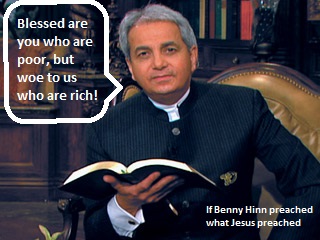
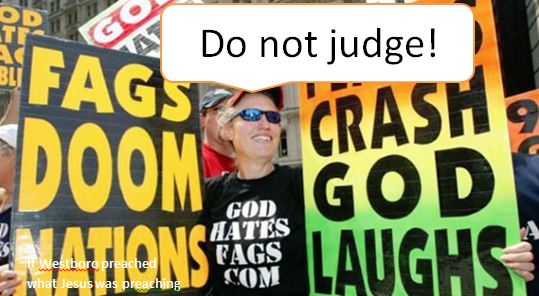
What if Modern Preachers Preached What Jesus was Preaching?
It’s finally here – the sequel to the extremely popular post What if Jesus Preached What Modern Preachers are Preaching! Get ready for…
What if Modern Preachers Preached What Jesus was Preaching?

The Promised Land, part 3: Supersessionism = Antisemitism?
For the rest of the blog posts in this series, go here.

John Chrysostom, who used antisemitic rhetoric (Photo credit: Wikipedia)
As we’ve seen in the previous parts of this series, Christian Zionism is a new theology; it did not exist in the early church and has in its current version only existed for about 150 years. Before that, supersessionism was basically the universal teaching of the church. This is the teaching that Christ has fulfilled the promises to Israel and welcomed Gentiles into God’s people while those who do not believe in Him has been excluded from this people. Thus, the promise of the land does not refer to the Jewish people any more but to the church, which supersessionists interpret as the promise of Heaven.
We will look at the biblical foundation for this teaching in the next parts of this series. For now, I want to discuss whether this theology is antisemitic, which some Christian Zionist claim. When they talk about how the early church was “hijacked” by Gentiles that replaced Zionism with supersessionism (which was hard to do since there is no evidence for Christian Zionism in the early church to begin with), they often quote other church fathers, like John Chrysostom, who were downright antisemitic, and jump to other periods of church history when Christians have done horrible things towards Jews and argued that this is rooted in supersessionism. You can see example of this reasoning here and here.
The problem with this argument is that it fails to show how supersessionism would lead to antisemitism. All the texts I have read just assumes that this is the case rather than proving it. Instead of showing a logical connection between supersessionist and antisemitic thought, they merely point to antisemitic rhetoric and action through church history and say that since they were supersessionists, supersessionism causes antisemitism. (more…)


The Promised Land, part 2: The Men in Black Theory
For the rest of the blog posts in this series, go here.

The men in black using a neuralyzer
In the previous part of this series we looked at how the theology of Christian Zionism, which claims that the Jewish people must return to the land of Israel before the second coming of Christ, is very young. Its roots are found in the 16th century and its developed form didn’t appear until the 19th century. However, most Christian Zionists don’t view this as a problem, since they believe that this was not the birth of the theology but its resurrection – Christian Zionism was the original church teaching about the role of Israel, and the Puritans and Dispensationalists simply rediscovered it.
However, the early church did not believe in Christian Zionism. None of the church fathers, neither any anonymous early Christian writings, argued that the Jewish people must return to Israel before the second coming of Christ. On the contrary, they were supersessionists, teaching that Christ had fulfilled the covenant with and promises to Israel and that these now belonged to His followers, the church.
The non-existence of Christian Zionism in the early church is rather indesputable, even most Christian Zionists themselves acknowledge this. They claim that the apostles believed in Christian Zionism, but that it was immediately lost. I call this “The Men in Black Theory”. Just as the movie agents use their neuralyzer to erase people’s memories, Christian Zionism was suddenly deleted from the collective mind of the whole church right when the final pages of the New Testament was written.
The Promised Land, part 1: Origins of Christian Zionism
For the rest of the blog posts in this series, go here.
John Nelson Darby (1800-1882) (Photo credit: Wikipedia)
Israel should of course have all of the land that God gave them from the beginning, and then there is no space left for a Palestinian state.

This comment appeared two days ago on my Swedish blog in a discussion about the conflict in the Middle East. And this guy is not alone, millions of Christians think that it is God’s will for the Jewish people to possess all of the Biblical land of Canaan once more in order for Jesus to come back. While I honour their zeal against anti-semitism and passion to follow God’s will, I have to disagree with them.
In my opinion, Christian Zionism is not only unbiblical but it has had, and continues to have, very serious consequenses in the Middle East. In a blog series of approximately eight parts called “The Promised Land”. I will dig deeper into what Christian Zionism is, what it has led to in the Middle East and what the Bible really says.
In this first part, we will look at the historical origins of Christian Zionism. Benjamin Corey writes:
For those who grow up in churches that preach the Church and Israel distinction, this theology seems as if it is a normal part of orthodox Christianity, and never gets questioned. However, the truth is that this theology is a new theology and is not part of orthodox Christianity.
This theology was popularized by denounced heretic John Nelson Darby in the 1800′s. Darby is considered the father of dispensationalism, which is a dwindling subset of American Fundamentalism. Dispensationalism is a collection of extra-biblical beliefs (such as the “rapture”) which is typically known by a preoccupation on the end of the world, and a pessimistic worldview. Among Darby’s heresies included this new idea that God had two, simultaneous covenants, one for Jews and one for Gentiles.
 Charismactivism