Home » 2013 (Page 7)
Yearly Archives: 2013
The author

Micael Grenholm, a Swedish charismactivist, apologist and author.
God vs Wealth, part 7: The Woman with the Alabaster Jar
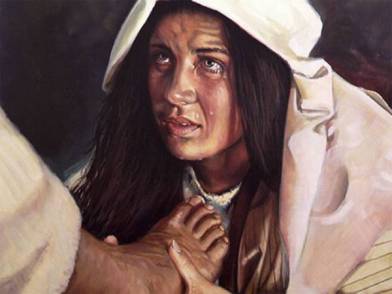
Image from theepottershand.com
In the previous parts of my God vs Wealth series, I’ve explained why I’m convinced that Christians neither should be rich nor spend money on unnecessary stuff like luxury, beauty products and entertainment. There’s a common counter argument against this though: the woman with the alabaster jar.
In Matthew 26, Mark 14 and John 12, we read about this woman who poured out really expensive perfume from her alabaster jar on Jesus’ body. The disciples get upset and tell her that that perfume could have been sold for a lot of money, which could have been given to the poor.
However, Jesus’ defends the woman and calls her act “beautiful”. Countless (rich) Christians have told me that this is the proof that there are times when we don’t have to give our money to the poor but spend them on luxury instead. If it was okay for Jesus, and He was sinless, why would it be a problem if we from time to time enjoyed some extravagance and glamour?
My answer to that is that this text cannot be applied to any situation today whatsoever. I’ll show you what I mean. Firstly, we have to realize that the disciples are doing something very logical if we think about the teaching Jesus already has given them. He commanded them in Lk 12:33 to sell everything they have and give the money to the poor – of course they get upset when a woman refuses to do the same with an extremely expensive perfume (it says that it was worth 300 denarii – a year’s wage for the avarage worker).
Seven Reasons Why Inequality Sucks

Inequality in Sao Paulo, Brazil. Photo: Milton Jung
I’ve already described how the Bible tells us to support social and economic equality and bridge the gap between the rich and the poor. Now that I am going to one of the most unequal countries in the world, I feel the need to return to this topic. Let me explain why I’m convinced that inequality is immoral, unjust and unholy.
There is a very common argument against equality, used by Christians and non-Christians alike: inequality is acceptable and right if everyone benefits from it. For example, if inequality produces more economic growth than equality would have done, and rich and poor alike benefits from this growth, then inequality is something good.
There are several problems with this argument:
1. Inequality produces social problems. In 2009, Richard Wilkinson and Kate Pickett authored a book called The Spirit Level, which looked upon how inequality impacts social issues in OECD countries. The results were staggering: they found correlation between inequality and infant mortality, crime, poor health, lack of education, etc. Of course the poor suffered most, but even the rich were worse off in unequal societies compared to equal ones. Thus, the thesis that everyone can benefit from inequality is not true when it comes to social aspects and quality of life.
Iris Relief Starts Supporting Syrian Refugees
I know, I’ve written about the crisis in Syria before, it shouldn’t be new to anyone that the humanitarian situation there is catastrophical. But things have become even worse. Today, leaders of four giat UN agencies – UNICEF, WFP, OCHA and UNHCR – published the video above were they demand more support for the humanitarian relief in Syrian and neighbouring countries. There isn’t enough money. People die because of lack of money. The political leaders of donor countries are to blame for this of course, but it won’t hurt if we dig in our pocket books ourselves to save lives.

Iris Relief, my favourite humanitarian organization, have now started to work with Syrian refugees. They write:
As of the beginning March 2013, Jordan has received over 320,000 Syrian refugees, with the numbers expected to double or triple over the coming months. There are wide spread shortages of food, water, medical, hygiene and education resources. Jordan is under pressure and struggling to keep up with the demand of the ever increasing basic needs of those seeking refuge. (more…)
The Ministry of the Apostle
Old School Apostle
“Pastor” comes from the Latin word for shepherd, and is commonly used as a description for the person leading a congregation. You know how many times the term is used in that sense in the Bible?
Once: Ephesians 4:11.
The other ministries Paul lists there – apostles, prophets, evangelists and teachers – are much more described and discussed in the Scriptures. Still, in many churches and denominations today, pastors are much more common than apostles and prophets (and often evangelists as well).
Let’s focus on the ministry of the apostle. The Greek word describes someone who have been send, a clear illustration to Matthew 28:18-20. Looking at the lives of Peter, James, John, Paul and the others we see that their ministry simply is about missions and church planting. It’s a translocal ministry that equip local churches and start new ones so that the Gospel may reach the end of the world.
Catholics and Orthodoxs have tried to replace the ministry of the apostle with church tradition. Protestants have tried to replace it with the Bible. In both cases, apostleship is viewed as something cessational and temporary, a ministry that gave us the foundation of our faith only in order to disappear after that. This is contradicted by the simple facts that:
1. Apostleship is never described in the Scriptures as something that would cease or decline; on the contrary, more and more apostles pop up the further we read the New Testament (Rom 16:7, 2 Cor 8:23).
Heading to Africa

People from Michael’s Children’s Village
You may have noticed that I’ve written a bit about South Africa lately. Well, that’s because I’m going there. Lord willing I will go to White River, Mpumalanga, in May, and visit Iris Ministries there. They have a children’s home called Michael’s Children’s Village which is led by Mozambiquians Surprise and Tryphina Sithole and Americans Teisa and Jean Nicole.
They’re practicing true charismatic activism. Surprise have seen food miracles as well as people raised from the dead, and at the Village they combine social work and compassion with prayer for signs and wonders. The reason it’s called Michael’s Children’s Village is that the arch angel Michael appeared to them and told them to start it.
There are huge needs of this type of social ministry in SA. Many may think of the country as a prosperous, emerging economy; however, it is one of the most unequal countries in the world. The traces of apartheid are still visible, damning millions of people into poverty while the richest only get richer.
Half of SA’s children live in poverty. 5.6 million South Africans suffer from HIV and over 200 000 die from AIDS annually. And the social unrest make crime very prevalent, making the rich isolating themselves from the poor even more.
School Revival in Port Elizabeth, South Africa
From an article by Gateway News, published a year ago:

Shannon-Leigh Barry
St Thomas High School in Gelvandale, Port Elizabeth has been transformed by a move of God over the past two months during which hundreds of learners have committed their lives to Jesus Christ and a number of miracles have been reported.
The revival began at a school assembly on Monday, March 5 when about 500 learners put up their hands when former St Thomas learner, Shannon-Leigh Barry, 25, asked for a response from anybody who wanted to know the Jesus that she had been speaking about. Shannon-Leigh was leading the assembly at the invitation of her father, Mark Barry, a teacher at the leading Northern Areas school which has more than 1 000 learners.
Since the March 5 assembly, several hundred more learners had turned to Jesus, and there were regular manifestations of spiritual gifts such as healings, prophecy and speaking in tongues at the ongoing revival meetings at the school during breaks and after school, said Shannon-Leigh in an interview yesterday.
Celebrate the New Arms Trade Treaty!
One year ago, me and my dear friend Michael Liliequist made a (very improvised) video clip lobbying for a global arms trade treaty, simply because selling bananas was more regulated than selling weapons:
A few weeks later we made a new (more directed) video explaining how much money is wasted on the killing industry instead of doing good things, like eradicating malaria:
And guess what? We did it!!
Living in Resurrection Power

I pray that the eyes of your heart may be enlightened in order that you may know the hope to which he has called you, the riches of his glorious inheritance in his holy people, and his incomparably great power for us who believe. That power is the same as the mighty strength he exerted when he raised Christ from the dead and seated him at his right hand in the heavenly realms, far above all rule and authority, power and dominion, and every name that is invoked, not only in the present age but also in the one to come. (Eph 1:18-21)
Christ is truly risen from the dead!! This is an undeniable cornerstone for our faith and should be central in the gospel we preach. If miracles cannot happen and Jesus has not risen, Christianity is worthless according to 1 Cor 15. But if miracles do happen and Jesus has risen, Christianity is the most important thing in the world.
But not only is the resurrection of Christ the basis for our doctrine, it should also be the fuel for how we live our lives. As Paul writes above, the same power that rose Jesus from the dead is in us. Through the Holy Spirit we have the same authority to do miracles like He did, the power of the resurrection is available for everyone who wants it!
The Role of Suffering in the Charismatic Movement

Image: Michael Clarke
We have now entered the holy week, the last step of lent in which the liturgical year remembers the passion, that is suffering, of Jesus. In my experience, it is not so common among Pentecostals and Charismatics to talk about suffering as something achievable. Rather, our emphasis on healing has often made us think that pain is always evil. And while I am convinced that we should always pray and work to alleviate involuntarily suffering, we should also be ready to suffer for Christ’s sake – and even count it as a joy! (Mt 5:11-12)
After all, we follow a crucified God who told us to take up our crosses and follow Him (Lk 14:27). He told us that we should expect persecution and turn the other cheek when attacked (Mt 5:39). We are also told in the Scriptures that we will experience spiritual trials and hardships (Jam 1:2ff.).
This may seem hard to sync with the Kingdom message of fighting suffering through healing, deliverance, poverty reduction and peacemaking. But it is one of the Kingdom paradoxes – while we should alleviate suffering, we should be ready to suffer. We should not seek suffering or be happy when others suffer, but when we are affected by suffering, which undoubtedly will happen from time to time, we should not interpret it as being abandoned by God but see it as a humiliating experience for us to identify ourselves with Christ.
Many Charismatics who experience a lot of miracles and breaktrough has also gone through deep pain. Smith Wigglesworth, the British Pentecostal healing preacher who raised several from the dead, lost his wife in the beginning of his ministry, and he himself got very sick in kidney stones. John Wimber prayed för thousands of people who got healed, but he died in a very painful fight against cancer. Heidi Baker is living in revival in Mozambique but just before the breakthrough she, her husband and her daughter were very, very sick and they had barely any money to continue.
(more…)
Holy Spirit Explosion in Stockholm, Sweden
One and a half year ago I attended a Healing School conference in Malmo here in Sweden, arranged by Global Awakening and New Wine Sweden. Randy Clark, Bill Johnson, Tom Jones and Will Hart were speaking in 26 different sessions about how to pray for the sick and seeing the Kingdom of Heaven manifest on earth. Many miracles happened during that conference, as can be seen in the video above that I made. For example, a guy named Magnus was damaged in a car accident 21 years earlier and got metal plates to stabilize the body, something that made it impossible for him to bow down entirely. He named and claimed his healing and bam – he could touch the floor.
With this wonderful conference in mind, I was excited when I attended the New Wine leader’s conference in Stockholm this week where Randy was the main speaker. It was the same message – healing does not belong to the church margins but is at the heart of the Kingdom – but he had some new wonderful testimonies that illustrated his points. For example, he showed us this powerful video about a woman getting healed from metal constraints, just like Magnus:
Randy Clark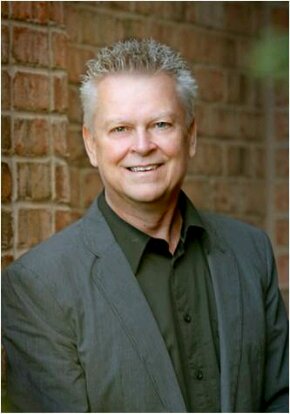
I like Randy. Even though I think his former mentor John Wimber (someone I keep comparing him with) had a slightly sounder theology at some points, I love his passion for Jesus, the Kingdom, and the spiritual gifts. His ministry, labeled by Wimber as apostolic, has changed the life of millions – including Heidi Baker. And God surely blesses his meetings through marvelous signs and wonders.
At the first night of the leader’s conference, a man started to shout joyfully and clap his hands. It turned out to be Pekka Liljeblom, a passionate Pentecostal evangelist – and a Facebook friend of mine. He got up on stage and explained that about 30 years ago, he got hurt in a boat accident and damaged his left eye. Since that day, he could only see ten centimeters with it. After receiving prayer at the conference however, his vision got restored with 90 %. He could now see to the other end of the room! I spoke with him two days later and his vision continued to improve.
“Show us that Jesus loves Zulus, and show us that whites can love blacks”

Flag of SA
From Jesus Army’s Radical Christian History series:
A building seating 10,000, crammed to capacity each week. 1,000 seekers daily. Healings. Deliverance. Radiant joy. A story from a revival of old? No. It is happening today in South Africa.
When Afrikaner Erlo Steegen was converted as a teenager he found the cry welling up inside him:
“Lord, I want to preach like You did!” He also felt his heart drawn to his black brothers. After some missionary training he acquired a tent and for twelve years preached the gospel among the spiritually starved Zulus.
Many came to the Lord as a result, yet few continued in the faith. Erlo was indignant that God was not being glorified and so he gave himself to prayer and the study of the Bible as well as reading about past revivals.
As a result God dealt with Erlo, humbling his ambition. Once he was approached by a widow, who begged him to prove the power of Jesus’s name by healing her mentally deranged daughter. With three others he prayed day and night for three weeks, but without success. A broken man, he returned the girl to her mother still unhealed.
Worse still, in a country racked by apartheid and centuries of oppression, the Zulus constantly challenged him: “christianity is a white man’s religion. Show us that Jesus loves Zulus, and show us that whites can love blacks.”
Francis – a Good Name for an Activist Wonder-Worker
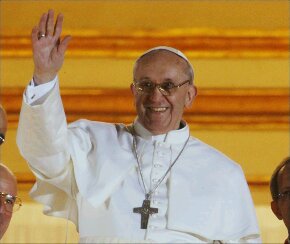
Pope Francis
As I hoped, we got a non-European pope! And as I suspected, the non-European pope was quite passionate for social justice. Even though some question marks have been raised concerning Jorge Mario Bergoglio’s actions during the Argentinian civil war in the 70’s, few can deny that he has been working hard against inequality, poverty and oppression as archbishop of Buenos Aires. He combines this activism with simplicity – as a cardinal, he lived in an ampartment instead of the usual palace, he took the bus instead of his chaffeur-driven car, and he cooked his own meal.
Many has pointed to the fact that his papal name, Francis, expresses this concern for the poor. S:t Francis of Assisi (1181-1226) sure was a radical, Christ-like activist. He sold everything he had, preached simplicity, loved the poor, criticised the rich and proclaimed the Kingdom of God. However, the new Pope is said to have another Francis in mind as well: S:t Francis Xavier (1506-1552). He is less well-known but just as radical – as a missionary in Asia he worked hard for poverty reduction and development while he was also spreading the Gospel.
Both of these Francises were charismatic activists. They combined their passion för justice and evangelism with marvelous signs and wonders in the power of the Holy Spirit. Francis of Assisis most famous miracle is probably the stigmata – the wounds of Christ supernaturally appearing on his body. But he experienced a lot. Marilynn Hughes writes:
Urgent Appeal: People Die in Syria due to Lack of Aid
This appeal comes from Doctors Without Borders (MSF). Please make a donation to them here.
After two years of extremely violent conflict, the humanitarian situation in Syria is now catastrophic and the aid provided falls drastically short of what is needed. The diplomatic paralysis preventing a political resolution of the conflict can by no means excuse the failure of humanitarian response. MSF calls on the parties involved in the conflict to negotiate an agreement on humanitarian aid, to facilitate its supply around the country via neighbouring countries or across front lines. Meanwhile, states, United Nations and donors must acknowledge the country’s fragmentation and urgently give their support to NGOs to help them provide assistance where they can.
The Syrian population is faced with a conflict of extreme violence and a humanitarian situation of catastrophic proportions: the previously well functioning health system has collapsed; food shortages are commonplace, and water and electricity supply is disrupted. “Medical aid is being targeted, hospitals destroyed and medical personnel captured,” explains Dr. Marie-Pierre Allié, President of MSF France. According to the United Nations, 2.5 million Syrians have been displaced in the country, while 57% of hospitals have been damaged and 36% are unable to function according to official data. These statistics do not include the private clinics or makeshift hospitals that have been destroyed or damaged.
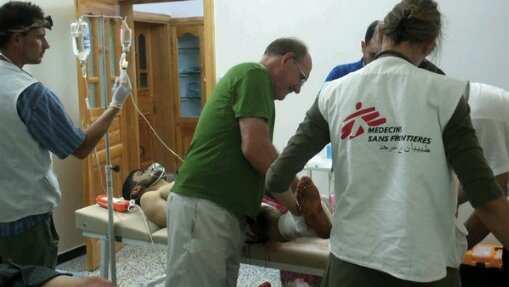
Photo: MSF
Jack Deere: The Voice of Angels

Angelic visitation
One of the best books I’ve ever read is Surprised by the Voice of God by Jack Deere. Through a combination of great Bible studies and awesome testimonies, Deere explores what Paul said was the gift we especially should desire: prophecy. Here is an excerpt from pages 137-139, concerning how God can give prophetic messages through angels:
Angels function not only as servants and guardians, they also function as agents of supernatural divine revelation. In the early church, angels were famous for engineering jail breaks (Acts 5:19; 12:7ff.). They also brought supernatural guidance and revelation to God’s servants. Philip was directed by an angel to bring the Gospel to the Ethiopian eunuch (Acts 8:26). Cornelius, the first gentile convert, was visited by an angel prior to his conversion with instructions for what he should do (Acts 10:3ff.). When Paul and all of his sailing companions were in danger of lsing their lives at sea, God send an angel who brought prophetic revelation to save them (Acts 27:23-26). And the greatest prophetic book, the book of Revelation, was communicated to John through an angel (Rev. 1:1).
[…]
Many people do not report encounters with angel for fear of what others might think. Early in my ministry a lady in my church told me the following story. Neither the lady nor my church were charismatic. Actually, our church had definite prejudices against the gifts of the Spirit. The woman had never wold anyone this story for fear of being thought crazy.
Women in Wartime
Today is International Women’s Day, a day which highlights the severe discrimination and oppression of women all around the world. There are strong evidence for the thesis that if gender equality is promoted in developing countries, it will give positive effects when it comes to political participation, poverty reduction and human rights.
But gender equality also has an intrinsic value, as people created in the image of God, it is totally unacceptable when women are facing oppression, violence and humiliation. Christian Aid has written this text about women’s situation in war, with the case study of Syria, that emphazise the importance of gender awareness.
Women in wartime
Today some 90% of war casualties are civilians, the majority of whom are women and children.
Just over a century ago, when the first International Women’s Day events were held, women and children made up only 10% of war casualties, while military personnel made up the majority of those who lost their lives.

Victims of sexual violence in DR Congo
International Women’s Day and Mothering Sunday
This year International Women’s Day and Mothering Sunday fall over the same weekend, on 8 and 10 March respectively.
These are both moments for celebrating the strength, resilience and inspiration of women all over the planet. But they are also times to draw attention to the fact that women are the world’s second class citizens.
 Charismactivism