
Home » Posts tagged 'Equality' (Page 9)
Tag Archives: Equality
The author

Micael Grenholm, a Swedish charismactivist, apologist and author.
Women in Wartime
Today is International Women’s Day, a day which highlights the severe discrimination and oppression of women all around the world. There are strong evidence for the thesis that if gender equality is promoted in developing countries, it will give positive effects when it comes to political participation, poverty reduction and human rights.
But gender equality also has an intrinsic value, as people created in the image of God, it is totally unacceptable when women are facing oppression, violence and humiliation. Christian Aid has written this text about women’s situation in war, with the case study of Syria, that emphazise the importance of gender awareness.
Women in wartime
Today some 90% of war casualties are civilians, the majority of whom are women and children.
Just over a century ago, when the first International Women’s Day events were held, women and children made up only 10% of war casualties, while military personnel made up the majority of those who lost their lives.

Victims of sexual violence in DR Congo
International Women’s Day and Mothering Sunday
This year International Women’s Day and Mothering Sunday fall over the same weekend, on 8 and 10 March respectively.
These are both moments for celebrating the strength, resilience and inspiration of women all over the planet. But they are also times to draw attention to the fact that women are the world’s second class citizens.
God vs Wealth, part 6: The Old Testament
To read other parts of the series, go here.

“What about king David?” people ask me when we debate whether a Christian should be rich or not. David was a “man after God’s own heart” (Acts 13:22) who clearly loved and feared the Lord, and yet he was very rich. Same thing is true for many believers in the Old Testament – kings like Solomon or Hezekiah as well as landlords as Abraham and Job. They believed in God, and still were rich.
However, we must remember that just because you are a believer, all your actions do not necessarily reflect the will of God. The only person in the Bible that we know lived a totally holy life is Jesus Christ. But when it comes to Abraham for example, he had married his sister. Should we use that as an argument for us to do the same?
Likewise, when it comes to David and Solomon, they lived in polygamy. We know however that Scripture condemns polygamy in other places. And interestingly enough, the same Bible verse that forbids Old Testament kings to take several wives also tells them not to accumulate wealth. This verse is not so famous, but is is a clear debunking of the “what about king David”argument. In Deutoronomy 17, God speaks of the lifestyle of the future king of Israel. Among other things, He says:
He must not take many wives, or his heart will be led astray. He must not accumulate large amounts of silver and gold. (Deut 17:17)
Healing the World: Combining the Gift of Healing with Poverty Reduction

Surprise Sithole
In his great autobiography Voice in the Night, South African pastor Surprise Sithole shares an amazing event that happened shortly after he had met his present co-worker Heidi Baker, director for Iris Ministries, for the first time. Cholera had struck a community, and being a highly contagious disease that could lead to death, most people would run the other way. However, Surprise and Heidi went straight into the fire.
They had to argue with the health workers for a long time before they could enter the hospital tent. Inside, the stench was horrible and the suffering of the people even greater. Surprise writes:
“Heidi walked straight into this disgusting, foul-smelling, life-threatening mess. She knelt down beside people to pray for them. She lovingly wiped the perspiration from their foreheads. She took the children in her arms and hugged and kissed them – pouring out her life again and again. Her courage and grace amazed me, and I tried my best to follow her example.”
As they prayed, more and more got healed, rising from their beds with their symptoms gone. For those who weren’t healed, they loved and hugged them and brought them clean water. Amazingly, neither Heidi nor Surprise came down with Cholera after this event.
God vs Wealth, part 5: Three Heresies
To read other parts of the series, go here.
In the first four parts of my God vs Wealth series, I’ve presented why I am convinced that Christians shouldn’t be rich. Now, I will discuss some counter arguments against that thesis.
1. There’s nothing wrong with being rich as long as you value God more than your money
This theory, which I’ve mentioned in some of the previous posts in this blog series, is basically saying that as long as your money doesn’t affect your relationship with God negatively, you can be as rich as you want. The problem is not owning money, the problem is if the money owns you. However, Jesus does not agree with this:
“Do not store up for yourselves treasures on earth, where moths and vermin destroy, and where thieves break in and steal. But store up for yourselves treasures in heaven, where moths and vermin do not destroy, and where thieves do not break in and steal. For where your treasure is, there your heart will be also.” (Mt 6:19-21).
In other words, it’s wrong to argue that you can be rich as long as your money doesn’t hinder your relationship with God, because where your treasure is your heart will be also – you cannot have treasures on earth and your heart in Heaven! The word “treasure” is used in James 5 as well where wealth also is criticised. We have to get rid of it to attain full devotion to the Lord.
Should Every Christian Be an Activist?

Christian activists
Some time ago I was having lunch with the leader of the Swedish Pentecostal movement. I had contacted him in order to share my vision of combining signs and wonders with peace and justice, and he offered to meet me. When we sat there I explained how important it was to eradicate poverty, fight climate change and work for peace, and then I remarked that I had to leave the lunch a bit early since I was going to participate in an act of civil disobedience in a detention center not far away, where the police would deport people to Iraq the same night. He looked at me and said “I really share your conviction that these issues are very important, but please reflect upon how much the ordinary believer is obliged to do.”
I got his point. Most Christians aren’t willing to lay so much time on activism as I do; in fact, for many of them “activist” is a quite alien term. And I agree with that there are different functions in the body of Christ – some focus on activism, others on preaching, others on evangelism and so on.
Still, just as the presence of preachers doesn’t mean that everyone else shouldn’t know any theology, every believer should care for peace and justice to some extent. The question is: what extent? Well, when we look at the Scriptures, it is striking that many of the commandments to all believers are very radical when it comes to peace and justice:
Why I as an Activist Love the Gifts of the Holy Spirit!
This text is also published at Jesus Radicals today.

Photo: Iris Ministries
The Pentecostal and charismatic movements have a bad reputation among Christian anarchists and activists. There are too many examples of healing evangelists who control the masses through manipulation and hysteria, with promises of supernatural encounters only to gain money and status for themselves. Furthermore, many Pentecostals and charismatics support nationalism, war, discrimination and inequalities. They bless the Israeli occupation of Palestinian lands, they preach a prosperity gospel where strong faith leads to great wealth, they deny climate change and don’t care about the environment.
Yet, I am totally convinced that every Christian activist should embrace the gifts of the Spirit and pursue signs and wonders. Why? Because the mess I just described is of course not genuine a fruit of the Spirit, it is a result of what I call the Corinth Syndrome, when charismatic Christians portray their own crazy ideas and practices as divinely inspired.
God vs Wealth, part 4: The Church Fathers
To read other parts of the series, go here.
Early Christian Teaching on Wealth and Poverty
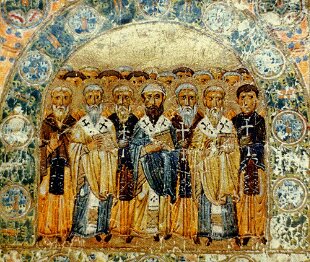
“Share everything with your brother. Do not say, ‘It is private property.’ If you share what is everlasting, you should be that much more willing to share things which do not last.” – The Didache, c. 90 AD, (Did. 4:8)
“Now then hear me and be at peace among yourselves, have regard one to another, and assist one another, and do not partake of what God has created alone in abundance, but share it with those that are in need. For some men through their much eating bring weakness on the flesh, and injure their flesh: whereas the flesh of those who have nothing to eat are injured by not having sufficient nourishment, and their body is ruined. This absence of community therefore is hurtful to you that have and do not share with them that are in want. Think of the judgment that will come! You then, that have more than enough, seek out them that are hungry!” … “Take heed therefore; as dwelling in a strange land prepare nothing more for yourself but a competency which is absolutely sufficient and necessary.” – The Shepherd of Hermas, c. 110 AD, (Herm. Vis. 3:9:2-5 and Herm. Sim. 1:6)
“They [Christians] love one another. They do not overlook the widow, and they save the orphan. He who has, ministers ungrudgingly to him who does not have. When they see strangers, they take him under their own roof and rejoice over him as a true brother, for they do not call themselves brothers according to the flesh but according to the soul.” – Aristides, early 2nd century (Apology 15)
“We who once took most pleasure in the means of increasing our wealth and property now bring what we have into a common fund and share with everyone in need.” – Justin Martyr, 100-165 AD (1st Apology 14)
(more…)
God vs Wealth, part 3: Sharing Everything
To read other parts of the series, go here.

I wear a red cross around my neck. I got it when I visited a church called Jesus Army in the UK a couple of years ago. Many people in this church practice community of goods. They eradicate the gap between rich and poor simply through sharing all they have together in community houses called New Creation Christian Community.
This is of course very biblical. We read about the first church in Jerusalem which was led by the apostles themselves: “All the believers were together and had everything in common. They sold property and possessions to give to anyone who had need.” (Acts 2:44-45). This should not be surprising, they simply obeyed the commands of Jesus. He clearly told all His disciples in Luke 12:33 to sell what they have and give to the poor.
It is thus misleading to think that this command was just given to one certain rich man in Matthew 19:16-22. I have heard countless rich Christians arguing that Jesus told him to sell what he had just because his money was a stumbling block to his relation with God, and thus rich Christians with a good relationship with God can ignore this command and continue to be rich. But the gospels doesn’t say that he had to sell his stuff because they affected his relationship with the Lord, the only reason Jesus gives is that the poor will get money – something they need no matter how our spiritual situation looks like. And again, He did say the same thing to all His disciples, and they all obeyed it.
(more…)
God vs Wealth, part 2: Equality
To read other parts of the series, go here.
It’s not controversial to say that we should give money to the poor. The question is how much we should give. Some Christians are arguing that we should give tithe, one tenth of our income. But we can’t limit our giving to that, keeping nine tenths of our income no matter if we need it or not. The Old Testament tithe was not a maximum amount but a minimum. Deutoronomy describes how we should act towards the poor even after we’ve given tithe: if we are able to help them but are not doint it, they may call to the Lord, and we will be guilty of sin.

If the rich only give tithe, they are still rich, and the poor are still poor. We need equality. The richest 20% of th world’s population consume 80% of the world’s resources. The poorest 20% consume 2% of the resources. The latter group suffer of hunger, lack of clean water and diseases, and they don’t live very long. At the same time, the rich spend billions on entertainment, luxury and other unnecessary stuff. This is totally unjust and needs to be changed.
God vs Wealth, part 1: It’s Wrong to Be Rich
To read other parts of the series, go here.
There are a lot of misconceptions and false teachings concerning wealth and poverty in the church today, so in response to that I am producing a series of approximately ten parts called “God vs Wealth”. This is the first part.
 I’ve heard countless pastors, preachers and priests who say that there is no problem with being rich, as long as you don’t worship your money you can be as wealthy as you want. I’m having some serious trouble with this teaching. Why on earth did Jesus say “woe to you who are rich” if there are no problems with being rich? “Woe” is not a positive word, it’s a warning.
James, the brother of Jesus, is also warning rich people:
Now listen, you rich people, weep and wail because of the misery that is coming on you. Your wealth has rotted, and moths have eaten your clothes. Your gold and silver are corroded. Their corrosion will testify against you and eat your flesh like fire. You have hoarded wealth in the last days. Look! The wages you failed to pay the workers who mowed your fields are crying out against you. The cries of the harvesters have reached the ears of the Lord Almighty. You have lived on earth in luxury and self-indulgence. You have fattened yourselves in the day of slaughter. You have condemned and murdered the innocent one, who was not opposing you. (Jam 5:1-6)
If there’s something James is not saying, it’s “There’s no problem with being rich”. He is not talking to the rich in a certain city but to all rich Christians, since his letter lack a certain adress. And his message is that need to get rid of their wealth to escape coming misery.
Development Aid to the South, Revival Aid to the North

Brother Yun
A month ago I was listening to Chinese pastor and revivalist brother Yun as he was conducting some meetings in Sweden. His autobiography, The Heavenly Man, was one of the first Christian books I read, and it has impacted me a lot. Yun describes both countless miracles and unspeakable suffering, persecution as well as revival. These aspects go hand in hand, he argues, the glory of the resurrection cannot be separated from the pain of Calvary.
As a Western Christian who at that point had neither experienced revival nor persecution, Yun’s testimony opened my eyes to what Christianity really is about. Having fled from China in 2001 to Germany, he had some very interesting reflections about the state of the Western church. Based on the story about the lame man in Acts 3, he wrote prophetically: “The Western church has a lot of silver and gold. The Chinese church rises up and walks.”
Of course there are exceptions, but generally this is painfully true: churches in high-income countries are rich in money but poor in spirit, churches in middle- and low-income countries are poor in money but rich in spirit. I would say the latter group is better off, still I am constantly aware of the urgent material needs they have in order to fight poverty and nurture revival. (more…)
Fighting Climate Change Through Fighting Wealth

Today the 18th international climate negotiation conference (COP18) starts in Doha, Qatar. I don’t know how they chose host country for the conference, but since Qatar is rich on oil, owns the “best airline in the world” and has turned into one of the richest country in the world per capita, it wouldn’t have been my primary choice. To end the enormous problem with climate change, we need to dramatically decrease oil use, flying and wealth.
Scripture tells us that the love for money is the root of all evil (1 Tim 6:10), which is evident when it comes to the horrors of climate change. Of course, developing countries have a right to develop and fight poverty, I am defenitely not against that. But I’m against that rich countries, corporations and individuals keep getting richer although they know that this will result in coming catastrophies.
The climate problem has been publically known for 20 years, but global greenhouse gas emissions are still increasing. Recently the World Bank published a shocking report which said that even if all countries implement what they have promised to do, we still risk a rise of global temperature with four degrees, resulting in humanitarian disasters affecting millions. The aspirations of especially rich countries are simply far too weak. We really need to pray for miracles in Doha.
John Wimber Quotes on Poverty, Wealth and Social Justice

John Wimber, 1934-1997
Not only was John Wimber a great Charismatic leader who was used by God to perform miracles and teach others to do the same, but he also had a burning heart for the poor and oppressed, and especially in his later years he emphasized to remember the poor and to work for social justice. Here are some quotes by him concerning this issue, mainly found on the John Wimber Twitter and Facebook accounts.
“The same Lord who gives sight to the blind and creates miracles through our hands is the very One who feeds the hungry through our hands and watches over the immigrant. We must never ignore the poor & needy. We must never spend any outpouring of Gods Spirit on ourselves.”
“Faith is spelled, R.I.S.K….Commitment is spelled, M.O.N.E.Y…”.
“The call to social justice is not adding to the Gospel, it flows from the heart of God. Great leaders in the history of the Church have understood the relationship between the Gospel and justice.”
“When we stand for social justice, we testify to the presence of the Kingdom.”
“We need the poor as much as they need us…” (more…)
Don Murphy: “Full Gospel” Includes Both Miracles and Sharing Material Goods

The Pentecostal Hutterite Don Murphy writes in his pamphlet The Church and the Narrow Path, to which I agree completely:
The Book of Acts chapter 2 records the birth of the Church of Jesus Christ and it describes what that Church was like. In the first part of Acts 2, we see the Church born in the power of the Holy Spirit, just as Jesus said (Acts 1:8). Then in the last part of Acts 2, we see the lifestyle of the early church, they were together daily, sharing their lives together, giving up private possessions as Jesus commanded (Luke 14:33), having all material possessions in common.
Using Acts 2 as a guide, we see that there are four types of churches today.
- Churches that bear little resemblance to the description of the Church in Acts 2 since they do not expect to have the power of the Holy Spirit in them as was in the early church and they do not follow the holy lifestyle of the early church as shown in the last part of Acts 2.
- Churches that meet the description of the early church in the first part of Acts 2. They do proclaim the power of the Holy Spirit with demonstrated signs and wonders. The Pentecostal churches fit this description. They like to say that they are ‘Full Gospel’ churches but they actually are only ‘Half Gospel’ churches since they do not fit the description of the last part of Acts 2.
- Churches that meet the description of the early church in the last part of Acts 2, meeting together daily and having all material goods in common. This is a very rare church indeed! However, they tend to not expect the power of the Holy Spirit in their lives as did the early church.
- Churches that meet the description of the entire chapter of Acts 2, a true ‘Full Gospel’ church. They not only proclaim the power of the Holy Spirit with demonstrated signs, wonders and holy living but also meet together daily and share all material goods in common as did the early church. Where does this church exist today?
When we use Acts chapter 2 as a guide we find that the way to the Kingdom of God is narrow indeed!
“Struggle to enter the Kingdom through the narrow door. The road to hell is wide with plenty of room and most go that way. But the door is small and the path is hard and narrow that leads to life and only a few find it.” (Mt 7:13-14, Luke 13:23-24).
Imagine Benny Hinn shouting: “Woe to you who are rich!”
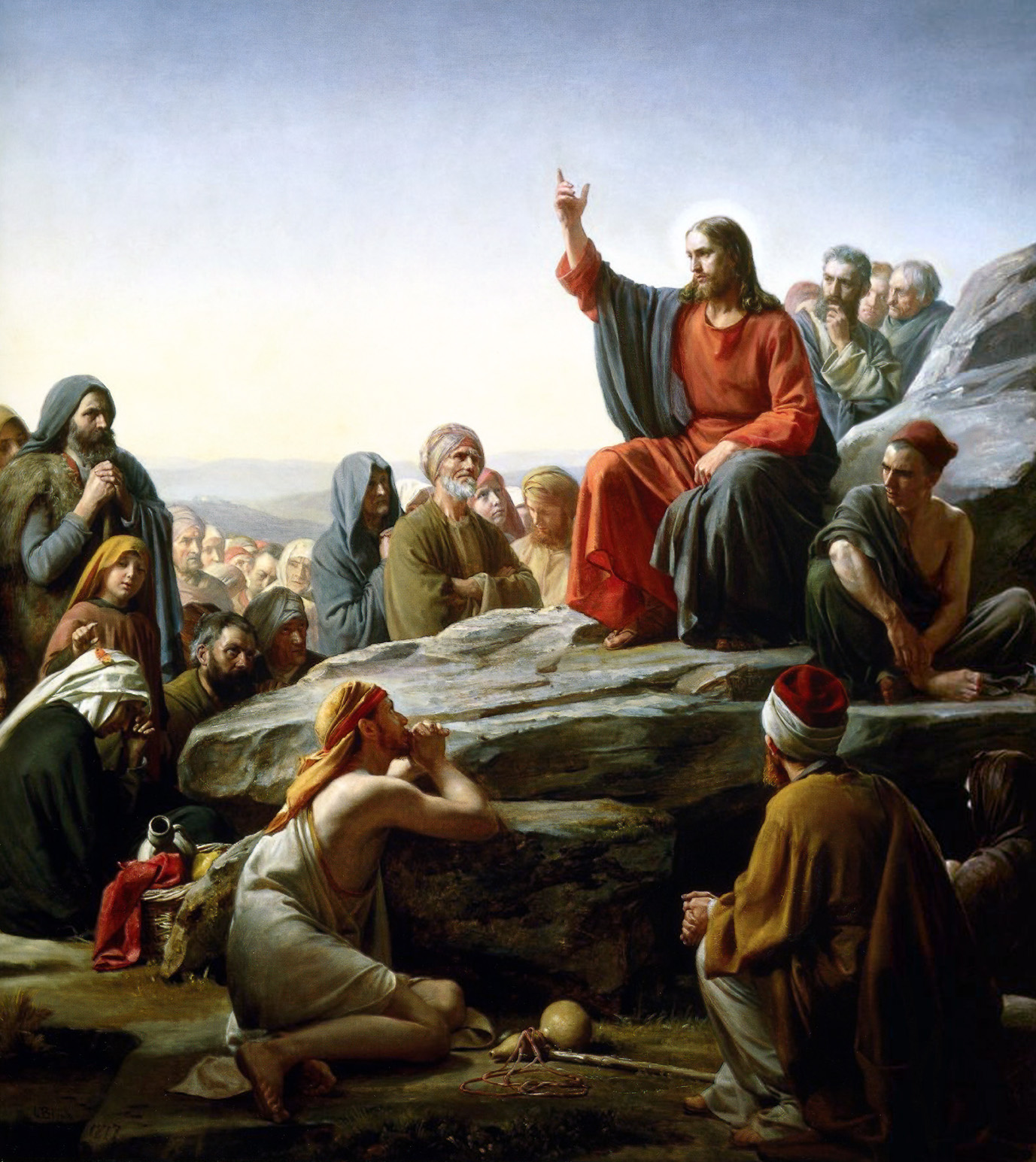
Luke 6 is one of my favourite chapters in the Bible. A “great number of people” from all over Israel gather around Jesus, for two reasons: to hear Him preach, and to get healed from their diseases. And healed they are, all of them. Demons are cast out. Power is flowing out from Jesus. In other words, there’s full-scale revival. Then He starts to preach:
“Blessed are you who are poor,
for yours is the kingdom of God!”
In this Charismatic revival scenario, Jesus starts to talk about the poor. He goes on with blessing the hungry, the weeping and the hated. They are blessed. They are loved. The needy, broken and oppressed are healed phycially and spiritually by the compassionate Saviour.
But then the faith healer gets angry.
“But woe to you who are rich,
for you have already received your comfort!”
Jesus warns and critizises the rich, the wel-fed and the comfortable. They have to repent. God wants economic equality (2 Cor 8:14), His love basically cannot remain in people keeping their money for themselves instead of giving them to the needy (1 Jn 3:17).
Now, what I love with this passage is the obvious and natural combination of miracles with a divine call for economic justice. It’s a typical example of Holy Spirit activism. How come that we’ve managed to separate healing revivals from global justice? How come that healing revivalist Benny Hinn rather preaches a “blessed are you who are rich” message? How come that Christian activist Jim Wallis isn’t conducting any miracle crusades? It’s quite obvious that Jesus did both things in Luke 6. And we should do what Jesus did (1 Jn 2:6).
 Charismactivism