Popular Posts


Recent Comments
 | James on Why Cessationism is Unbiblical… |
 | Nate on The Problems with the Lutheran… |
 | Franciskus – p… on Francis – the Charismati… |
 | Riverbelle on The Problem with “Sacram… |
 | Russell on Why Churches Should Abandon St… |
Networks





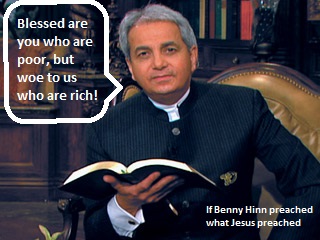
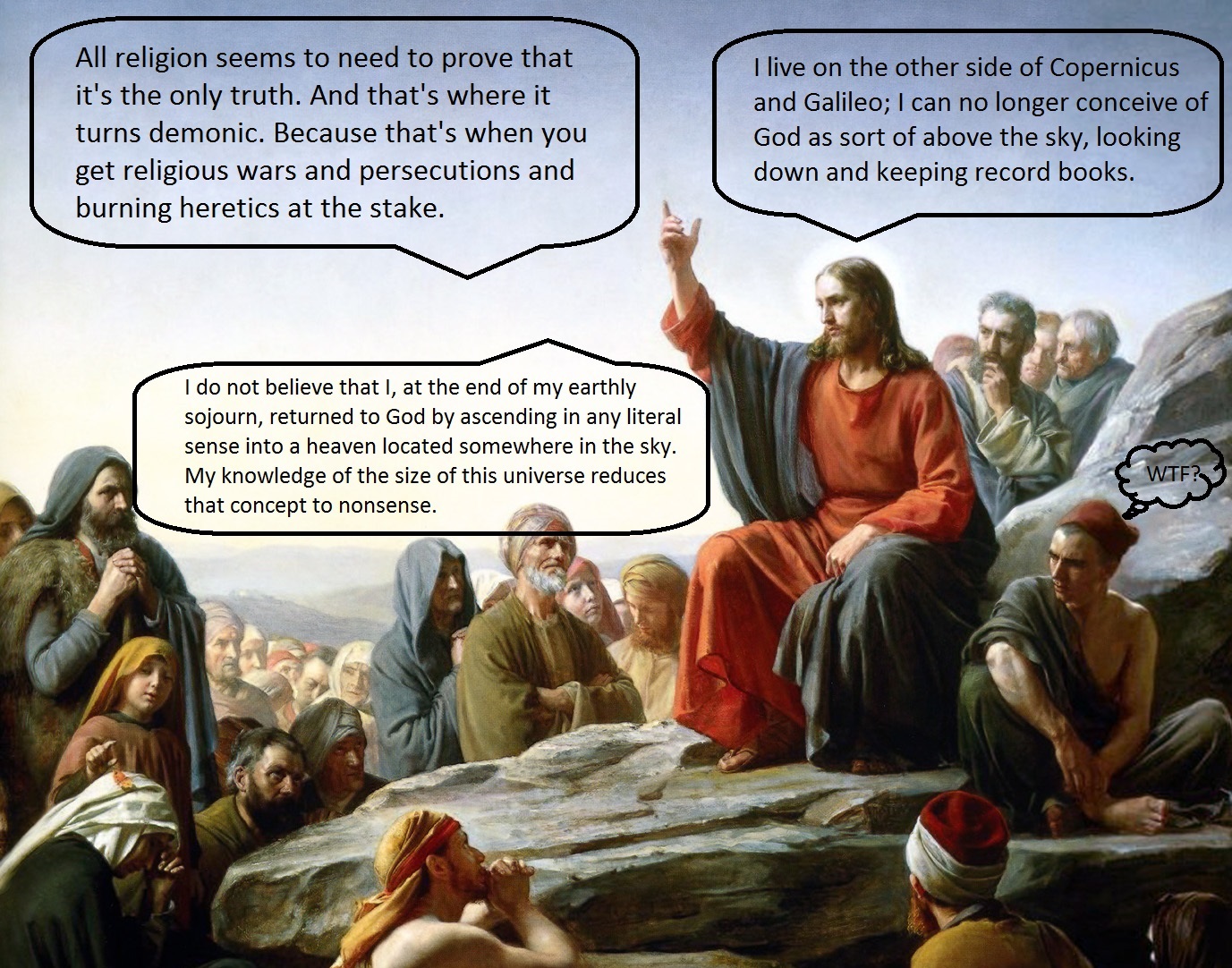
What if Modern Preachers Preached What Jesus was Preaching?
It’s finally here – the sequel to the extremely popular post What if Jesus Preached What Modern Preachers are Preaching! Get ready for…
What if Modern Preachers Preached What Jesus was Preaching?


The Happy Racists of Scandinavia

A 19th-century propaganda image of Norwegian, Danish and Swedish soldiers joining hands (Photo credit: Wikipedia)
The other day, my American friend Robert Martin tweeted “Hey, @micaelgrenholm… Sweden is 5th happiest country in the world… congrats!” I jokingly responded “5th?? Now I’m definitely not happy!!” and he wrote “Well, at least 4 of the top 10 are Scandinavian… check it out. US is # 17″ Yup, Denmark was in fact number 1, and Norway number 2. All I could think about at that moment was actually racism and xenophobia.
How come? Well, a couple of years ago a Swedish journalist published a book called “The Happiest People in the World“ about racism in Denmark. While citizens enjoy a high standard of living with extensive welfare and social security, it’s very, very hard for non-whites to become such citizens. In fact, Denmark is probably the most xenophobic country in northern Europe. Even though the racist Danish People’s Party has not been part of a government, other parties have used similar rhetoric and even policies in order to prevent more people from joining them. The result is of course that DPP’s ideas of a multiethnic Denmark being a “national disaster” has formed national policies.
How about Norway, then? The day before Martin tweeted his message to me Norway had their parlamentarian election, and as the Conservative Party won they proudly announced that they would govern together with the xenophobic Progress Party. This is the first time a racist party has entered a Scandinavian government.
How do I know that they are racist? Well, for instance, they want to ban Romani people from the country. Furthermore they have all the traditional charesteristics of xenophobia: they are hostile to islam, they want to decrease immigration, they are patriotic and wants to defend “Norwegian values” against multiculturalism, etcetera.
The Promised Land, part 3: Supersessionism = Antisemitism?
For the rest of the blog posts in this series, go here.

John Chrysostom, who used antisemitic rhetoric (Photo credit: Wikipedia)
As we’ve seen in the previous parts of this series, Christian Zionism is a new theology; it did not exist in the early church and has in its current version only existed for about 150 years. Before that, supersessionism was basically the universal teaching of the church. This is the teaching that Christ has fulfilled the promises to Israel and welcomed Gentiles into God’s people while those who do not believe in Him has been excluded from this people. Thus, the promise of the land does not refer to the Jewish people any more but to the church, which supersessionists interpret as the promise of Heaven.
We will look at the biblical foundation for this teaching in the next parts of this series. For now, I want to discuss whether this theology is antisemitic, which some Christian Zionist claim. When they talk about how the early church was “hijacked” by Gentiles that replaced Zionism with supersessionism (which was hard to do since there is no evidence for Christian Zionism in the early church to begin with), they often quote other church fathers, like John Chrysostom, who were downright antisemitic, and jump to other periods of church history when Christians have done horrible things towards Jews and argued that this is rooted in supersessionism. You can see example of this reasoning here and here.
The problem with this argument is that it fails to show how supersessionism would lead to antisemitism. All the texts I have read just assumes that this is the case rather than proving it. Instead of showing a logical connection between supersessionist and antisemitic thought, they merely point to antisemitic rhetoric and action through church history and say that since they were supersessionists, supersessionism causes antisemitism. (more…)


The Promised Land, part 2: The Men in Black Theory
For the rest of the blog posts in this series, go here.

The men in black using a neuralyzer
In the previous part of this series we looked at how the theology of Christian Zionism, which claims that the Jewish people must return to the land of Israel before the second coming of Christ, is very young. Its roots are found in the 16th century and its developed form didn’t appear until the 19th century. However, most Christian Zionists don’t view this as a problem, since they believe that this was not the birth of the theology but its resurrection – Christian Zionism was the original church teaching about the role of Israel, and the Puritans and Dispensationalists simply rediscovered it.
However, the early church did not believe in Christian Zionism. None of the church fathers, neither any anonymous early Christian writings, argued that the Jewish people must return to Israel before the second coming of Christ. On the contrary, they were supersessionists, teaching that Christ had fulfilled the covenant with and promises to Israel and that these now belonged to His followers, the church.
The non-existence of Christian Zionism in the early church is rather indesputable, even most Christian Zionists themselves acknowledge this. They claim that the apostles believed in Christian Zionism, but that it was immediately lost. I call this “The Men in Black Theory”. Just as the movie agents use their neuralyzer to erase people’s memories, Christian Zionism was suddenly deleted from the collective mind of the whole church right when the final pages of the New Testament was written.
Three Views on Speaking in Tongues
This is a guest blog by my dear Australian friend Andrew Meakins, whom I share Facebook page with.

Pentecostés. Óleo sobre lienzo, 275 × 127 cm. Madrid, Museo del Prado. (Photo credit: Wikipedia)
1) The Pentecostal view of tongues: Speaking in tongues is the initial evidence of the baptism in the Holy Spirit. The baptism in the Holy Spirit is a once only experience. Tongues is for every believer.
2) The Charismatic view of tongues: Speaking in tongues is a gift of the Spirit which usually accompanies the baptism in the Holy Spirit but not always. The baptism in the Holy Spirit is not a once only experience but a continual infilling that can manifest itself in different ways. Tongues are for every believer who desires the gift.
3) The Third Wave view of tongues: Speaking in tongues is a gift of the Spirit which sometimes accompanies the baptism in the Holy Spirit. The baptism in the Holy Spirit is not a once only experience but a continual infilling that can manifest itself in different ways. Tongues may not be for every believer but every believer is free to ask for it.
I’m inclined to go with the third wave view, because it’s more inclusive of all believers. There are some Christians who seemed to obviously be empowered by the Holy Spirit but never spoke in tongues (as far as we know). John Wesley is an example. The other benefit of the Third Wave view is it doesn’t put tongues as a measure of spirituality or maturity but simply as another gift that can edify us. On the other hand, I’m very grateful I was taught in the Pentecostal church initially because I was encouraged to earnestly desire to speak in tongues. Without that extra encouragement, I don’t think I would have pursued the gift. From my personal experience, the gift of tongues revolutionized my prayer life but having this gift doesn’t make me better than any other Christian.
Why the US Really Doesn’t Care About the Syrian People
This is a contribution to the synchroblog series on Syria at the MennoNerds network, of which this blog is a member.
A couple of days ago the leader of the main racist party here in Sweden was holding a very weird speech. Besides stating that you cannot separate what’s Christian and what’s Swedish, and demanding that Swedish churches must be built with Swedish material, he used the horrible sarin gas attack in Syria as an argument for not receiving refugees from there. Yeah, you heard me. He said that since the crisis in Syria is so severe, it is horrible for the Swedish government to waste money on asylum immigration instead of supporting the refugees in their local areas, i.e. refugee camps.
Perhaps he missed the news about Syrians wanting to return to the conflict because the circumstances in their Jordanian refugee camps are killing them.
I mean, God bless the UNHCR, we should really give as much as we can to them right now, but they can never ever offer the same security, welfare and peace that a Western country can. It’s ridiculously stupid to say that it’s cheaper to help refugees in their local areas than welcoming them to the West, because the results are extremely cheap as well. And no, the refugees that manage to get to a Western country don’t want to be deported to a refugee camp. If we really care about Syrian lives, we must welcome them to our countries.
What Would Martin Luther King Speak About Today?

Martin Luther King (Photo credit: Wikipedia)
Today is 50 years since Martin Luther King‘s extremely famous “I have a dream” speech at Lincoln Memorial, Washington D.C. He has inspired countless people through the decades to passionately work for justice and freedom using non-violence, and also to seek the God he so zealously followed. The problems he adressed – racism, injustice and violence – still exist in various forms, and so we should take his example and keep up the good fight against it. Here are three areas I think needs special concern:
Racism and Xenophobia in Europe
The ugliness of racism sadly exists in most places arounf the world, and even though the situation for African Americans have become better it is far from optimal. Yet, as a European, I think what we are seeing here sometimes are even far worse. In Greece a neo-Nazi party got 7 % of the seats in the parliament. In Hungary, a neo-Nazi party got 12 % of the seats in the parliament. Hate crimes against Jews, Muslims, Blacks, homosexuals and other minorities are on the rise. Just a couple of weeks ago, a Muslim woman here in Sweden got beaten by a racist for wearing a hijab. The event caused a massive protest where thousands of women weared hijab in solidarity. Then, a new group of racists found the woman and beat her up again. What can we do? Use the example of Luther King: be a light in the darkness, use nonviolence in the midst of violence, be loving in the midst of hate, welcome the stranger in the midst of xenophobia. (more…)
God vs Wealth, part 10: Now What?
To read other parts of the series, go here.

Christian communism? (Photo credit: Wikipedia)
It’s finally time to end God vs Wealth. And in this final part, I want to talk about some practical implications of this teaching and adress some questions that I think some of you who have followed the series have.
Question 1: Are you really saying that everyone should have everything in common?
I think economic equality is the goal and community of goods is an effective means to reach the goal. In fact, I don’t really know any more effective way to reach equality than Acts chapter 2. The model most churches use today clearly doesn’t work, and for many of them equality is not even the goal.
Of course, community of goods requires more than one person, so start with connecting with others who has the same thoughts as you. get inspired by New creation Christian Community and The Simple Way, and start building. Remember though that Christians communities should include the really poor and marginalised. Get to know poor folks in your area or neighbourhoods, invite them for dinner, love them, and if they’re up for it, live with them.
Also urge your church to start building international community of goods. Connect with say five churches in other parts of the world, look what common budget you have and split it equally. Then, rich churches will learn simplicity and poor churches will have more resources to meet needs and spread the Gospel. Win-win! (more…)
Why John Piper is Wrong about Prophetic Dreams

John Piper (Photo credit: Wikipedia)
I wrote the other day about how thousands of Muslims become Christians because they claim to have seen Jesus in a dream. As I was googling “Muslims Jesus dream” to find testimonies about this to link to, I also came across criticism of this phenomena by reformed pastor John Piper. Piper says that he is “very suspicious” to these claims because the Biblical model of evangelism is not hearing the Gospel through dreams but through a preacher:
“Jesus coming to them in their head, preaching the Gospel to them that they have never heard of before, and believing and being saved… that I am suspicious of… big time,”
“The Gospel needs to be heard. How shall they believe unless they hear and how shall they hear without a preacher and how shall they preach unless they be sent. That’s a pretty significant argument in Romans 10… It says, how shall they preach unless they be sent? It doesn’t say, oh they can preach in a dream when they are not even there.”
I think there are several problems with this argument. First of all, dreams and visions are a very common way for God to communicate to people in the Bible. As Jack Deere write in his awesome book Surprised by the Voice of God:
According to the Bible, dreams and visions are the normal language of the Holy Spirit when God speaks to hos prophets. Numbers 12:6 says, “When a prophet of the Lord is among you, I reveal myself to him in visions, I speak to him in dreams.” Joel promised that one day drams and visions would be common among the people of God, saying, “And afterward, I will pour our my Spirit on all people. Your sons and daughters will prophesy, your old men will dream dreams, your young men will see visions. Even on my servants, both men and women, I will pour out my Spirit in those days” (Joel 2:28-29). The apostle Peter claimed that the coming of the Spirit on Pentecost began the fulfillment of Joel’s prophecy (Acts 2:16ff.).
The Promised Land, part 1: Origins of Christian Zionism
For the rest of the blog posts in this series, go here.
John Nelson Darby (1800-1882) (Photo credit: Wikipedia)
Israel should of course have all of the land that God gave them from the beginning, and then there is no space left for a Palestinian state.

This comment appeared two days ago on my Swedish blog in a discussion about the conflict in the Middle East. And this guy is not alone, millions of Christians think that it is God’s will for the Jewish people to possess all of the Biblical land of Canaan once more in order for Jesus to come back. While I honour their zeal against anti-semitism and passion to follow God’s will, I have to disagree with them.
In my opinion, Christian Zionism is not only unbiblical but it has had, and continues to have, very serious consequenses in the Middle East. In a blog series of approximately eight parts called “The Promised Land”. I will dig deeper into what Christian Zionism is, what it has led to in the Middle East and what the Bible really says.
In this first part, we will look at the historical origins of Christian Zionism. Benjamin Corey writes:
For those who grow up in churches that preach the Church and Israel distinction, this theology seems as if it is a normal part of orthodox Christianity, and never gets questioned. However, the truth is that this theology is a new theology and is not part of orthodox Christianity.
This theology was popularized by denounced heretic John Nelson Darby in the 1800′s. Darby is considered the father of dispensationalism, which is a dwindling subset of American Fundamentalism. Dispensationalism is a collection of extra-biblical beliefs (such as the “rapture”) which is typically known by a preoccupation on the end of the world, and a pessimistic worldview. Among Darby’s heresies included this new idea that God had two, simultaneous covenants, one for Jews and one for Gentiles.
Celebrate World Humanitarian Day!
 Today is a big day, where we celebrate the thousands of brave men and women who have dedicated their lives to help and save others. Over 200 million people are every year affected by humanitarian crisis, and humanitarian aid workers do what they can to alliviate suffering and save lives. But it’s risky. Every year several humanitarian aid workers die in service. This is the main reason Doctors Without Borders had to leave Somalia recently – it was too dangerous. Thus, World Humanitarian Day not only celebrates humanitarian action but also commemorates humanitarian martyrs.
As Christians, we should have humanitarian passion. We should be on the frontlines to recognize this day, spread its message and donate to humanitarian relief. I highly recommend the Christian organizations Samaritan’s Purse and World Vision. They rock and are making a wonderful impact to spread the Kingdom through love and justice. Happy WHD!
God vs Wealth, part 9: The Prosperity Gospel
To read other parts of the series, go here.

Image from internetmonk.com
The prosperity gospel is a popular teaching in many Pentecostal and neo-Pentecostal churches. Even though there are a lot of different views on prosperity, the concept is usually understood as economic blessings that God wants to give all believers. If you have a strong faith in God, you’ll get rich. Godliness is a means to financial gain.
But what does the Bible say? Well, in 1 Tim 6:5, Paul speaks about “people of corrupt mind, who have been robbed of the truth and who think that godliness is a means to financial gain.” So the prosperity gospel is simply corrupt and untrue. He goes on saying:
But godliness with contentment is great gain. For we brought nothing into the world, and we can take nothing out of it. But if we have food and clothing, we will be content with that. Those who want to get rich fall into temptation and a trap and into many foolish and harmful desires that plunge people into ruin and destruction. For the love of money is a root of all kinds of evil. Some people, eager for money, have wandered from the faith and pierced themselves with many griefs. (vv. 6-10)
When Jesus Speaks to Muslims

Photo: Peter Hagyo-Kovacs, Creative Commons
In my city, Uppsala, Sweden, there was a Muslim lady a couple of years ago that wanted to take her life. Different depressing circumstances in her life forced her to this horrible decision, and even though she prayed and prayed to Allah to help her, she didn’t get a response. Which really isn’t that strange, since the gift of prophecy has ceased according to Islam – Muhammad was the last and final prophet.
Her soul being in total despair, she went to the train station of Uppsala to throw herself in front of the train. However, when she got there she went into a jewelry shop for no reason. She didn’t know why, she just went in.
The shop owner greeted her, but she remained silent. Then he said, “The Lord has showed me that you want to take your life. Don’t do it, turn to Jesus and believe in him. You are now a Muslim, but the Lord is calling you to Jesus.”
Needless to say, the woman just wept and wept, recieved Jesus and is still living today. (more…)
Untouchable Children of God
 For several years, some very dear friends of mine in the missions organization Touching Asia has worked against trafficking and child prostitution in Nepal and India. Even though many challenges remain, they have rescued hundreds of girls from the brothels and provide them with a safe and loving home. They and their partnering organizations that they cooperate with have receieved acknowledgements from both the Nepali and Swedish government. And soon a documentary about this ministry will be released: Untouchable Children of God.
The film will show both the darkness and the light. The avarage age of a girl who is trafficked from Nepal to an Indian brothel is 13 years. There they have to receive over ten customers a day, with no chance of quiting – slavery in its clearest form. Thousands of children are living this way, and they continue to do so for years and years, banning them from any chance to get educated.
But there is hope. If you want to support Touching Asia’s ministry in Nepal, go to their website or to the website of Love Nepal. And pleae pray that they and others may receive unlimited power from the Holy Spirit to liberate even more captives and turn beauty out of ashes.
UNTOUCHABLE: CHILDREN OF GOD – Sneak Preview from Grant Knisely on Vimeo.
The author

Micael Grenholm, a Swedish charismactivist, apologist and author.
A Living Alternative

God vs Inequality

 Charismactivism