
Home » Justice & Economics (Page 6)
Category Archives: Justice & Economics
The author

Micael Grenholm, a Swedish charismactivist, apologist and author.
Jesus vs Xenophobia: Christian Responsibility to Love Immigrants as Ourselves

Should Christians welcome or deport asylum seekers and other immigrants? Is aid to refugee camps really better than receiving refugees? And is it a Christian duty to christianize territories and then protect them against islamization?
These are some of the issues I talked about at my seminar Jesus vs Xenophobia on the annual summer camp for the Scandinavian Vineyard movement. A friend filmed it all and I have now uploaded it to the Holy Spirit Activism YouTube channel. The first part deals with what the Bible says concerning migration, borders and refuge, the second part describes the global refugee crisis and discusses some of the arguments anti migration advocates use, and the third part is a short Q & A.
So what do you think? Who would Jesus deport, and why would He do it? Let me know in the comments 🙂
4 Prooftexts Rich Christians Use to Keep Their Wealth
My MennoNerd friends have been talking a lot about wealth and poverty in our vlogging relay race recently, something I also contributed with in my video about community of goods. In today’s video I bring up four prooftexts that brothers and sisters who have quite a lot of money often point to when I explain to them why I’m convinced that Christians should not be rich.
The prooftexts are:
- People in the Old Testament being rich (Gen 13:2, 2 Chron. 9:22 and others)
- Jesus being fine with expensive alabaster being poured upon Him (Mark 14:1-9)
- Paul saying that he is content both when he has plenty and when he is needy (Phil 4:12)
- Jesus possessing a seamless undergarment (John 19:23)
For more Bible studies on why Christians shouldn’t be rich, check out my God vs Wealth series.
Community of Goods: the Best Way to Eradicate Poverty
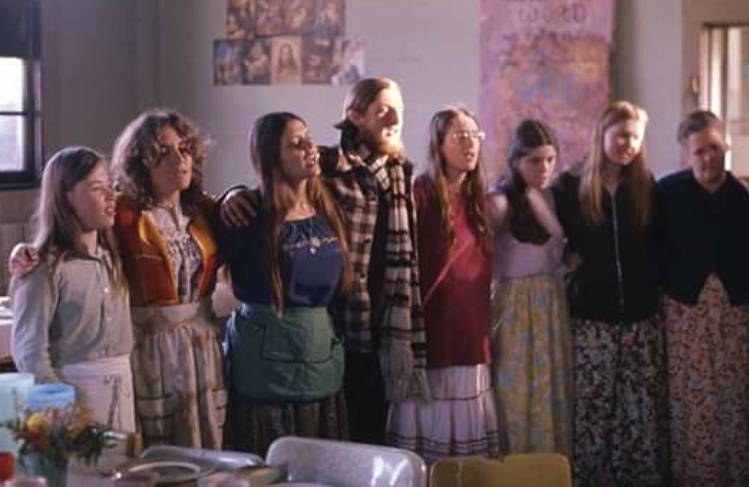
To share everything is commanded in Scripture and eradicates poverty better than anything else.
Last week I was attending one of the bigger Christian conferences here in Sweden called Torp, where I was speaking on the topic of how to combine miracles, evangelism and social justice. I pointed to the fact that Pentecost in Acts chapter 2 does not just include signs and wonders but also community of goods, i.e. having all possessions in common so that nobody is rich and nobody is poor (Acts 2:44-45). I argued that if we want to resurrect the spiritual power and evangelism of the Biblical Pentecost we ought also want to resurrect community of goods. I developed my thoughts on community of goods and how it relates to Jesus’ command to sell everything one has in this MennoNerd video:
These thoughts were new and radical to several of those who were listening. Some were curious, others sceptical. One pastor in particular raised two objections. Firstly, he said, community of goods cannot be equated with using Spiritual gifts or doing evangelism because there is no command saying “practise community of goods”, just a description of how the early Christians did so. Secondly, the pastor thought that the Swedish evangelical church was already very generous when it comes to giving alms to the poor, so he saw no need of preaching community of goods as something we should resurrect in evangelicalism.
My direct response to his first question repeated what I had been saying in the lecture, and that I briefly talk about in the video above, namely that community of goods is the practical application of Jesus’ command to sell everything one has and give the money to the poor – which he gives not just to one rich young ruler (Mk 10:21) but to all his disciples (Lk 12:33). Jesus himself practised community of goods with his disciples (Jn 13:29), and he told them to teach their new disciples to do everything he had commanded them to do (Mt 28:20). To sell everything one has doesn’t mean to live completely without possessions, for then the early Christians would have been nudists, instead we see how the community of goods in the book of Acts is described as being the consequence of the early Christians selling everything they have (Acts 4:32-35).
The Desperate Need for Christian Hospitality
Have you ever wanted to meet an angel? If so, let some homeless people into your home.
Scripture says: “Do not forget to show hospitality to strangers, for by so doing some people have shown hospitality to angels without knowing it.” (Hebr 13:2). And even if the person we’re hosting turns out to be mere human, that’s not a very big problem since we are then simply doing a very good deed: “Share with the Lord’s people who are in need. Practice hospitality.” (Rom 12:13).

Homeless people getting a home
In Sweden where I live, almost 50% of all the households are single households, meaning that only one person lives in them. We have almost half a million vacation houses standing empty most months of the year. And yet, so many – even Christians – are arguing that we don’t have space for more immigrants, that we should send Syrian refugees back to war and Romanian beggars back to misery. How about showing some hospitality instead?
Christians Caused Climate Change – Now it’s Time We Fix it!

Many of those who invented and fueled industrialism and capitalism were, or claimed to be, Christians.
Sure, some Muslim oil sheiks and Confucian factory workers have also played their role, but Christians are responsible to a very large extent to the inequality and environmental destruction which this economic system has brought. Now, followers of Jesus around the globe need to step up against the biggest beast that global mass consumption has birthed: climate change.
Climate change – isn’t it a weird term for a phenomena that may very well kill hundreds of thousands of people, ruin cuties and destroy whole countries? It’s like naming a genocide something like “population change” or, as the Guardian’s excellent podcast The biggest story in the world pointed out, calling a bomb an “unexpected delivery”. Human emissions of greenhouse gases is, according to 97% of scientists researching the matter, destroying the system and will eventually crush civilisation. What we’ve created is Creation Destruction.
The sad thing is that while this catastrophe is caused primarily by rich people, most of those that will get hurt from it are poor. This is often called “climate injustice”. What our hyper-consumption has caused harms not just polar bears, but human beings living in poverty. To stop this, we need to act quickly.
Why the Parable of the Talents is Not About Money

In today’s Lunchtime with Micael we will look at the parable of the talents, and why it doesn’t prove that Jesus supported inequality or capitalism. Five years ago I was sitting on the train to a Christian youth festival in central Sweden, when a representative from the Christian Democratic Party, who were going to the same festival, sat down next to me. We started to chat, and it was soon revealed that we thought a bit differently when it comes to poverty and wealth.
He thought that capitalism was amazing and had no problem with “income disparity”, or inequality. When I pointed out that Jesus wants equality and criticizes the rich, he said “Nope, in the parable of the talents he clearly praises economic investment and banking, and has nor problem with some people being richer than other.”
The parable he was referring to is found in Matthew 25 and Luke 19. It’s a long parable and you can read it yourself here (it’s verses 14-30), but the main message is that a man hands over some talents, i.e. ancient money, to his servants. Two of them invest their money and dubble their capital, which makes the man really happy when he comes back. However, one servant (who only got one talent in contrast to the other’s three and five) didn’t invest his money but put them in the ground. – something that makes his master furious so that his talent is taken away from him and he is deported from the household. (more…)

No Christian Should Be Rich, According to Jesus’ Brother
 One of the clearest Scriptural condemnations of personal wealth is found in the letter of James, the brother of Jesus:
Now listen, you rich people, weep and wail because of the misery that is coming on you. Your wealth has rotted, and moths have eaten your clothes. Your gold and silver are corroded. Their corrosion will testify against you and eat your flesh like fire. You have hoarded wealth in the last days. Look! The wages you failed to pay the workers who mowed your fields are crying out against you. The cries of the harvesters have reached the ears of the Lord Almighty. You have lived on earth in luxury and self-indulgence. You have fattened yourselves in the day of slaughter. You have condemned and murdered the innocent one, who was not opposing you. (James 5:1-6)
When I read this the first time, I had already started to re-evaluate my rich lifestyle based on Jesus’ command about selling everything one has and the community of goods practised by the apostles. So I wasn’t shocked when I found James’ text, rather, I thought “This is spot on, exactly what I have been thinking!” I still think that this text is extremely powerful and true when it comes to highlighting the immorality of being rich, how rich people build their wealth on exploitation of cheap labour and how they ultimately kill innocent, poor people.
But not all Christians are as excited about selling everything they have as I am. Since few will go as far as Martin Luther who claimed that the letter by Jesus’ brother isn’t as holy as other Biblical epistles, most rich Christians that I’ve heard commenting this text are arguing that James is talking about a certain type of rich people, which (fortunately) do not apply to them. This is totally incorrect, and here’s why. (more…)
What Did Jesus Mean With “Sell Everything You Have”?
Extreme Commands for an Extreme World

Jesus and the Rich Man
When I was 16 years old, I read in the newspaper about world poverty. For the first time, I learned that one billion people suffers from what the UN calls extreme poverty – less than 1,25 US dollars per day – and that due to the horrible circumstances that such low income brings, 50 000 people die from extreme poverty every day. That’s 18 million in a year. Chocked by these facts, I opened my Bible later that day and found the story about Jesus and the rich man:
Jesus looked at him and loved him. “One thing you lack,” he said. “Go, sell everything you have and give to the poor, and you will have treasure in heaven. Then come, follow me.”
At this the man’s face fell. He went away sad, because he had great wealth.
Jesus looked around and said to his disciples, “How hard it is for the rich to enter the kingdom of God!” (Mark 10:21-23)
This wasn’t the first time I encountered this passage, but when I had done so previously I had simply interpreted Jesus in a non-literal sense. I thought that when He said “Sell everything you have” to the rich man, He meant “Put me as number one in your heart, give all of yourself to me.” Not that He literally wanted the dude to sell everything he had because, come on, that’s extremely… extreme.
How to Help Erthquake Victims in Nepal

Photo: UNDP
Over 3800 have died and over 100 000 people are homeless in the devastating Nepali earthquake last Saturday. Nepal is a precious nation for me personally – my church has been working there a lot – and so I quickly looked up what organizations are providing humanitarian relief. Here are some I can recommend:
Christian Aid are bringing aid relief such as water purification kits and temporary shelter through the international aid network Act Alliance. You can donate in pounds, euros and dollars.
The Mennonite Central Committee already have offices and personell in Nepal, and thankfully all are safe but they obviously have a lot to do now and need support.
World Vision is initiating a response to bring food, water, shelter, emergency health interventions and other types of aid to Nepal.
Finally, UNICEF is coordenating with other UN bodies for a massive response to make sure that especially children are safe. You can donate at their website in almost every currency there is.
Also, please pray for the people of Nepal, all the humanitarian aid workers and the Nepali church in these challenging times. God bless you!
Don’t Blame the Immigrants, Blame the Rich!

Not the Problem
As poor people are being oppressed by rich people, the poor paradoxically often blame other poor people for their misery. The apostle James, Jesus’ own brother who is one of my favourite author, writes in his letter about how strange it is for the Christians of his time to despise the poor while the rich oppressed them:
Listen, my dear brothers and sisters: Has not God chosen those who are poor in the eyes of the world to be rich in faith and to inherit the kingdom he promised those who love him? But you have dishonored the poor. Is it not the rich who are exploiting you? Are they not the ones who are dragging you into court? Are they not the ones who are blaspheming the noble name of him to whom you belong? (Jam 2:5-7)
I have read in the news that in South Africa, some people suffering from unemplyment and marginalization violently attack immigrants from countries like Malawi, Zimbabwe and Mozambique, accusing them for “taking our jobs”. At the same time, white South Africans earn six times as much money than blacks, which of course means that if whites earned less there would be more money to employ people with, just as this American CEO could raise the wages of all his employees by lowering his own.
The European colonisers who plundered Africa’s natural resources, installed racist segregation and enjoyed wealth and luxury in gated communities while the indigenous population suffered in poor townships, are the immigrants that black South Africans should really be caring about, since most of their white descendants still are much richer than the rest of the population. SA is one of the most unequal countries in the world. Yet, the poor starts to blame other poor people from other countries. Why is that?
Why Wealth is Wrong: The Economic Argument

Are Lamborghinis helping the poor?
Two weeks ago we looked at how it is mathematically impossible to spend the same money on superfluities (i.e. unnecessary stuff) and aid to the poor, and from that we concluded that statements like “You need to be rich in order to give money to the poor” or “It’s good to give money to the poor, but there’s nothing wrong with being rich” either cannot refer to the possession or consumption of superfluities, or they are simply self-contradictory.
In this blog post I want to address another argument rich people use when defending their wealth, namely that all consumption is good for the economy and in the end also beneficial for the poor; there is really no need to point out consumption of superfluities as something bad, since the money one pays eventually trickles down to the poor.
This argument is obviously rooted in secular, neoclassical economic theory and commonly defended by people on the right of the political spectrum, but often adapted and argued for by Christians. Sometimes they try to fit these ideas into the Bible, such as Paul Segerstom who has argued that the Scriptures support laissez fair capitalism, something I criticised a while ago.
Even if we would assume that some percent of the price I pay for a Lamborghini will go to the poor – perhaps the man who printed the car plate or the women producing its electronics in Chinese sweatshops – this is still less than what the poor would have get if we invested the same money into development aid.
“Can you help me because I do not have food!”

Denisa with her baby
For the last two months, a friend of mine have contacted me almost every day, asking me for money. I trust her and know that she is in genuine need, but sending money via Western Union is so costly, and I am genuinely surprised that not a single soul in Coventry, UK, is giving her the help she needs. I’m very disappointed with the British churches, they have so far failed miserably when it comes to helping a mother in need.
I got to know Denisa when she was begging on the streets of Uppsala, Sweden, where I live. Being originally from Romania as most beggars in our town, she spoke very good English. It turned out that her mother lived in Coventry and that Denisa had studied there, but when her mother ran out of money she went to Sweden to beg.
Because of her language skills she actually got a job here that lasted until summer 2014. Then she and her husband Mugurel were begging for some months before they moved to Romania for a brief period of time. Having no source of income there, they then travelled to Coventry even though they had hardly any money and no income.
Two months ago Denisa gave birth to their first child. She contacted me and said that she needed money to get a place to stay and money for food. I helped her with the rent costs and asked her to go to the Jesus Centre in Coventry, run by the Jesus Army. She went there several times, but unfortunately they hardly helped her. I’m not surprised that they couldn’t give her money or housing (which she initially hoped for) but at least I expected them to help her with food. I mean, here’s a mother with a newborn child with no source of income at all!
However, they told me from the Jesus Centre that they could only give food on Tuesdays. And when she did get food there was no baby food at all, even though they knew that she had a baby. That’s just plain ridiculous, unworthy of a social centre that bears Jesus’ holy name.
So I send her money for food, but since I’m helping a lot of other families here in Sweden I’m running out of funds myself. And I don’t get how there is nobody in Coventry that can make sure that an infant won’t starve. I’ve tried to contact other churches but there has been no sufficient response. And so Denisa is contacting me almost every day on Facebook simply writing:
“Can you help me because I do not have food”
If you live in Coventry or at least the UK and want to help Denisa somehow, just call her on 07824070060. I especially pray that my friends at the Jesus Army will understand the seriousness of this situation.
I’m Obliged to Help the Poor

Today I’ve spent some six hours with my Romanian friends, buying them a caravan. They used to sleep in a car. Northern Europe has seen a lot of Romanian economic refugees, due to the mistreatment if the Roma minority in the country. Romas (also known as the degrading name “gypsies”) are Europe’s most discriminated ethnic minority, especially in eastern Europe.
80% of Romanian Romas are unemployed, 30% can’t read, and their life expectancy is 10 years shorter than other Romanians. They’re trapped in poverty, not getting the social security they need, and then they migrate to other European countries to beg. Here, they lack homes, education and health care. It’s a mess.
I love them so much. Most of them are Pentecostal and we pray and worship together. I see Jesus in them. They are poorer than those I met when I was in Africa two years ago. I’m obliged to help them.
God wants equality. I know that I am destined to share community of goods with several of these people. I’ve identified a few families that could stay here in Sweden and build their lives here. Others have their future in Romania or another country. One woman I got to know here in Uppsala moved to Coventry, where I helped her to get in touch with the Jesus Army.
When I help the poor, they call me a saint. When I ask why people are poor, why we are rich and why children have to sleep in cold cars in one of the wealthiest countries in the world, they call me a communist and extremist. But it was my Master, Jesus, who said “blessed are you who are poor… But woe to you who are rich!” (Lk 6:20, 24). I’m following His footsteps. And He walks among, and in, the homeless Romanians on the streets of Europe.
Coming This Summer: New Documentary about Community of Goods in the Jesus Army

When I visited the Jesus Army in the UK last year I filmed a lot – eight hours of footage to be exact – and already then I planned to make a documentary about their community of goods, where they share everything just like the apostles in the book of Acts. Then I found out that some Swiss brothers and sisters had decided to do the same and made an awesome documentary called Living in Community. At first I thought that meant that I didn’t need to do my documentary but still, I had eight hour of footage to do something with. So…
GET READY FOR AN AWESOME, SPIRIT-FILLED DOCUMENTARY THAT WILL BLOW YOUR MIND, COMING THIS SUMMER ON YOUTUBE
In a world filled with consumerism, individualism and atheism, a mighty Jesus revolution arises that practises community of goods. The Jesus Army is centred around 40 community houses where disciples of Jesus share a common purse so that nobody is richer than anyone else. When watching Everything in Common, you will get insight in how this is possible, what the people involved think about it and how you can start practising community of goods.
Everything in Common – coming to YouTube Summer 2015.
Why Wealth is Wrong: The Mathematical Argument

In my God vs Wealth series and God vs Inequality E-book, I’ve mostly based my arguments for why Christians shouldn’t be rich on Bible study, as well as a bit of early church history.
However, I have noticed that many Christians who defend their personal wealth do not just use the Bible, but also theoretical arguments that are based on economics, ethics and experience. Most of them are quite easy to counter with other arguments in the same field for why wealth is wrong. So in a couple of blog posts, I would like to discuss some of these arguments for and against wealth, while also connecting them to the Bible.
The first argument I often hear is “You need to be rich in order to give money to the poor” or, alternatively, “It’s good to give money to the poor, but there’s nothing wrong with being rich.” Now, I could agree with the first statement if we define rich as “having an income that exceeds one’s own/family’s needs” because then, per definition, only rich people will be able to give money to the poor without harming themselves or their families.
However, what’s really confusing is that oftentimes, people who use this argument do not solely define “rich” as “earning a large income”, but also as “possessing abundant capital” (i.e. owning a lot of stuff) or “consuming superfluities” (i.e. buying unnecessary stuff). And these definitions are often mixed up, so that I’ve even met Christian brothers and sisters who argue that it’s perfectly fine to spend money on big houses and cars, because you need to be rich in order to give money to the poor.
Now, this clearly contradicts the basic rules of mathematics. Let us take John the Baptist’s redistribution commadment as an example: “Anyone who has two shirts should share with the one who has none, and anyone who has food should do the same.” (Luke 3:11). Simple mathematics that most of us learn even in preschool tells us that if person A has 2 shirts and gives 1 to person B who has 0, they both suddenly have 1 shirt each and voilà, there is economic equality. Person A cannot keep and give away one of his shirts at the same time, 2-1=1. (more…)
 Charismactivism