
Home » Articles posted by Micael Grenholm (Page 12)
Author Archives: Micael Grenholm
The author

Micael Grenholm, a Swedish charismactivist, apologist and author.
The Human Trinity
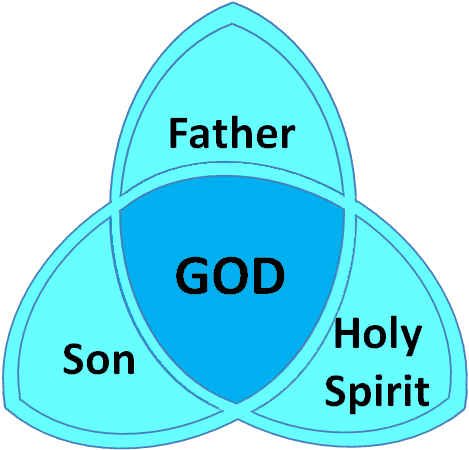
I’m currently at one of Sweden’s biggest Christian conferences called Torp where I am co-responsible for evangelism. We’re teaching biblical principles on how to share the faith in the afternoons, and in the evenings we do outreach in the local town of Örebro with the Pancake Church. It’s tiring but awesome!
The other day a group of Muslims came to us and started to ask us questions like how do we know that the miracle claims of the Gospels are true, and how does one know which religion is true. And of course, one of them raised an issue that Muslims are often concerned with: how can you believe that God is three?
The answer I gave him made him say “Now I understand! Now I understand!” Which is great since a common response to Christians explaining the Trinity rather is “Now I’m just more confused”. But he isn’t the first one to appreciate the analogy I often use to portrait how God can be three in one: the human trinity. (more…)
The Hiddenness of God: a Charismatic Response
There’s a theological problem known as the hiddenness of God which is sometimes used by atheists as an argument for God’s existence. If there is a God and He cares for human salvation, why isn’t He making His existence more obvious? Why isn’t He putting a neon cross in the sky or stamp every cell with “Made by God” in Hebrew letters? Why is He so silent and invisible if He exists?
Apologists generally offer two responses to this. First, God’s existence is already obvious as it is, the arguments from natural theology are good and atheism is really a position held by a minority on a global scale. Second, we cannot be sure that more people would actually be saved if God’s existence was even more obvious, knowing that He exists isn’t the same thing as building a relationship with Him.
I think those responses are good but would also want to offer a third response – a charismatic one. In the video above you can see how a deafmute boy in Zambia starts to hear and speak. On this page you will find resources on medically verified healings. There you go, evidence for God’s existence.
The atheist may respond that these events have natural explanations that we just don’t know yet. But that’s probably what s/he would say about the neon cross and the “Made by God”-stamps as well. And so there’s no way those kind of atheists will accept the existence of God. But if they’re open-minded, they’ll realise that He isn’t far away from any of us, and He can do convincing miracles in all of our lives.
Atheism as an Extremist Position
My video on how atheists need to deny evident truths like everything that begins to exist having a cause or the objectivity of moral values and duties gave rise to a debate between me and an atheist called John Hammond in the YouTube comment section. He confirmed my point in that he as an atheist did deny that everything that begins to exist has a cause and that morality is objective, but he thought that it was evident that these things aren’t true.
What follows is our online discussion, with John’s comments in quotation blocks and my responses in normal bread text:
Its so easy to mock others on YouTube that don’t agree with you isn’t it. We atheists are so stupid according to you aren’t we. I have argued against the Kalam Cosmological Argument so many times that I can’t be bothered to type it all out again. So will this do?
Subjective morality. Lets take two people, Hitler and me, both moral people. Now Hitler’s morality allowed him to initiate the murder of millions of people. My morality does not allow me to hurt anyone. So Hitler and me do not agree on what’s good or bad, whats moral. This is whats called ‘subjective morality’ I think Hitler’s morality was wrong. He would have thought my morality was wrong. Now lets develop this a little more. There are something like seven billion people in the world. That’s seven billion different moralities although most would agree on most points like not eating babies or torturing little kittens. We get our morality [what we personally think is right or wrong, good or bad] because of being a social animal, our upbringing and the society we live in. I personally think murdering millions of people is wrong, Hitler or Jehovah for example think its O.K. to murder millions of people.
No, we atheists do not deny truths as you falsely claim, we just stay within the bounds of reality and what we do know, not what we don’t know. In other words we do not believe in your supernatural God.
I respect you right to your beliefs sir so please respect my beliefs [or non belief] as an atheist.
With respect, John.
Atheists Denying Evident Truths
In this video I eat a delicious avocado sandwich and talk about how atheists often have to deny truths that are really evident to most of us in order to defend their atheism. I’m thinking for example on how most atheist debators argue against one or both of the premises in the Kalam cosmological argument, which are:
- Everything that begins to exist has a cause
- The universe began to exist
This is of course to avoid the conclusion of the universe having a cause, since this cause must be transcendent, outside of space, matter and time, and very powerful – which of course sounds an awful lot like God. But the premises aren’t easy to refute, they seem in fact very obvious. Of course everything that begins to exist has a cause, and of course the universe began to exist.
Another example is the moral argument for God’s existence, which states:
- If God does not exist, there is no objective morality
- There is objective morality
- Therefore, God exists
You’ll be surprised to find when discussing with atheists that many believe in both premises while they refute the conclusion. In fact, some will claim that they deny both premises and they’ll try to efute premise 1 by providing support for premise 2, and vice versa. I believe this is because we live in a culture that despises logic and so what young people in particular are told is that no opinion is better than another and that nothing’s objectively true, while they’re also told that certain moral beliefs are outrageous and unacceptable. The same person can firstly accuse Christianity for claiming that certain moral truths are universal and required by all, and later accuse Christianity for having errant moral stances on marriage or abortion.
What the atheist then has done is simply to just support both premises and so, s/he has to admit that God exists. Of course, it often takes time before the atheist is ready to make such a shift, and often the reason one is an atheist is not primarily intellectual but emotional. But as we continue to point out that atheism is incompatible with some of the most foundational truths that are universally accepted, hopefully more and more people will realize that there is a God who is both Creator and a moral anchor point.
A Defence for the Miraculous Argument
Since I first presented my formulation of the miraculous a argument for God’s existence I’ve made a slight adjustment. The content is the same but I’ve added an extra premise (2), and because of that an extra conclusion (4), to clarify why the argument is valid even if it isn’t God himself that’s responsible for a certain miracle. This is how I nowadays formulate the argument:
- If miracles occur, a supernatural reality exists
- If a supernatural reality exists, God exists
- Miracles occur
- Therefore, a supernatural reality exists
- Therefore, God exists
As this is a deductive argument, the conclusions (4 and 5) are necessarily true if it can be shown that the premises (1-3) are true. So let me briefly defend each one of them.
1. If miracles occur, a supernatural reality exists
This premise is fairly non-controversial as long as one gets the definition of “miracle” straight. The definition I have suggested is a supernatural act impacting nature as demanded by human beings. However, if one uses a definition that doesn’t mention the supernatural cause, for example an event requested by humans which is scientifically and naturally inexplicable, then one needs to defend the first premise by showing why it is more plausible than not that such events have a supernatural cause rather than an unknown natural cause. If the supernatural cause is integrated into the definition of miracles on the other hand, such a defence belong to premise 3.
The Difference Between Divine Creation and Human Creation

Last summer me and the coolest Christian in Sweden, David Larsson, were sitting in God’s nature pondering about what His creativity tells us about our creativity:
As we are created in the image of God, we are naturally creative. But unlike God we are sinful, and so oftentimes human creations are destructive and dirty. Aesthetically they are also often very different from what God creates: He likes uniqueness, irregularity and complexity whereas human creations like cars or lamps or cities are copied, predictable and simple.
We can learn a lot from how God creates stuff, it’s sustainable and life-promoting and per definition very natural. Instead of building new towers of Babel we could use more gardens of Eden where we cooperate with God in creating constructive, natural and healthy things that benefit ourselves as well as the rest of creation. Let us be liberated from industrialism and be free creative agents in God’s beautiful world.
Three Apologetic Defenses for Miracles
As I’m developing a formulation and defense for the miraculous argument for God’s existence I’ve enjoyed listening to lectures on YouTube by other Christian apologists where they defend the key premise, that miracles occur, from both a philosophical and an empirical perspective. The main philosophical objection to miracles was raised by David Hume in the 19th century, an argument that is still often referenced to by atheists and skeptics but which is actually circular and not very persuasive, as Timothy McGrew explains:
It is generally agreed today that Hume was simply lacking miraculous experience himself and so just assumed that nobody else was experiencing it. His remark of how a dead man coming back to life “has never been observed in any age or country” is embarrassingly naïve, not just dismissing the resurrection of Jesus a priori but also the numerous dead raising accounts of his time. As I have met and interviewed a man who was raised from the dead I can assure you Hume was wrong. (more…)
The Role of Relationship in the Kingdom of God
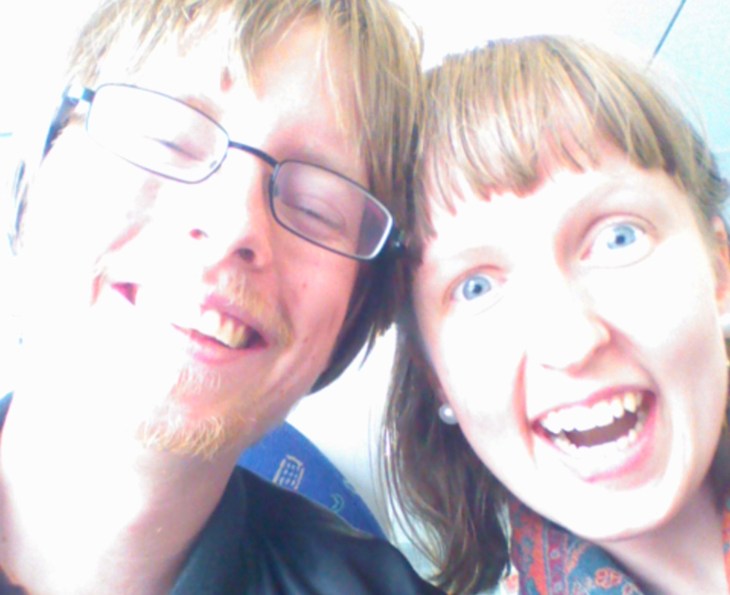
So I’m in a relationship now, which is exciting and overwhelming and horrifying and wonderful. Sarah is a charismactivist with a heart for revival and poverty reduction, a vegan Pentecostal with a global vision for Biblical community-churches that live out the book of Acts. She’s great and I thank God for her every day.
Now, as I’ve written previously I’m really a big fan of celibacy. I have no reason to doubt Paul’s statement in 1 Cor 7:38 about how singleness is “better” than being married. As long as I’ve been a Christian I have found it plausible that a single person can be “undivided” to the Lord in a way that couples can’t (1 Cor 7:33-35).
Now, many would argue that marriage and celibacy are on equal level of both value and sacrifice and that neither is better than the other. I get the impression that this is the official stance of most evangelical and charismatic churches here in Europe at least. Still, in practice, the notion is often that getting a spouse is the priority goal of every Christian’s life and celibacy is the secondary option for those who fail or are uninterested. (more…)

The Amazing Life of John Wimber
In this new episode of my YouTube series Heroes of Faith, I present how Vineyard leader and charismatic apostle John Wimber became a Christian, discovered his Spiritual gifts and advocated social justice as well as revival:
Watch the previous Heroes of Faith episode about Heidi Baker here.
Why Sacraments Don’t Exist
My latest contribution to the MennoNerds vlog concerned the issue of sacraments, where I and my cat friend Kafka argued that they don’t exist:
 Now, some of you may get a knee-jerk reaction when you hear that, so let me clarify what I mean. I’m not saying that things like communion, baptism and anointing of the sick don’t exist or that we shouldn’t do those things, there are clear Biblical commands prescribing us to practice that. But the Bible doesn’t call them “sacraments”, and neither should we. In the video, I briefly describe the origin of the term and how the definition of “sacrament”, which in turn decides what should be included in the category, is completely arbitrary and man-made.
Think for yourself: why isn’t helping the poor described as a sacrament? It’s not because Jesus isn’t telling us to help the poor, because He is. It’s not because helping the poor isn’t a visible sign of invisible grace, as the classical sacramental definition goes, because it is. Let’s face it, the reason why baptism and communion are included in a category that historical churches have found very important whereas helping the poor, evangelism and the Lord’s prayer has been excluded from said category, is because the founders of those sacramental categorizations subjectively thought that some Biblical commands were more important than others. I’ve written more about this here. (more…)

Worship Song: King of Light
Written and performed by me. No copyright, spread it on, to God be the glory.
Sand and scorching heat
Bloodstain on the street
Tortured and betrayed
Vision starts to fade
All our guilt and sin
Carries He within
King of light
God of life
Crucified
Chokes and dies
Land and heavens shake
For the Kingdom’s sake
Demons flee away
Now that we are saved
All our guilt and sin
Carried He within
King of light
Love divine
Breaks the night
As evil dies
King of light
God of life
Crucified
As evil dies
Aid and Revival in Mueda with Heidi Baker
Yesterday Heidi Baker spoke at a church in Stockholm not far from where I live. I wasn’t aware of her trip until it was too late, but I’m not sad since yesterday was an amazing day for me even without Heidi. Jesus showed Himself to me again just as He did when I just had become a Christian and needed a sign for His presence. It was in my house church as the brothers and sisters prayed for a very important decision I have to make, and I sobbed and praised Him for revealing Himself in this manner for the first time in nine years.

But yeah, Heidi rocks! And her ministry Iris Global have just published two beautiful videos about a recent outreach to the Mueda region in Mozambique. The first one is just mute recordings from the adventure with a powerful and touching worship song on top of it:
In the second one Heidi and Iris staff narrates what actually happened on the outreach. Wells were dug, education was supported, a deaf-mute girl was healed and people were saved. Praise the Lord! (more…)
The Illogical Age of Secularism

The two latest episodes of the Apologetics Canada Podcast have been dealing with the lack of logical thinking in modern culture. It wasn’t too long ago I realized that all liberal theology per definition is completely illogical since it claims to be Christian while denying things that Christ taught and practiced. And liberal theology is just the Christian version of the trend that postmodern secularization has brought with it: a departure from logic.
As an example the ACP guys name the viral video where a man asks college students what they think about various identical attributes he applies to himself that contradicts his physical appearance. He starts with claiming to be a woman, which all of the students think is great. Then he goes on claiming to be Chinese, two meters tall and seven years old, asking permission to enroll for first grade. The logic that most students had self-implodes due to this reductio ad absurdium.
In fact, most people don’t study much logic in school. And many arguments used in popular debate are emotional rather than logical. While people often refer to science as an argument of authority and certainly think that they’re logical, I have noted myself in recent debates with both Christian nationalists on receiving refugees and with atheists on the existence of God, that their arguments don’t follow the rules of logic. (more…)

Worship Song: President of Love
Written by yours truly, performed with Sarah Stenmark and Johannes Widlund.
Verse 1
Every soldier’s uniform
and every garment rolled in blood
will be fuel for fire.
Every tank will be an ambulance
Every gun will be a spoon
Nations won’t fight no more
Chorus
‘Cause Your Kingdom has come to this broken earth
It all started when You came through the virgin birth
Now this church You see is Your embassy
We pledge allegiance to the Prince of Peace (more…)

Why Heidi Baker and Bill Johnson Love Azusa
My newest video on the HSA Youtube channel is about the Azusa Now event in Los Angeles last month and how the Lord put the Azusa Street revival on my heart six years ago. What the Lord did there is absolutely amazing. Just take a look at this testimony from the first issue of the Azusa magazine Apostolic Faith, published in September 1906:
A Mohammedan, a Soudanese by birth, a man who is an interpreter and speaks sixteen languages, came into the meetings at Azusa Street and the Lord gave him messages which non but himself could understand. he identified, interpreted and wrote in a number of the languages.
Not only were the miracles at Azusa astonishing but its still ongoing global impact is breathtaking. In the video I refer to my PCPJ interview with Jennifer Miskov who has written a book called Ignite Azusa together with Baker, Johnson and Lou Engle. She argues that a new revival greater than that of Azusa will birth a new Jesus Movement that combines miracles with community living and total reconciliation between people.
Amen to that!
 Charismactivism