Home » Posts tagged 'Pacifism' (Page 2)
Tag Archives: Pacifism
The author

Micael Grenholm, a Swedish charismactivist, apologist and author.
Dealing with the Violence of Muhammad

Dr. Nabeel Qureshi
I’m currently reading Nabeel Qureshi’s bestselling book Seeking Allah, Finding Jesus. It’s a really good read with solid arguments against Islam and for Christianity. It contains some serious challenges for devout Muslims.
Nabeel had been raised believing that the Qur’an is unchanged and perfectly preserved and that Muhammad was sinless and, in fact, the greatest man who ever lived. Both of those beliefs are actually very easy to disprove when you start looking into it.
I meet Muslims every week when I’m out evangelizing with the Pancake Church. Several of them have argued that Muhammad never killed anyone. One of them was even a dai who used to hand out Qur’ans to people on the streets and who claimed to know the life of Muhammad quite well. I was perplexed by this: how could he have missed that Muhammad fought at least 27 battles, or that he once commanded the beheading of 600 Jewish men?
Nabeel’s book has helped me understand this. Most Muslims never read the hadith or the early biographies of Muhammad’s life (which originated around 200 years after his death or later). Many of them don’t even read the Qur’an, they just recite it in Arabic during prayer. What they know about Muhammad’s life is based on what their Imams or parents tell them, and oftentimes those stories are very distorted and biased. Most Muslims genuinely believe them though and are for example convinced that all of Muhammad’s battles were defensive, something that the earliest collections of hadith denies. (more…)
Why Jeremiah Explains Jesus’ Sand-Writing
Sermon notes on John 8:1-11.

Jesus went to the Mount of Olives. At dawn he appeared again in the temple courts, where all the people gathered around him, and he sat down to teach them. The teachers of the law and the Pharisees brought in a woman caught in adultery. They made her stand before the group and said to Jesus, “Teacher, this woman was caught in the act of adultery. In the Law Moses commanded us to stone such women.Now what do you say?” They were using this question as a trap,in order to have a basis for accusing him. But Jesus bent down and started to write on the ground with his finger. (Jn 8:1-6)
“Well, kill her of course” would be a proper Phariseic response to this question. Many witnesses had seen her commit this sin, and the Old Testament punishment for adultery is death (Lev 20:10). There is obviously a gender-based injustice here since only the woman is supposed to be punished, while the man she had sex with is nowhere to be seen, but many Pharisees would not care so much about that.
Jesus’ response, though, is revolutionary and unexpected:
When they kept on questioning him, he straightened up and said to them, “Let any one of you who is without sin be the first to throw a stone at her.” Again he stooped down and wrote on the ground.
At this, those who heard began to go away one at a time, the older ones first, until only Jesus was left, with the woman still standing there. Jesus straightened up and asked her, “Woman, where are they? Has no one condemned you?”
“No one, sir,” she said.
“Then neither do I condemn you,”Jesus declared. “Go now and leave your life of sin.” (Jn 8:6-11)
Jesus is Stronger than the Bombs of Terrorists
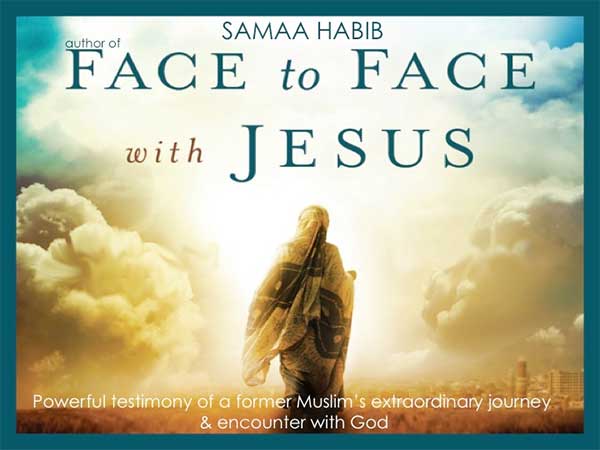
I’ve been enjoying Samaa Habib’s autobiographical book Face to Face with Jesus as I did research for my upcoming book Charismactivism last month. Samaa is from a Muslim country that used to be ruled by Soviet and that has experienced some horrible civil wars, and she opened her heart to the Gospel as a Christian ministry showed the Jesus film to the war torn public. She was amazed and told her father: ”He cannot be just a prophet, he must be more than that! He is alive. Mohammad’s skeleton is still buried in Mecca. Jesus is my super hero!” Her father didn’t agree of course, but tolerated the young girl’s enthusiasm.
She eventually went to a church service and gave her life completely to the Lord together with two of her sisters. Now, her father was enraged. After she had confessed that she will not live without Jesus, he abused and tortured her, strangling her until she fainted. She later escaped her family’s house through a window and fled to the church.
As time went by, more people in Samaa’s family were saved. Her mother was healed from a heart problem and encountered Jesus in a dream. This made the father tolerate Christianity a bit more, even if he still was in severe disagreement.
One day as Samaa was worshipping in church, a bomb exploded right next to her and she died instantly. She saw Heaven and Jesus, and He said that she could either be with Him or return to earth to lead more people to Him. She chose the latter, and woke up blind and deformed as she was taken to hospital. Her brain was visible and her appearance was a mess. (more…)
Statement of Faith
Based on the Nicene Creed as well as statements of faith from the Vineyard movement, Azusa Apostolic Faith Mission, the Jesus Army, the old Assemblies of God, Schelitheim Anabaptists and the Lausanne Covenant.
God
We believe in one God, the Father Almighty, Maker of heaven and earth, and of all things visible and invisible.
Jesus
And in one Lord Jesus Christ, the only-begotten Son of God, begotten of the Father before all worlds; God of God, Light of Light, very God of very God; begotten, not made, being of one substance with the Father, by whom all things were made.
Who, for us men for our salvation, came down from heaven, and was incarnate by the Holy Spirit of the virgin Mary, and was made man; and was crucified also for us under Pontius Pilate; He suffered and was buried; and the third day He rose again, according to the Scriptures; and ascended into heaven, and sits on the right hand of the Father; and He shall come again, with glory, to judge the quick and the dead; whose kingdom shall have no end.
The Holy Spirit and His Gifts
And we believe in the Holy Spirit, the Lord and Giver of Life; who proceeds from the Father; who with the Father and the Son together is worshipped and glorified; who spoke by the prophets.
We believe that the Holy Spirit indwells every believer in Jesus Christ and that He is our abiding Helper, Teacher, and Guide. We believe in the filling or empowering of the Holy Spirit, often a conscious experience, for ministry today. We believe in the present ministry of the Spirit and in the exercise of all the biblical gifts of the Spirit. We practice the laying on of hands for the empowering of the Spirit, for healing, and for recognition and empowering of those whom God has ordained to lead and serve the Church. (more…)
Praying for Paris: Terrorism and Climate Change
In two weeks time I was supposed to go to Paris together with other climate activists. We’re awaiting instructions on whether the trip will be possible, but right now I’m mourning and praying for the victims of the horrible terrorist attacks in the French capital yesterday. In this video I share some thoughts on how torespond to such attrocities, and why attention to Paris is extremely important also when it comes to decisions on climate change, wince these can potentially save millions of lives.
There is also a great injustice in that terrorist attacks and suicide bombings in Lebanon or Iraq are rarely called “attacks on humanity” or spawn Facebook campaigns. The media values white life more than other people’s lives, that’s a fact. And it is wrong and sinful. 200 000 people have been killed in Syria, that’s one Paris attack every day for the last four years.
Let us pray to God for peace and justice, and also that we may be uncorrupted by the flawed logic of this world. Let us pursue holiness and righteousness, and strive for simplicity and equality as Jesus modelled for us. Let us love our enemies, pray for the repentance of ISIS and let us send missionaries to them! Let us receive the refugees that flee from them and present them the Gospel of life. Let us love our way out of the darkness in the power of the Holy Spirit.

Image by Michele Perry
How Do American Christians Deal with Martyrdom?
Another horrible school shooting has occurred in the US, this time in the Umpqua Community College in Oregon, and according to some reports the shooter targeted Christians or was at least interested in whether his victims were Christian or not. the Washinton Post writes:
In one classroom, he appeared to single out Christian students for killing, according to witness Anastasia Boylan.
“He said, ‘Good, because you’re a Christian, you’re going to see God in just about one second,’” Boylan’s father, Stacy, told CNN, relaying his daughter’s account while she underwent surgery to treat a gunshot to her spine.
“And then he shot and killed them.”
Another account came from Autumn Vicari, who described to NBC Newswhat her brother J.J. witnessed in the room where the shootings occurred. According to NBC: “Vicari said at one point the shooter told people to stand up before asking whether they were Christian or not. Vicari’s brother told her that anyone who responded ‘yes’ was shot in the head. If they said ‘other’ or didn’t answer, they were shot elsewhere in the body, usually the leg.”
Some Christians have argued that this shows that they are clearly persecuted in the US, which I would say is a big exaggeration when comparing with our brothers and sisters in Iraq, China and North Korea that are persecuted for real. But not only that, in an American fashion many Christians have argued that this shows that more guns are needed! More Christians need to arm themselves to be able to kill new shooters that inevitably will pop up on American soil. (more…)
Fighting Terrorism Like Jesus

France has once again been subject to an attack which the president has dubbed “terrorist”. A man has been decapitated and the aggressor has been said to wave a black Islamic State flag. Meanwhile, over 40 people have been killed in bombings at a hotel in Tunisia and a mosque in Kuwait. Some believe that the attacks have been coordinated.
The threat of violent extremism shouldn’t be diminished. The Islamic State has an ideology very similar to Nazism – a belief that they’re superior and have the right to kill people who don’t look like and believe like them. Much like the 21-year old boy who went into a church in Charleston, South Carolina, last week and killed nine people because of the colour of their skin. He wasn’t labeled a terrorist that quickly as the guy in France was – instead we got to see childhood pictures of him and speculations about his mental state.
It is ridiculous how common this media logic is: dark-skinned aggressors are politically motivated terrorists, while light-skinned aggressors are confused lone-wolves with mental problems. Even Norwegian terrorist Anders Behring Breivik is not very often described as a terrorist, although it has been stated in court that he isn’t a psychopath but had a xenophobic ideology as the basis of his crime.
Speaking of xenophobia, Europeans who lean towards those ideas will most surely use the recent attack in France as an argument for deporting more Muslims to countries like Syria and Iraq, where there is war and terror fully operating. Now, that’s a horrible solution to the problem. The attacks in Tunisia and Kuwait today are illustrative: most victims from Islamic terrorism live in the middle east. Most of the Islamic State’s victims are Muslims! “Solving” Islamic terrorism with deportations is like “Solving” the holocaust and world war two with deporting every Nazi and Jew to Germany. It only gets worse if you do that.
So what is the solution then? Let’s look at the Bible. Did you know that one of Christianity’s greatest missionaries was a terrorist? His name was Saul.
Christian Nonviolence and ISIS: You’re Asking the Wrong Question
This post is written by Micah Bales at his own blog and is published here with permission. It is the best article I’ve seen so far about Christian nonviolence and ISIS.
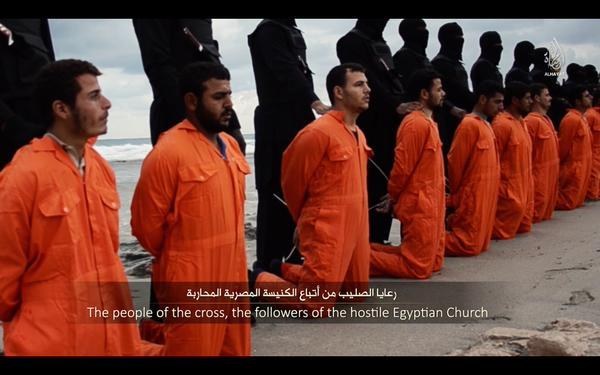
A couple of folks I really respect – Kate Gould of Friends Committee on National Legislation (aka, the Quaker Lobby), and Jim Wallis of Sojourners – were recently on the O’Reilly Factor. For those of you who don’t watch cable news, this is a television program where Bill O’Reilly basically screams at people and incites hatred of anything non-white, non-rich, and non-Republican. I normally don’t watch the show. But when I heard that Kate and Jim were going to be talking, I tuned in.
I knew almost immediately this wasn’t going to be good. It’s Bill’s program, so he gets to frame the question. Here’s what he asks: Do Christian pacifists have a solution for stopping ISIS?
It’s the wrong question. O’Reilly knows it’s the wrong question, and that’s why he’s asking it. Unfortunately, both Gould and Wallis attempt to answer his question directly and rationally. Gould presents an argument for diplomatic measures to curb ISIS’ support. Wallis tries to explain that O’Reilly’s rhetoric of holy war will only lead to a wider conflagration and cost more lives.
This is great for Bill O’Reilly. To these subtle, rational arguments, all he has to do is scream and berate. At one point, O’Reilly interrupts Jim Wallis mid-sentence and demands: How would you stop the ISIS savages from murdering innocent people? How? (more…)
Putting Away the Sword of Self Defense: Scriptural Reflections of a Pentecostal Pacifist
This article is one of the best defenses for Christian pacifism I have read, written by Pentecostal pastor Eric Gabourel. It was originally posted on the website of his church, Live Oaks Community Church in New Orleans.

Who would Jesus kill?
At the last Passover Seder Jesus told His disciples that if they didn’t have a sword to sell their cloaks and buy one (Luke 22:36). This statement is often abused by Christian just war theorist to advocate Christian participation in war. Those who take the position that Jesus was telling His disciples to be prepared for battle or for self-defense only emphasize this phrase from the passage. To have an appropriate assessment of this statement one must treat the entire text of Luke 22:7-53.
Before Jesus tells His disciples to buy swords He calls them to recollect the instance when He told them to go out and preach the Gospel without carrying purse, bag, or sandals (Luke 22:35; Luke 10:4). He then asks them what they lacked when they were sent out to live by faith. Naturally they said “nothing” because of God’s sustaining power that responds to human faith in a lifestyle of radical simplicity and abandonment. Jesus’ teachings on worry and anxiety (Luke 12:24-34) states that we should not be concerned about human necessities: food, shelter, clothing, because these are the things that pagans run after. Moreover, He tells His followers to, “Sell their possessions and give to the poor” (Luke 12:33). Therefore, Jesus in telling his disciples to now carry a purse and a bag was not telling them to expunge what He initially taught them. Jesus was telling them to do these things as a symbol of the impending crisis that was to ensue.
Jesus telling His disciples to carry possessions wasn’t a contradiction just as His prayer on the Mount of Olives wasn’t. In this prayer we also witness the tension of the crossroads that Jesus was standing at. He asked the Father, “if you are willing, take this cup from me” (Luke 22:42). This prayer does not imply that Jesus was trying to avoid His salvific mission to bear the sins of the world. His prayer stresses the overwhelming burden that He was about to bear. He knew and understood His task. That’s why He continued to pray, “yet not my will, but yours be done” (Luke 22:42). The tension was so intense that Luke states that Jesus’ sweat was like drops of blood falling to the ground (22:44).
A Christian Response to the Charlie Hebdo Attacks

When Jesus said “Love your enemies”, He didn’t add “except terrorists”. On the contrary, it was probably them He had in mind. Charismatic activist Bob Ekblad has written an excellent piece on how Christians should respond to the horrible terrorist attack against Charlie Hebdo in Paris, which I quote a large portion of below. I have nothing to add except a little cartoon about Jesus’ amazing enemy love.
How might followers of Jesus respond to this escalation of hatred and violence? Jesus warned his disciples: “You will be hearing of wars and rumors of wars. See that you are not frightened, for those things must take place, but that is not yet the end” (Matthew 24:6). Jesus expects his listeners to be aware that history is heading toward increasing tension and to resist the natural tendencies toward hard- heartedness or violence.
“Because lawlessness is increased, most people’s love will grow cold. But the one who endures to the end, he will be saved. This gospel of the kingdom shall be preached in the whole world as a testimony to all the nations, and then the end will come” (Matthew 24:12–14). Anyone listening to Jesus is told to not be fearful, but to get on with the highest priority work—announcing the Gospel of the Kingdom. What is this Gospel?
It most certainly does not include Christians identifying with or justifying swift and effective retaliation, increased surveillance, growing suspicion, incarceration, hatred against Muslims, or fear. When James and John ask Jesus if they should call down fire from heaven to consume the Samaritans who refused them entry as they traveled toward Jerusalem, Jesus rebukes them, saying: “You do not know of what spirit you are of. For the son of man did not come to destroy men’s lives but to save them” (Luke 9:55–56).
Why Christians Should Be Pacifists
 Guest post from my Australian friend Drew Meakin. Check out his website and our common facebook page Charismatic Holiness Anabaptist Theology!
Criteria for defending a Christian belief or practice/ Christian pacifism
In order to defend a Christian belief or practice, one must be able to prove it from 1) scripture 2) history, 3) experience, 4) biblical/historical trajectory.
1) Scripture is of most importance. Can it be confirmed by at least two or three scriptures in the Bible? Do those verses apply to new covenant believers? “Every matter must be established by the testimony of two or three witnesses.” 2 Corinthians 13:1. Many cultic groups have become errant by building doctrines or beliefs around only one scripture.
2) History is of secondary importance. Was it held to by the early church and has it continued until the present day?
Early Christian Pacifism

Church Fathers
Christianity is a pacifist religion. Most of the early church fathers wrote that Christians should not kill or join the military, and the idea of “just wars” first developed in the late fourth century, after Constantine’s reforms. The ante-Nicaene church was to a large extent a non-violent church. This was clearly shown already in 1919 when John Cadoux pubished his book The Early Christian Attitude to War, which is now available online. The research has been updated with Ron Sider’s book The Early Church on Killing, which was published last year. But only by looking at quotes from early church fathers, we see that these saints were far from the war-waging right-wing Christians that unfortunately are quite influential in the public debate today:
Justin Martyr wrote in 160 AD:
“We ourselves were well conversant with war, murder, and everything evil, but all of us throughout the whole wide earth have traded in our weapons of war. We have exchanged our swords for ploughshares, our spears for farm tools. Now we cultivate the fear of God, justice, kindness to men, faith, and the expectation of the future given to us by the Father himself through the Crucified One.” (Dialogue with Trypho 110.3.4)
Tatian (dead c. 185), Justin’s disciple, wrote:
“I do not wish to be king, I don’t want to be rich, I reject military service. I hate adultery”(The Ante-Nicene Fathers, Alexander Roberts and James Donaldson, Grand Rapids, Michigan, Vol. II, reprint 1979, p. 69)
Athenagoras (133-190) wrote:
“What, then, are these teachings in which we are reared? ‘I say to you, love your enemies, bless those who curse you, pray for those who persecute you, that you may be sons of your Father in heaven, who makes his sun to shine on the evil and on the good, and sends his rain on the just and on the unjust . . . Who [of the pagan philosophers] have so purified their own hearts as to love their enemies instead of hating them; instead of upbraiding those who first insult them (which is certainly more usual), to bless them; and to pray for those who plot against them? . . . With us, on the contrary, you will find unlettered people, tradesmen and old women, who, though unable to express in words the advantages of our teaching, demonstrate by acts the value of their principles. For they do not rehearse speeches, but evidence good deeds. When struck, they do not strike back; when robbed, they do not sue; to those who ask, they give, and they love their neighbours as themselves . . . We . . . cannot endure to see a man being put to death even justly.” (Legatio 11, 34-35 (Athens, 175))
What it Means to be Anabaptist, and Why You Should be One

An Anabaptist being martyred in 16th century Europe
As many of you know, I am glad to be a part of the MennoNerds network, an international blogging community made up by people who are nerdy about Mennonite and Anabaptist theology. The Anabaptists were the central figures in the radical reformation during the 16th century. While Luther and Calvin opposed Catholic teaching they still wanted to kill people and were opposed to freedom of religion. Anabaptists however both criticized Catholic teaching and the Catholic church model when one baptizes entire countries, gather people in cathedrals and kill those who don’t agree with you.
The Anabaptists were of course persecuted and killed both by Catholics and Protestants. However, some survived and can today be found in three main groups: the Amish who dress funny and live environmentally friendly, the Hutterites who dress funny and have everything in common, and the Mennonites who dress boringly and write blogs about Anabaptism.
My fellow MennoNerd Tyler M. Tully has written an excellent introduction to Anabaptism, where he also defines three core distinctives that define Anabaptist theology. These three are, in short:
- Jesus Centered– Jesus stands as the lens by which Anabaptists read the entire Bible, and the exemplary by which we engage all theology.
- Free Church of Confessing, Baptized Disciples – the Anabaptists were opposed to infant baptism partly because it wasn’t Biblical, and partly because it created a society where your nationality, not your faith, defined you church membership, and that was opposed to freedom of religion
- Agents of God’s Shalom – Anabaptists are pacifists committed to non-violence, but not only do we want an absence of war but also a presence of Shalom, justice and harmony.
Killing the Next Hitler
Yesterday was the International Holocaust Remembrance Day, a day that feels extremely important to remember in xenophobic Europe of today. As Spain is going fascist, the neo-Nazi “Christian” party Jobbik has 12% of seats in the Hungarian parliament and islamophobia is growing rapidly, many are afraid that the economic crisis will throw Europe back to a similar state like the 1930’s. The period when Adolf Hitler gained power.

Adolf Hitler as an Infant
There is a great number of extremely simplistic solutions to how the second world war would have been prevented, the most common is probably to kill Hitler as a child. I cannot count how many times I’ve heard people dream about this “what if” scenario. Not long ago it was discovered that Hitler actually almost died as a child when he fell through the ice, but a friend, who later became a priest, saved him. The Daily Mail called it “the most devastating act of mercy in history”.
But of course, Adolf’s soul was darkened not because of mercy but because of lack thereof. The upcoming genocide in the Central African Republic won’t be stopped by people who let children die but by people who save them. Our culture is so dipped in a logic of death that we think the best way to stop a murderer is to kill him, that the best way to stop the Holocaust was to kill civilians in German cities, that the best way to stop the war against Japan was to kill hundreds of thousands of innocent people with nuclear bombs.
The Problems with the Lutheran Augsburg Confession

Illustration of the Confession by Wenceslaus Hollar
I was raised in the Lutheran Church of Sweden, the biggest church in my country, formerly state-church, with around seven million members of whom 85 % according to a recent poll don’t believe in Jesus. When I was saved in 2006, Martin Luther was one of my spiritual heroes. As I read the Scriptures and compared it to Catholicism I realized that they had added a lot of stuff that Jesus and the apostles never talked about, and I thought Luther was one of the first to realize that and to resurrect the original Gospel. Arguing that Scripture should be the only source to theology and pointing at Paul’s emphasis on justification by faith and grace, he criticized the unbiblical Catholic indulgence and several unbiblical doctrines. I thought Luther was awesome.
As I learned more about Luther and Lutheranism however, I started to realize that perhaps he wasn’t entirely biblical either. In fact, he changed the order of biblical books according to his personal opinion, placing the letter of James, one of my favourite biblical books, last because it didn’t make sense with his interpretation of sola fide. And he was a quite violent man, justifying wars, capital punishment, persecution against Jews and execution of Anabaptists. In fact, as I discovered the existance of Anabaptists and their radical, pacifist Jesus-centered theology, I realized that Luther was not the only one protesting against Catholic errors, and far from the best.
I hope to return to my criticism of Luther in a future post, but right now I want to turn to the Augsburg Confession, one of the most important Lutheran documents that actually is one of the primary faith documents of the Church of Sweden, in line with the Nicene Creed. It’s a really weird document. It starts like this:
Most Invincible Emperor, Caesar Augustus, Most Clement Lord: Inasmuch as Your Imperial Majesty has summoned a Diet of the Empire here at Augsburg to deliberate concerning measures against the Turk, that most atrocious, hereditary, and ancient enemy of the Christian name and religion, in what way, namely, effectually to withstand his furor and assaults by strong and lasting military provision…
 Charismactivism