Home » Justice & Economics (Page 13)
Category Archives: Justice & Economics
The author

Micael Grenholm, a Swedish charismactivist, apologist and author.
Iris Relief Starts Supporting Syrian Refugees
I know, I’ve written about the crisis in Syria before, it shouldn’t be new to anyone that the humanitarian situation there is catastrophical. But things have become even worse. Today, leaders of four giat UN agencies – UNICEF, WFP, OCHA and UNHCR – published the video above were they demand more support for the humanitarian relief in Syrian and neighbouring countries. There isn’t enough money. People die because of lack of money. The political leaders of donor countries are to blame for this of course, but it won’t hurt if we dig in our pocket books ourselves to save lives.

Iris Relief, my favourite humanitarian organization, have now started to work with Syrian refugees. They write:
As of the beginning March 2013, Jordan has received over 320,000 Syrian refugees, with the numbers expected to double or triple over the coming months. There are wide spread shortages of food, water, medical, hygiene and education resources. Jordan is under pressure and struggling to keep up with the demand of the ever increasing basic needs of those seeking refuge. (more…)
Heading to Africa

People from Michael’s Children’s Village
You may have noticed that I’ve written a bit about South Africa lately. Well, that’s because I’m going there. Lord willing I will go to White River, Mpumalanga, in May, and visit Iris Ministries there. They have a children’s home called Michael’s Children’s Village which is led by Mozambiquians Surprise and Tryphina Sithole and Americans Teisa and Jean Nicole.
They’re practicing true charismatic activism. Surprise have seen food miracles as well as people raised from the dead, and at the Village they combine social work and compassion with prayer for signs and wonders. The reason it’s called Michael’s Children’s Village is that the arch angel Michael appeared to them and told them to start it.
There are huge needs of this type of social ministry in SA. Many may think of the country as a prosperous, emerging economy; however, it is one of the most unequal countries in the world. The traces of apartheid are still visible, damning millions of people into poverty while the richest only get richer.
Half of SA’s children live in poverty. 5.6 million South Africans suffer from HIV and over 200 000 die from AIDS annually. And the social unrest make crime very prevalent, making the rich isolating themselves from the poor even more.
Urgent Appeal: People Die in Syria due to Lack of Aid
This appeal comes from Doctors Without Borders (MSF). Please make a donation to them here.
After two years of extremely violent conflict, the humanitarian situation in Syria is now catastrophic and the aid provided falls drastically short of what is needed. The diplomatic paralysis preventing a political resolution of the conflict can by no means excuse the failure of humanitarian response. MSF calls on the parties involved in the conflict to negotiate an agreement on humanitarian aid, to facilitate its supply around the country via neighbouring countries or across front lines. Meanwhile, states, United Nations and donors must acknowledge the country’s fragmentation and urgently give their support to NGOs to help them provide assistance where they can.
The Syrian population is faced with a conflict of extreme violence and a humanitarian situation of catastrophic proportions: the previously well functioning health system has collapsed; food shortages are commonplace, and water and electricity supply is disrupted. “Medical aid is being targeted, hospitals destroyed and medical personnel captured,” explains Dr. Marie-Pierre Allié, President of MSF France. According to the United Nations, 2.5 million Syrians have been displaced in the country, while 57% of hospitals have been damaged and 36% are unable to function according to official data. These statistics do not include the private clinics or makeshift hospitals that have been destroyed or damaged.
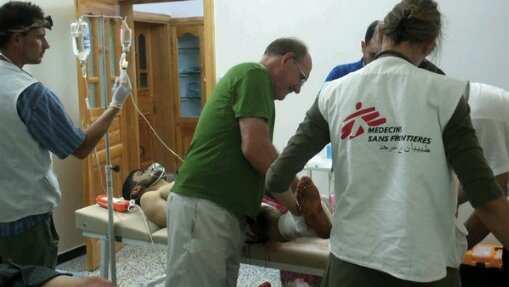
Photo: MSF
Women in Wartime
Today is International Women’s Day, a day which highlights the severe discrimination and oppression of women all around the world. There are strong evidence for the thesis that if gender equality is promoted in developing countries, it will give positive effects when it comes to political participation, poverty reduction and human rights.
But gender equality also has an intrinsic value, as people created in the image of God, it is totally unacceptable when women are facing oppression, violence and humiliation. Christian Aid has written this text about women’s situation in war, with the case study of Syria, that emphazise the importance of gender awareness.
Women in wartime
Today some 90% of war casualties are civilians, the majority of whom are women and children.
Just over a century ago, when the first International Women’s Day events were held, women and children made up only 10% of war casualties, while military personnel made up the majority of those who lost their lives.

Victims of sexual violence in DR Congo
International Women’s Day and Mothering Sunday
This year International Women’s Day and Mothering Sunday fall over the same weekend, on 8 and 10 March respectively.
These are both moments for celebrating the strength, resilience and inspiration of women all over the planet. But they are also times to draw attention to the fact that women are the world’s second class citizens.
How Sub-Saharan Africa Has Changed Since 2005
Feeling depressed about all the wars, poverty, corruption, terrorism, famines and natural disasters in SSA? There sure is a lot to pray for and work against, but praise God – it’s getting better! Here’s some statistics from ONE:

Now of course there are regional differences; and even though things are generally getting better, the social, economic and political status of SSA countries are still very low compared to many other parts of the world. But we should never lose hope, change is possible! Let’s pray and work for more development, peace and revival on the beautiful African continent!
God vs Wealth, part 6: The Old Testament
To read other parts of the series, go here.

“What about king David?” people ask me when we debate whether a Christian should be rich or not. David was a “man after God’s own heart” (Acts 13:22) who clearly loved and feared the Lord, and yet he was very rich. Same thing is true for many believers in the Old Testament – kings like Solomon or Hezekiah as well as landlords as Abraham and Job. They believed in God, and still were rich.
However, we must remember that just because you are a believer, all your actions do not necessarily reflect the will of God. The only person in the Bible that we know lived a totally holy life is Jesus Christ. But when it comes to Abraham for example, he had married his sister. Should we use that as an argument for us to do the same?
Likewise, when it comes to David and Solomon, they lived in polygamy. We know however that Scripture condemns polygamy in other places. And interestingly enough, the same Bible verse that forbids Old Testament kings to take several wives also tells them not to accumulate wealth. This verse is not so famous, but is is a clear debunking of the “what about king David”argument. In Deutoronomy 17, God speaks of the lifestyle of the future king of Israel. Among other things, He says:
He must not take many wives, or his heart will be led astray. He must not accumulate large amounts of silver and gold. (Deut 17:17)
How to Spread the Gospel

Street evangelism with my church, Uppsala Mosaik
As a John Wimber-inspired charismatic, I am convinced that signs and wonders are wonderful for spreading the Gospel. It’s hard to convince people that God exist if they can’t see His power. Furthermore, as a Christian activist, I am convinced that love, servanthood and good deeds are wonderful tools for spreading the Gospel. It’s hard to convince people that God loves them if we don’t express love to them. And as an evangelical, I am convinced that preaching is a wonderful tool for spreading the Gospel. It’s hard to convince people that God can give them salvation if you don’t tell them.
In other words, I fully agree with these three schools of thought. However, I have met countless of times Christians who argue that one of these evangelism strategies is much better than the other two and must be prioritized.
I’ve listened to a charismatic preacher at a healing conference who basically said that the power of the Holy Spirit is the absolutely most vital in evangelism, more vital than doing good deeds.
I’ve talked with a deacon who argued that doing good deeds is much more important than actually using words, quoting S:t Francis famous words “Always spread the Gospel, and when necessary, use words” (although he actually never said that, but that’s another story).
(more…)
Healing the World: Combining the Gift of Healing with Poverty Reduction

Surprise Sithole
In his great autobiography Voice in the Night, South African pastor Surprise Sithole shares an amazing event that happened shortly after he had met his present co-worker Heidi Baker, director for Iris Ministries, for the first time. Cholera had struck a community, and being a highly contagious disease that could lead to death, most people would run the other way. However, Surprise and Heidi went straight into the fire.
They had to argue with the health workers for a long time before they could enter the hospital tent. Inside, the stench was horrible and the suffering of the people even greater. Surprise writes:
“Heidi walked straight into this disgusting, foul-smelling, life-threatening mess. She knelt down beside people to pray for them. She lovingly wiped the perspiration from their foreheads. She took the children in her arms and hugged and kissed them – pouring out her life again and again. Her courage and grace amazed me, and I tried my best to follow her example.”
As they prayed, more and more got healed, rising from their beds with their symptoms gone. For those who weren’t healed, they loved and hugged them and brought them clean water. Amazingly, neither Heidi nor Surprise came down with Cholera after this event.
Aaron D. Taylor: Merging Charismatic and Mennonite Traditions
This text was written four years ago by Aaron Taylor. He basically says what I say but said it before I said it. Check out his awesome blog.

Aaron D. Taylor
Why I Wish I Were a Mennonite
My name is Aaron D. Taylor and I’m a charismatic Christian. If you ever see me driving with my glasses on, I may look dignified, but don’t let my appearance fool you. Throughout my life I’ve been slain in the Spirit and drunk in the Holy Ghost on numerous occasions. I’ve felt the anointing, laid hands on the sick, cast out devils, and been prophesied over countless times. It’s taken me a long time to feel comfortable in my Pentecostal/charismatic skin, but I can honestly say today that I wouldn’t trade my Pentecostal/charismatic heritage for anything. I’ll admit it’s been a very long time since I’ve “shaken under the power” or “danced in the Spirit”, but to this day I pray in tongues, lay hands on the sick, and if I ever need to get the devil off my back, I’ll gladly pull out the “Sword of the Spirit” and start quoting Scripture. We Pentecostals and charismatics have a lot to be proud of. We were a miniscule, lower class fringe movement 100 years ago and now there are over 600 million of us around the world!
So why do I wish I were a Mennonite? Yesterday was my 30th birthday and when I think about the past 30 years of history, on nearly every moral issue that speaks to how Christians are supposed to live as a peculiar people surrounded by a godless culture, the Mennonites have been right and we’ve been wrong. While charismatic leaders were “naming and claiming” plush clothing, fancy cars, and million dollar mansions, Mennonites were teaching their children to live simply so that others could simply live. While charismatic leaders were petitioning the government to keep under God in the pledge of allegiance, Mennonites were warning their children about the dangers of nationalism. While charismatic leaders were building “apostolic networks” to win the world for laissez-faire capitalism, Mennonites were sharing possessions, building communities, and identifying with the poor. While charismatic leaders were putting bowling alleys and coffee shops in their multi-million dollar church buildings”, Mennonites were providing a decent living for third world farmers by setting up international co-ops and selling fair trade coffee.
Desperate Needs, Ultimate Joy: A Letter from Rolland Baker

Photo: Iris Ministries
This newsletter just came from Rolland Baker, founder of Iris Ministries.
Dear friends of Iris around the world,
We in Iris continue to face more need, challenge, opposition, helplessness and perplexity than we can bear, yet daily God shows up and we soldier on. We are jars of clay to show that this all-surpassing power is from God and not from us (2 Cor. 4:7). We often feel under great pressure, condemned to failure. But we have learned that this happens that we might not rely on ourselves, but on God, who raises the dead (2 Cor. 1:9).
We cannot overstate how much more help we need in every way. We need administrators, organizers, technicians, engineers, mechanics, builders, doctors, nurses, teachers, farmers, computer and Internet geeks, donors, etc., ad infinitum, along with every kind of spiritual gifting. The reason is that Iris is not simply a church, or a children’s center, or a relief effort, or a Bible school, or a mission training base, but all these and more as one example of an entire Kingdom environment. We exist to demonstrate an all-encompassing love that flows from God’s heart, a love that the unsaved have never seen before. We are here to seek and save the lost, and in the process give them a foretaste of heaven and our unshakeable inheritance that is to come.
We came to Mozambique, one of the world’s poorest countries, to prove the Gospel, both in our own hearts and lives and among the neediest people we could find. And the Gospel has taken root all around us. Churches are being added to our number weekly, mounting into the thousands. After so many years of cruel colonialism, communism and civil war, the overall climate of Mozambique has changed, deeply affected, we believe, by the Gospel. It has recently been voted one the most peaceful countries in Africa. Its economic growth rate is amazing. Major energy resources are being discovered.
God vs Wealth, part 5: Three Heresies
To read other parts of the series, go here.
In the first four parts of my God vs Wealth series, I’ve presented why I am convinced that Christians shouldn’t be rich. Now, I will discuss some counter arguments against that thesis.
1. There’s nothing wrong with being rich as long as you value God more than your money
This theory, which I’ve mentioned in some of the previous posts in this blog series, is basically saying that as long as your money doesn’t affect your relationship with God negatively, you can be as rich as you want. The problem is not owning money, the problem is if the money owns you. However, Jesus does not agree with this:
“Do not store up for yourselves treasures on earth, where moths and vermin destroy, and where thieves break in and steal. But store up for yourselves treasures in heaven, where moths and vermin do not destroy, and where thieves do not break in and steal. For where your treasure is, there your heart will be also.” (Mt 6:19-21).
In other words, it’s wrong to argue that you can be rich as long as your money doesn’t hinder your relationship with God, because where your treasure is your heart will be also – you cannot have treasures on earth and your heart in Heaven! The word “treasure” is used in James 5 as well where wealth also is criticised. We have to get rid of it to attain full devotion to the Lord.
Humanitarian Passion
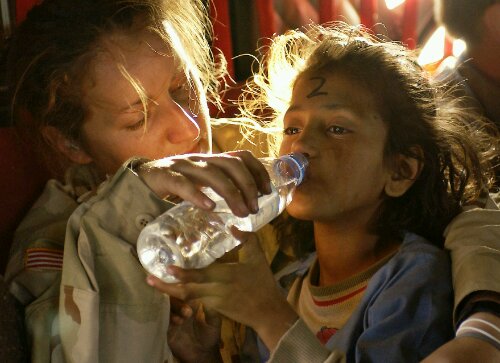
Image from Wikimedia Commons
As you may have noticed, I’ve written a lot about humanitarian aid the last couple of days. I feel a growing passion for this issue, and I really want to spread it on to others. However, I have noticed that it is not so easy to do.
To my experience, most people are quite uninterested in humanitarian aid; they aren’t reading much about it nor giving that much money to it. When I look at the statistics of my Swedish blog, the posts last year that got the least views are those who concerned humanitarian crises (with the single exception of Gaza). And when I get reports from humanitarian organizations, they constantly talk about that their projects are underfunded.
Why is it like this? Why are rich people spending billions on sports, entertainment and luxuries while people suffer and die in Syria because of lack of humanitarian aid? Some would say that this is caused by human nature, we cannot help that we aren’t so interested in saving the lives of people far away. However, this cannot explain how humanitarian aid workers lay down their lives to help people they’ve never met. Humanitarian passion is rare but does exist.
Emergency: 140 000 Homeless in Mozambique Due to Floods
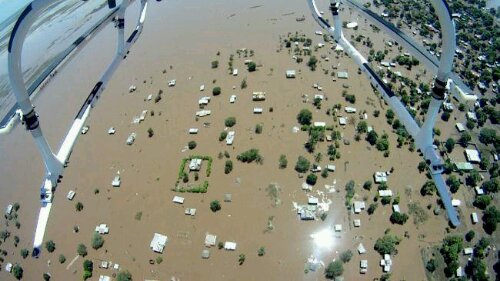
“The flood was causing vastly more than homelessness. Corpses were floating in the floodwaters. Helicopters rescued ten thousand people from treetops and roofs along the Limpopo River, but ninety thousand more were stranded and in immediate danger of being swept away and drowned. Most could not swim, but the current was so powerful and deep that even strong swimmers could not last long. Each day those trapped in tiny areas grew weaker from hunger and exposure. Small children were affected quickly by malnutrition, so they were rescued first, leaving their parents behind.
Those rescued were deposited in isolated areas, still wet and miserable and without food or services of any kind. Children were hungry, sick and crying, with high fevers, and left without mothers and fathers. International aid was on the way but greatly delayed by red tape, and it was far less than what was required. In this huge country with so many orphans and children in distress, there were pitifully limited facilities for taking care of them. In the Lord we tried to fill a vacuum among the neediest of them all.”
This is what missionary Rolland Baker writes in his book Always Enough (Chosen Books, 2003) about the devastating floods that hit Mozambique 13 years ago. His organization, Iris Ministries, did their best to alleviate suffering and save lives in the midst of disaster. In the book, he expresses the joy of seeing happiness returning to those who recieve the aid, but also the pain of knowing that there were many they didn’t were able to help. Today, he and the other Iris missionaries will have to experience this all over again.
Because of extremely heavy rain the last week, southern Mozambique has been struck with the largest flood disaster since 2000. UN OCHA reports that 250 000 are affected, of which 146,000 have to be housed in temporary shelters. These people are in desperate need. Katherine Mueller from the Red Cross says: The main needs are tents and clean water, but they basically need everything.”
Iris Relief has sent a team to the areas affected by the floods to bring humanitarian aid and the power and love of the Holy Spirit. Please support this, go here and scroll down to “Iris Relief: Responds to Mozambique Floodings”. Or you can give to World Food Programme, Unicef or some other organization that are active in the area. Thank you, and God bless you!
Humanitarian Disasters: The Facts
Text by Christian Aid:
Almost half the world’s population has lived through a disaster at some point in the past decade. It’s enough to make you fear the future.
Storms, floods, famine, cyclones, drought, typhoons, earthquakes, mudslides, avalanches. Each year for the past decade, an average of 258 million people have lived through some kind of disaster – in total, this is the equivalent of almost half of the world’s population.
According to the Red Cross, an average of 354 natural disasters occurred throughout the world each year from 1991 to 1999. Between 2000 and 2004, this figure more than doubled to an average of 728 natural disasters per year.
And each year, the death toll from disasters is growing greater – from 84,570 in 1995 to 249,896 ten years later, according to the Organisation for Economic Co-operation and Development (OECD).
(more…)
Should Every Christian Be an Activist?

Christian activists
Some time ago I was having lunch with the leader of the Swedish Pentecostal movement. I had contacted him in order to share my vision of combining signs and wonders with peace and justice, and he offered to meet me. When we sat there I explained how important it was to eradicate poverty, fight climate change and work for peace, and then I remarked that I had to leave the lunch a bit early since I was going to participate in an act of civil disobedience in a detention center not far away, where the police would deport people to Iraq the same night. He looked at me and said “I really share your conviction that these issues are very important, but please reflect upon how much the ordinary believer is obliged to do.”
I got his point. Most Christians aren’t willing to lay so much time on activism as I do; in fact, for many of them “activist” is a quite alien term. And I agree with that there are different functions in the body of Christ – some focus on activism, others on preaching, others on evangelism and so on.
Still, just as the presence of preachers doesn’t mean that everyone else shouldn’t know any theology, every believer should care for peace and justice to some extent. The question is: what extent? Well, when we look at the Scriptures, it is striking that many of the commandments to all believers are very radical when it comes to peace and justice:
 Charismactivism