Home » Church & Theology (Page 5)
Category Archives: Church & Theology
The author

Micael Grenholm, a Swedish charismactivist, apologist and author.
Why Both Conservative and Liberal Churches are Decreasing

Rachel Held Evans (photo from Wikipedia)
Evangelical blogger and author Rachel Held Evans is no longer evangelical; she has joined the Episcopalian church which, in the US, is not very theologically conservative but rather progressive or liberal. This isn’t very surprising since Evans has been very critical to evangelical theology as well as evangelical views on politics, women, the LGBT community etc.
In an interview that has been published in several media, including Sojourners, Evans names these progressive values along with sacramental church life as being the reason she joined Episcopalianism. She’s also asked to comment the fact that the Episcopalian church is rapidly losing church attendees, to which she responds:
Just about every denomination in the American church — including many evangelical denominations — is seeing a decline in numbers, so if it’s a competition, then we’re all losing, just at different rates… Lately I’ve been wondering if a little death and resurrection is exactly what the American church needs… A church might produce thousands of attendees without producing any disciples.
This is quite remarkable, since the point of one of Evans’ most famous articles on CNN’s Belief Blog is that evangelical churches must become more liberal to stop millenials from leaving them. This is a similar argument to John Shelby Spong‘s famous thesis that Christianity must change or die. A former bishop in Evans’ new church, Spong argued that this change includes stop believing in theism, stop beliving in the supernatural, stop believing that prayer is useful and stop believing in physical resurrection. Pretty ridiculous. Evans is far from this extreme, but her reasoning in the CNN article was similar: liberal Christianity is necessary for church growth.
Why Church Splits are Necessary (and Even Good!)

The Jesus Army – Independent and Radical
A denomination could simply be defined as a Christian organization with one specified leadership. It isn’t necessarily about theology. Two Christian movements with exactly the same theology would still be two denominations if they had different leaderships. This is important to remember. When we talk about being one as Jesus prayed that we would be (John 17), also known as ecumenicalism, this could be understood in several different ways: either that we should find unity in faith, love and practice, or that we should unite under the same leadership, forming one denomination. Ulf Ekman, the Swedish Pentecostal pastor who converted to the Catholic Church, seems to have the latter understanding of ecumenicalism since he often explain his decision by saying that he wanted to obey Jesus’ wish that all His disciples should be one.
For the same reason, many Christians are a bit fed up with new denominations, getting horrified when hearing that there are over 30 000 of them (which is an exaggeration), and at least here in Sweden we have had a trend the last 25 years where local churches as well as whole denominations unite and form the same organization under the same leadership.
In such a context it would perhaps sound weird – even dangerous – to promote a formation of a new denomination. Don’t we have too many already? It may be so that the Holy Spirit is doing something new and fresh to revive the body of Christ, but that should be channeled within the existing churches rather than becoming new ones. A church split is viewed as something intrinsically bad, always. Even Martin Luther wanted to reform the Catholic church rather than starting a new church, didn’t he?
Ulf Ekman’s Multiple Conversions

Ulf Ekman. Photo by Josefin Casteryd
I live in the same city as the world’s arguably most famous living Swedish Christian, namely Ulf Ekman. The founder and long-term leader of the Scandinavian Word of Faith movement (with many branches in the former Soviet Union), Ekman surprised many when he revealed last year that he and his wife would convert to Catholicism, which they also have done. Yesterday, Ulf Ekman was being interviewed on national Swedish television about his life, faith and different controversial topics like abortion, support for Jewish migration to the West Bank and prayer for healing (which apparently is controversial in a Swedish secular context).
Ekman’s conversion from being neo-Pentecostal to being Catholic wasn’t the first religious shift he has made. In his youth he was an atheist socialist in Gothenburg, protesting against capitalism and the Vietnam war, but when a Christian friend talked to him about how Jesus could give him forgiveness for his sins, he was saved. He went to Uppsala (my town) to study theology and became a Lutheran priest in the Church of Sweden. However, in the early 80’s he studied at Kenneth Hagin’s Rhema Bible college in Tulsa, Oklahoma, and when he came back he was a full-blooded prosperity preaching Pentecostal. He founded the Word of Life church in Uppsala in 1983, and the movement quickly spread to the rest of Scandinavia and to the USSR.
For Ekman, his conversion from atheism to Christianity also meant a political conversion from socialism to conservatism. He wasn’t afraid of preaching politics from the pulpit, whether it was against Sweden’s abortion laws, for the policies and military decisions of the state of Israel or simply prayers that the Social Democrats would lose the Swedish elections. (more…)
How to Become a Saint
Don’t you want to be a saint? Here’s how you become a saint.
Step 1: Be saved.
If you don’t know how to be saved check this article or simply listen to the wise words of the apostle Paul: “If you declare with your mouth, ‘Jesus is Lord,’ and believe in your heart that God raised him from the dead, you will be saved.” (Rom 10:9)
Step 2:
There is no step 2, you’re already a saint! 😀 Congratulations, well done saint. There is no need for any pope. There is no need for any canonization. All it takes to be a saint is to follow Christ, and here are som Bible verses that prove this:
“Lord, I have heard from many about this man, how much harm he did to Your saints at Jerusalem” (Acts 9:13)
“I ask you to receive sister Phoebe in the Lord in a manner worthy of the saints …” (Romans 16:2).
“For the equipping of the saints for the work of service, to the building up of the body of Christ” (Ephesians 4:12).
“…the mystery which has been hidden from the past ages and generations, but has now been manifested to His saints, to whom God willed to make known what is the riches of the glory of this mystery among the Gentiles, which is Christ in you, the hope of glory.” (Colossians 1:26-27)
“All the saints greet you, especially those of Caesar’s household.” (Philippians 4:22)
Co-Suffering with Jesus and the Poor

I attended a 48-hours prayer meeting a couple of years back in Stockholm, and during a worship session a dear friend of mine approached me, asking me to pray for her so that she may receive the same passion for the poor that the Lord has given me. I was so glad that this was what she wanted, but as I started praying I realized that it would be impossible for her to have the same passion as I have without feeling the pain and suffering of making sacrifices, knowing more about the horrible face of poverty and realizing how many it is that do not get help.
This was why I became an activist in the first place – I realized that innocent people were dying while I was playing video games and dreamt of getting a car and a house. I just prayed that God would make it impossible for my friend to close her eyes to the suffering of the poor, and that she would partake in their suffering.
I don’t know if she ever got the same passion for them as I have, at least she’s not revealing it as clearly on Facebook 🙂 But there and then I think we both realized that this was truly what was necessary for passion. When we follow Christ, a cross is always attached. As He Himself said:
“Whoever does not carry their cross and follow me cannot be my disciple… suppose a king is about to go to war against another king. Won’t he first sit down and consider whether he is able with ten thousand men to oppose the one coming against him with twenty thousand? If he is not able, he will send a delegation while the other is still a long way off and will ask for terms of peace. In the same way, those of you who do not give up everything you have cannot be my disciples.” (Luke 14:27, 31-33)
“Go Out, Come In” – a New (or Old) Type of Church Service
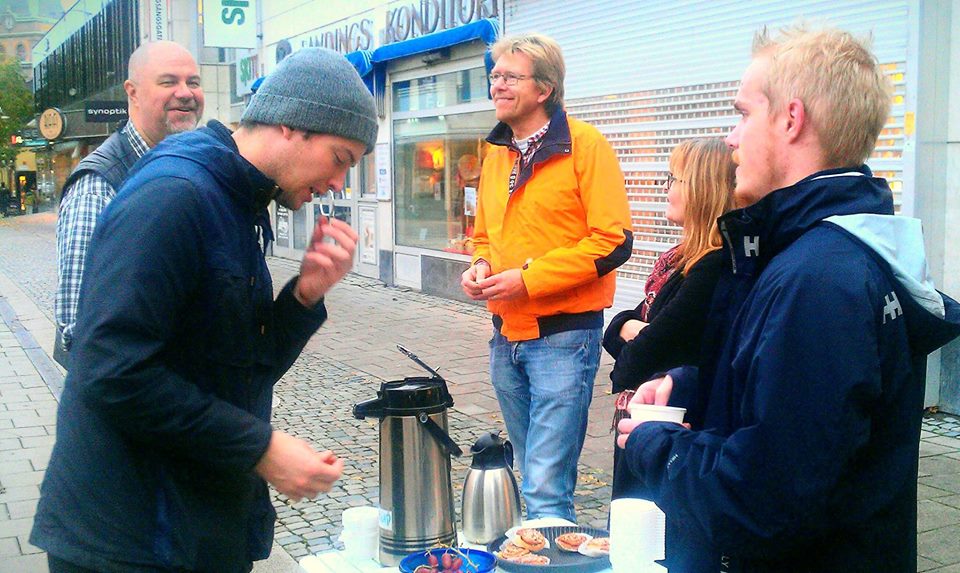
Outside
I love my church! Uppsala Mosaik is a small house church in Uppsala, Sweden (not to be confused with the mega church Mosaic in Los Angeles, California (we’re way smaller than them)) focusing on the Kingdom of God. We’re evangelical, charismatic and activist, and our aim is, like many other churches, to love God and love people.
When I visited Mosaik for the first time in 2010, I was amazed by its structure. We met in a pub back then. We had coffee break in the middle of the service, between worship and Jesus stories. Jesus stories, by the way, are when everyone can share a testimony about what Jesus has done in their life. And when the service was coming to an end, students flooded the pub while Mosaik volontueers started to serve free pancakes.
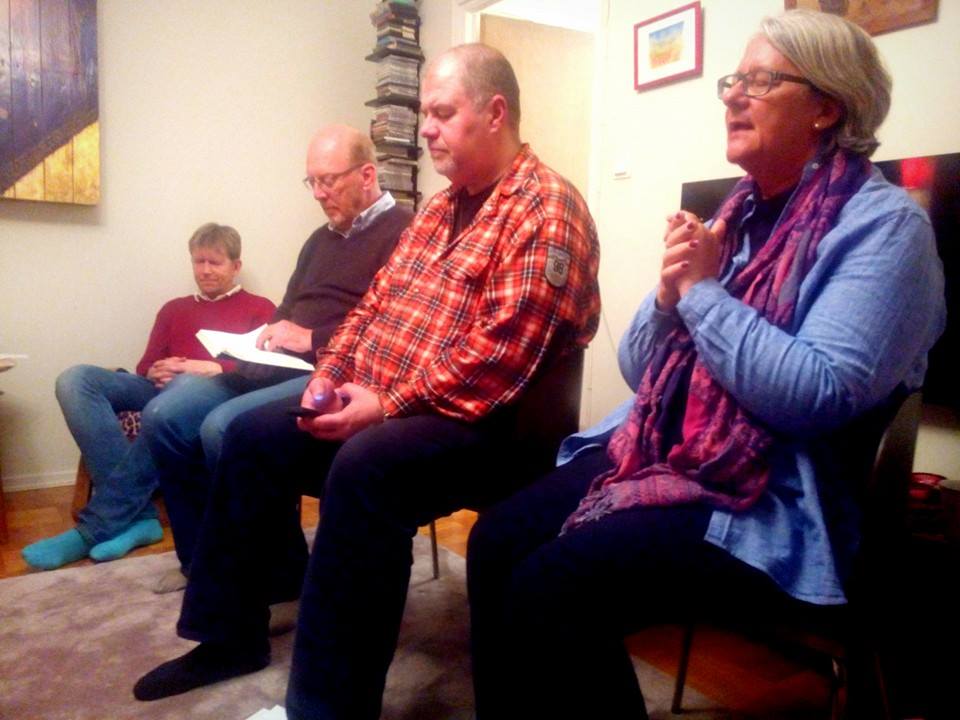
Inside
I sat down with the pastor, Hans Sundberg, and he explained the theology behind what Mosaik looked like. In Sweden, people are leaving churches like crazy, so that statistically, if the drop-off speed would remain at this rate, there would be no Christians here in 2040. Now, God is good and we pray for revival, but Hans was convinced that the church must leave the old Christendom-structures that builds large cathedrals expecting people to fill them, and becoming sad when they don’t.
3 Additional Ways the Modern Church Looks Nothing Like the Early Church

Paul preaching the Gospel. Art by Giovanni Paolo
This awesome article has been frequently shared by people in my networks the last couple of days; Preston Sprinkle writes about 4 ways the modern church doesn’t look like the early church (and, as several have pointed out, this goes especially for the modern mainstream Western church). These four areas are:
1. How we view other Christians. When the early disciples called themselves brothers and sisters, they actually treated each other like brothers and sisters and had a community that was far more relational and sacrificial than fellowship in most Western churches.
2. How we spend our money. The early Christians didn’t collect money for church buildings and pastors’ wages but for the poor.
3. How we think about power. The early church refused to be patriotic but was pacifist and persecuted.
4. How we study the Bible. Early Christians let every new convert study the Scriptures in a detailed manner, and most disciples then knew the Bible better than many Western church goers today.
I totally agree with all of Sprinkle’s points, and I’m glad that more and more start descovering the radical roots of the Christian faith. However, I would like to pinpoint three additional areas where the early church looked different from the mainstream Western church life today: (more…)
The Church’s Responsibility for the Holocaust

Emblem of the German Christians
Today is 70 years since the Nazi death camp Auschwitz was liberated by Soviet troops, and it is also the International Holocaust Remembrance Day. We must never forget the horrible attrocities during the world war when approximately seven million Jews, Romas, disabled, homosexuals and others were brutally killed by the Nazi regime and their allies. And as Christians, we must never forget that many who participated in this called themselves Christians, and that parts of the church leadership supported Nazism – although there was a lot of Christian resistance as well.
A lot has been written about the religious views of Hitler himself, and it seems to be a bit self-contradictory and populistic – which isn’t too strange since he, after all, was a Nazi. I’ve heard several neo-Nazis and other racists today declare that they fight for “Christian values” while they also hate religion and, of course, revere pagan gods. This is obviously extremely paradoxical but could be explained by that for many racists religion is merely a suit, which importance is heavily subordinated the nationalist and racist values that one fights for. Hence, the Party Platform of NSDAP read in 1920:
“We demand the freedom of all religious confessions in the state, insofar as they do not jeopardize the state’s existence or conflict with the manners and moral sentiments of the Germanic race. The Party as such upholds the point of view of a positive Christianity without tying itself confessionally to any one confession. It combats the Jewish-materialistic spirit at home and abroad and is convinced that a permanent recovery of our people can only be achieved from within on the basis of the common good before individual good.”
The state-censored religion proposed here should be unacceptable to any descent Christian, but both Catholics and Protestants started to dance to the Nazi pipe after Hitler became dictator. Paul Althaus, one of Germany’s leading Lutheran theologians, wrote “Our Protestant churches have welcomed the turning point of 1933 as a gift and miracle of God”.
Happy Birthday Anabaptism!

Today is the 490’s birthday of Anabaptism, the radical, biblical, pacifist and restorationist Christian movement that consists of millions of Jesus believers around the globe, including me. You may have heard my little song about what Anabaptism is already but it won’t hurt to listen to it again, eh?
So here’s the story about how Anabaptists came to be. The 16th century Protestants were far from the first who rebelled against the Catholic church and its unbiblical teaching, but they weren’t as radical as the Hussites or Waldensians had been. In fact, neither Luther nor Calvin wanted to restore the Biblical church completely but rather, they argued that Biblical practices they didn’t like had “ceased” (I talked about this two posts ago).
They had no problem with unbiblical practices like the state church system, though. Luther and Calvin are called magisterial reformers because they didn’t want to separate the church from the state but, on the contrary, relied on the secular state powers to liberate themselves from Rome.
Why You Cannot Be Cessationist and Claim to Restore the Biblical Church at the Same Time
In this video, I present my chapter “Charismatic Anabaptism: Combining Signs and Wonders with Peace and Justice”, which is included in the new anthology A Living Alternative. In the chapter I argue that Christians should use the miraculous gifts of the Holy Spirit in order to promote nonviolence and economic equality. To defend this thesis, I use the Bible, church history as well as modern testimonies.
The church historical part can be a bit mind-blowing to some – not many Anabaptists know that their movement initially was very charismatic, with an emphasis on prophetic visions, healing and miracles. Likewise, most Pentecostals and charismatics are unaware of that the early Pentecostals were pacifists and criticised capitalism. Even though they are hardly connected historically, early Anabaptism and early Pentecostalism were extremely similar, which I interpret as the work of the Holy Spirit, whom both movements wanted to be influenced by.
Both Anabaptism and Pentecostalism are restorationist, that is, they want to restore the New Testament church. Now, Calvinism and Lutheranism – Protestant movements that also originated during the 16th century reformation just like Anabaptism, that were far more positive to violence, economic inequality and pesecution than the Anabaptists – also argued that they restored the Biblical church, basing their theology on “Scripture alone” instead of relying on Catholic unbiblical tradition. (more…)
Ana-whaaat?! A Living Alternative Book Presentation
 I’VE WRITTEN A BOOK chapter! The book is called A Living Alternative and it is awesome. Together with 19 other Anabaptists, I write about why ANABAPTISM is amazing!
“Ana-whaaat?!” you may ask, but watch this video and you will learn everything you need to know about Anabaptism through my epic song skills.
For more info about the book and how you can get it, go here. And if you like my YouTube videos, subscribe to my channel here. Bless you!
Book Release: A Living Alternative
I am a MennoNerd, and we MennoNerds have just published a book! It’s called A Living Alternative and is about Anabaptist Christianity in a Post-Christendom world. Listen to what Christian activist Shane Claiborne has to say about it:
The world is poised to receive the wisdom of the Anabaptists. We are fat with consumerism. We are tired of war. We are hungry for community. We need an excuse to slow down, turn off the noise, and simplify our lives again. For many of us, progress has also meant disgress. This chorus of wise voices will stir you to imagine what it means to be the peculiar people of God in the 21st century.
Jesus Feminist Sarah Bessey says:
Even though I’m not an Anabaptist by chosen label or tradition, I found so much richness and truth in this book. Deep, challenging, prophetic and conversation-starting, I loved A Living Alternative. If you’ve wondered what your life would look like if you really lived like Jesus, this book will give you an accesible theological foundation for the practical living out of your discipleship particularly in a post-Christian context.
And hipster pastor, apologist and fellow MennoNerd Greg Boyd says:
In this splendid collection of essays readers will find a wonderfully diverse group of people wrestling with an amazingly diverse set of issues sorrounding what it means to be a faithful follower of Jesus in a post-Christendom world. Perhaps even more importantly, in each of these essays readers will sense the refreshing vibrancy and beauty of the kingdom vision that has captured the imaginations of these authros, and this can’t help but pull readers further into this vision. So, whether you already identify with this kingdom movement or don’t yet know what I’m even talking about, I’d like to challenge you to thoroughly digest this book!
Sounds good, right? My chapter is about combining signs and wonders with peace and justice, Deborah-Ruth Ferber covers singleness, Drew Hart writes about anablacktivism, and so on. You can get the book at American Amazon or British Amazon if you’re interested, and my dear Swedish countrymen and -women can get it on Adlibris. Peace out!

Kick Out Douchebag Christians from the Church
Earlier this morning a friend brought my attention to an article in Swedish newspaper Aftonbladet, about how a church in the small town of Kil in Western Sweden bought a caravan for begging, homeless immigrants to live in, along with a toilet and waste management. As a result, around five to ten church members left the church, protesting against the decision to help the homeless. They claim that the homeless are criminals and that the money they get for begging funds some sort of mafia. The police, on the other hand, denies such claims and says that the homeless immigrants are not criminals.
Obviously, based on a Christian worldview where everyone are created in the image of God and should be loved, even if they were part of a criminal organization that would not be a reason for the church to let them sleep and freeze in a forest. On the contrary, if they were victims of the mafia that would be an even greater reason to help them. As I’ve written before, there is no other way to defeat homelessness than to give homeless people homes, and it is false to think that not helping the poor will in any way help the poor.
Now, my friend was quite happy that these compassion-protesting egoists left the church, and I must say that I am as well. Bye bye, grumpy phariesees, see you when you’ve repented. This sparked a discussion however with another friend of mine, who questioned if such an attitude is suitable for a Christian. After all, Jesus hung around with sinners, welcoming prostitutes and murderers into His church, forgiving their sins and teaching them discipleship. Even if it’s sad and unacceptable that church goers don’t like compassion, shouldn’t we seek to welcome and change them rather than exhorting them to leave?
The Purpose of Saints
 Happy All Saints Day! When the world is playing with ghosts and demons, let us instead remember and honor the millions of holy brothers and sisters that has went before us. As Shane Claiborne writes on facebook:
Over the centuries, Halloween has not been about glorifying death. It’s been more about respectfully remembering the dead and honoring that life is “hallowed” — holy.
Before there was “Halloween”, there was “All Hallows’ Eve” — and All Saints Day. For hundreds of years, before jack-o-lanterns and zombies and candy corn, Christians around the world have remembered the dead, the saints, the cloud of witnesses that have gone before us.
The “cloud of witnesses” refers to Hebrews 12:1, which after name-dropping several Old Testament saints who endured in faith even though they had not yet the Kingdom of God in all its glory yet, says: (more…)
Greg Boyd: Do All Roads Lead to God?
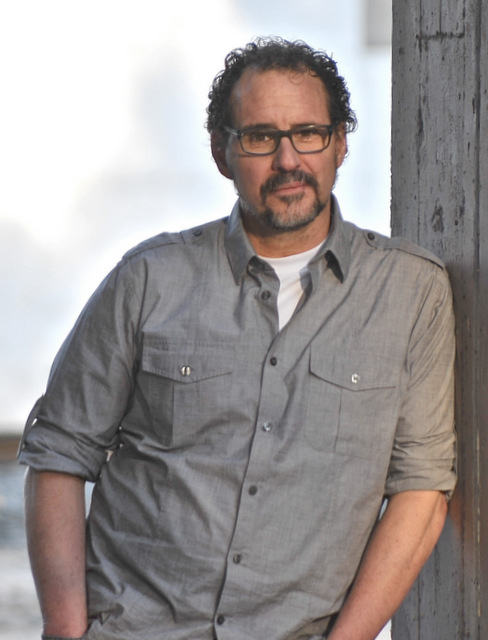
Greg Boyd
Pastor, author and MennoNerd blogger Greg Boyd has written an excellent piece on his ReKnew website that really brings up the sharp apologist in him. I deliberately share his whole text here because we believers have all things in common:
First, if it’s really true that Jesus is the way to Father and that no one comes to the Father except through him, (Jn 14:6) then it seems that no other religious leader or religious doctrine can bring us to the Father. “The” is a definite article, and it implies singularity. “A dog” could refer to one of any number of dogs. But “the dog” can only refer to one particular dog. If Jesus is the Lord and Savior and the way to the Father, he’s the only one there is.
This isn’t what most people in our relativistic, post-modern age want to hear. I, on occasion, give talks or participate in debates on secular university campuses around the country on issues related to the historical Jesus. Whenever I stand by the claim that Jesus is the only way to God I am confronted with a certain amount of hostility. To think there’s only one way to God, I am often told, is arrogant, ignorant, intolerant and dangerous. Everyone knows these days that there are many ways to God, at least for people who are sincere in what they believe.
What’s odd is that no one has ever been able to provide me with cogent arguments defending this position. When I’ve asked for some, as often as not people have simply stared at me in disbelief, offended at the suggestion that truths this obvious would need supporting arguments.
Always beware when any of your beliefs are so “obviously true” you think they don’t need supporting evidence or arguments. This the way brainwashed people think!
 Charismactivism