Home » Articles posted by Micael Grenholm (Page 11)
Author Archives: Micael Grenholm
The author

Micael Grenholm, a Swedish charismactivist, apologist and author.

At Heidi Baker’s Sunday School, Kids Heal the Lame and Blind
We who are a part of the MennoNerd vlog have been talking about welcoming children into the Kingdom recently, and that reminded me of a clip from Iris Global where Heidi Baker interviews some of the children at Village of Joy in Pemba. It turns out that these kids have prayed for lame and blind people who have been healed. A pretty good Sunday school, in my holy opinion.
Watch the whole Iris Global clip here:
Is Community of Goods for Everyone?
As a passionate advocate for community of goods, I often get the question whether every Christian “has to” have everything in common, if it’s a universal commandment or a calling for some. Most Christians seem to assume that’s the latter is true and get upset if I were to disagree. But in this video I’d like to challenge their conclusion, which I suspect that they have reached to quickly. There are three major problems with the idea that community of goods is just for some that need to be adressed:
- The Biblical problem: If it’s just for some, why is it portrayed as a universal commandment in Lk 12:33 and 14:33, and why did everyone do it in Jerusalem?
- The empirical problem: If individual economies and spontaneous giving are just as good as community of goods, why are the only churches who exterminate poverty within themselves churches that have community of goods?
- The demographical problem: Are all poor Christians called to community of goods?If not, why doesn’t God want to exterminate the poverty of all poor Christians? And if they are, don’t we need all rich Christians to join as well to finance it all?
For a more detailed description if these arguments, watch the video.
Social Work in the Power of the Holy Spirit

Artwork at Northampton Jesus Centre
Yesterday I volunteered at the Northampton Jesus Centre, a social centre run by the Jesus Army in a former cinema. People with various needs come here, and I’ve had some great talks with several of them; listening, testifying and praying. I also got to help the Centre out with their Facebook communication, being an Internet junkie and all.
The Lord called me to do social ministry with the poor seven years ago. A dear friend and brother of mine had left the faith, and as I prayed about this with some friends on a Christian community conference in Stockholm a guy called Nils received a prophetic word. He said that the Lord wanted me to use my hands in serving the poor, and out my theoretical theological understanding of the importance of economic equality into practical love. When I did this, my friend would come back to Jesus.
I then became involved in the Uppsala City Mission’s work with the homeless and drug addicts. I learned a lot and became more social, which also benefited my evangelism. I continued to serve the poor practically and eventually started my own organization, Stefanushjälpen or St Stephen’s Help. And my friend did come back to Jesus and is very zealous for Him nowadays. (more…)
Why I Moved to the United Kingdom

I can’t remember what kind of Google search or hyperlink that first led me to the website of Jesus Army almost seven years ago, but I remember how thrilled I was to finally encounter an evangelical, charismatic church that has complete community of goods. The closest resemblance to such an apostolic church that I had previously discovered was in a dusty, old book in my father’s home library called In His Footsteps. I was so excited as I earnestly turned the pages and read about this amazing church in the middle of nowhere which took Jesus seriously, had everything in common and led countless people to the Lord. Then I came to the last page which revealed that it was all fiction.
But the Jesus Army was real! I sent them an email, asking to come and visit them in Northamptonshire for a few days in April 2010. I was interested in the Training Year they offer and wanted to get a feeling about what New Creation community life was like. It was amazing; as I’ve previously shared I was baptised in the Holy Spirit during that trip, and I was so encouraged to see that community of goods is not just possible in the western world today – it’s very effective!
Without giving any convinced promises I told the Jesus saints that I wanted to do a training year (or rather, six months) in 2011. But after some time I told them I wasn’t going. I was feeling too young, insecure and inexperienced to take such a step. God was good and let me experience some amazing things in Sweden during that time. But I now know that of course I would have enjoyed and benefited a lot from a Jesus Army training year back then. I’m not luring myself into believing that whatever my life ends up like is what God wanted all along. He wants me and everybody else to share our possessions from the day we are saved. But even as we fail God can lead us onward, never forsaking us but faithfully caring for us.

C.S. Lewis on Why It’s Wrong to Say that Miracles Are Impossible
I’ve just finished Narnia author C.S. Lewis’ book Miracles and provide a review in the video above. I really enjoyed it and was fascinated by the philosophical arguments Lewis uses to argue against naturalism, the idea that nature is all that there is and that miracles thus are impossible. His main argument is that if naturalism were true we would have no reason to believe that our reasoning reflect reality, an argument I have written more about here. Lewis also uses a moral argument for the existence of a supernatural or transcendent reality, and answers to several objections to miracles.
Why Are People Leaving Church Without Saying Anything?
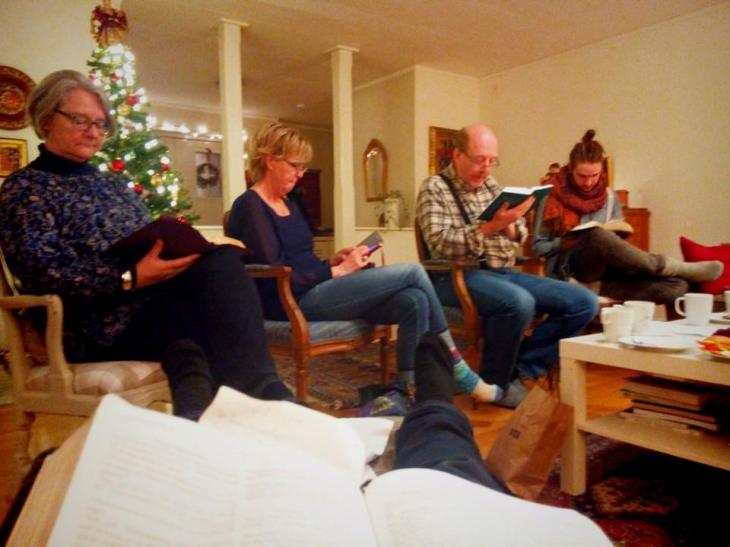
With the rise of individualism in the West there has been an increasing trend of “private Christianity” where people believe in Jesus but they never attend any church. Some of them acquire teaching and/or worship songs via the Internet at home, while others just pray sometimes. I encounter several of these “secret Christians” when I’m out evangelising, and most of them seem convinced that church meetings really are unimportant, that it’s perfectly fine to be a Christian alone.
The Bible, on the other hand, clearly commands us “not giving up meeting together, as some are in the habit of doing, but encouraging one another–and all the more as you see the Day approaching.” (Hebr 10:25). Even as the early Christians went on missionary trips they weren’t alone. Jesus commanded us to pray “Our Father” in plural, Paul emphasises in 1 Cor 12 that we’re all body parts in one body, dependent on one another.
But let’s face it, Christians who leave church aren’t doing it because they have a special Bible interpretation, but because church has disappointed them. As a house church leader I have seen several people go during the last five years, some of them to other congregations but a substantial number have become private Christians. Some of it is due to mistakes from our parts, other times we have been too radical. (more…)
10 Self-defeating Statements You Should Stop Using

As a culture that despises logic, Western society is filled with self-defeating ideas and ideologies that people throw out into discussions and debates as self-evident truths. While there can be doubts and question marks concerning many things, we know that these self-defeating statements are false because logically incoherent concepts cannot exist. These statements are as non-existing as square circles, finite eternities and married bachelors.
An example of a self-defeating statement that is, thankfully, less commonly used is “This statement is false”. It cannot be true on its own standards, and therefore it’s meaningless and there’s no point in taking it seriously. Another example is “No words that I write have any meaning”. If it was true, then nobody needs to care about what I just wrote.
The following 10 statements are much more commonly used, especially in discussions about God, religion, metaphysics and philosophy. You may very well find that you have used some of them yourself, and has taken for granted that it is an obvious fact even though on closer inspection, it does not meet its own standards. If so I highly recommend that you simply stop using them. (more…)

Converting a Trump Supporter
It’s official: Donald Trump has become the Republican nominee for President of the United States. Even though his campaign started as an unserious PR stunt and even though (or perhaps because of) his blatant racism, sexism and authoritarianism, Trump has become very popular. I have encountered several Trump supporters in my social media feeds. And they’re really hard to talk to. I and Sarah illustrate what a conversation with a Trump supporter feels like in this sketch:
It is as if arguments don’t work very well when it comes to Trump supporters, or any supporter of racism and fascism. I have spent a lot of time trying to combat xenophobia here in Europe, and it is just as hard as Americans now find converting Trump supporters to be. Whatever one says, whatever what evidence one presents, it is as if they’ve already decided that racism and bigotry is what will make a country great. And just a few months ago they didn’t think that way, and it’s so hard to see why Trump’s hateful message could be so attractive.
As a charismatic Christian, however, I know that no one is outside God’s miraculous power and that no one is unable to be transformed into a sanctified disciple of Christ. We shouldn’t give up on the Trump supporters. Continue to feed them arguments, and do so with love and compassion as well as a listening ear to what troubles them. And welcome God’s Spirit into your life so that His voice and power can guide you into leading people to repentance and holiness.
Proving God’s Existence Using Your Phone

Sarah and I have spent the weekend in the small village of Åsele in northern Sweden, doing evangelism with the pancake church at a big market fair. We’ve had the opportunity to talk to, pray with and love hundreds of people, mostly youths. One girl received salvation there and then after she was healed in her neck, many others received Bibles and were very interested in getting to know God more.
On Saturday evening I hung a paper plate around my neck that said “Evidence for God in 2 minutes”. Needless to say it caught lot of attention, and I got to have apologetic and evangelistic discussions with at least 25 people. I illustrated my points using my phone, which was very effective and increased the attention rate of my listeners even more.
“This phone is very unique”, I said, “because it has no cause for its existence. It popped into being out if nothing without a cause, and now I use it to call people and take photos. Do you believe me?” Nobody said yes, some looked at me as if I was a madman and others just laughed out loud. Then I explained that of course this is not the case, everything that begins to exist must have a cause. “So what do you think is the cause for the big bang and the origin of the universe?”
Charismatic Apologetics: Combining Reason with Power
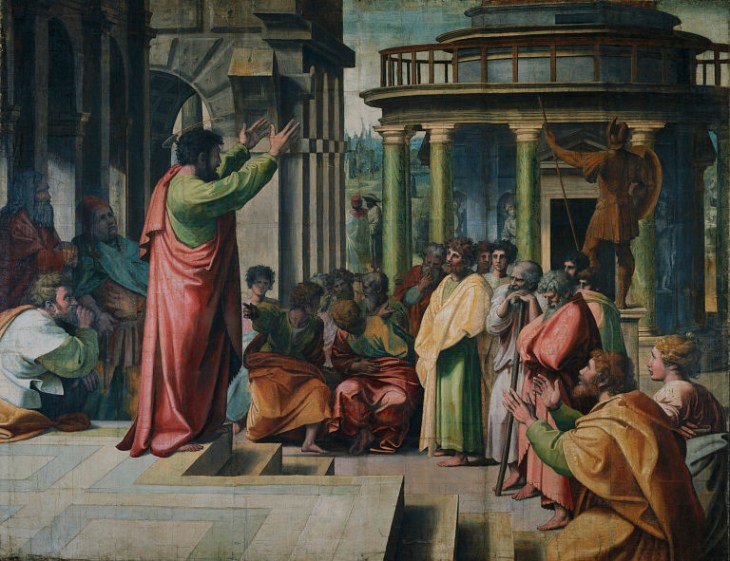
I had not in any way planned to be so apologetic this semester, but the Lord has led me to both studying and producing apologetic material as you probably have noticed. Identifying myself as an apologist is new but exciting, and it makes sense since I’ve for a long time been inspired by Stephen in Acts 6-8. He combined miracles with poverty reduction and nonviolence, and he was an apologist as well. Just look at these verses:
Now Stephen, a man full of God’s grace and power, performed great wonders and signs among the people. Opposition arose, however, from members of the Synagogue of the Freedmen (as it was called)—Jews of Cyrene and Alexandria as well as the provinces of Cilicia and Asia—who began to argue with Stephen. But they could not stand up against the wisdom the Spirit gave him as he spoke. (Acts 6:8-10)
Stephen was a charismapologist! He could heal the sick on Monday and defend the faith on Tuesdays, all the time while serving soup to the widows. For Stephen, there was no conflict between demonstrating the power of God through miracles and arguing for the truth of Christianity intellectually. (more…)

Sex in the Pews
Today I’m starting a new series on my YouTube channel called Radical Bible which aims to do Bible study in a prophetic, profound and a bit provoking way. The first episode is about people having sex in church pews and what to do when ministry gets messy.
Why It’s Irrational to be a Naturalist

C.S. Lewis
I’m currently reading C.S. Lewis’ classic book Miracles, where he starts off by discussing why naturalism – the idea that nature is all that exist and that anything supernatural is impossible – really is an unreasonable position to hold. This is because reason itself would be fully explained by nonrational causes, and thus be unreliable. Naturalism is thus self-defeating since one cannot then reasonably subscribe to it.
“This, as it seems to me, is what Naturalism is bound to do”, Lewis writes. “It offers what professes to be a full account of our mental behaviour; but this account, on inspection, leaves no room for the acts of knowing or insight on which the whole value of our thinking, as a means to truth, depends.” (Miracles, Fontana Books 1947, p. 22).
Alvin Plantinga has developed a simliar argument where he points out that evolution, which basically all naturalists accept, presents a defeater for why one should believe in naturalism. this evolutionary argument against naturalism can be presented as such: (more…)
Charismatics Have a Hope Nobody Else Has

Village of Hope, Iris South Africa
Lucy Peppiatt, principal at Westminster Theological Centre which is an awesome British school, has written an excellent piece on why all Christians should be charismatic and why the risk of “charismania” shouldn’t put us off from seeking the gifts of the Spirit. One of the reasons she gives relates strongly to what I call charismactivism, the fact that Spiritual gifts ought to promote peace, justice and a better world:
I think that most of us feel overwhelmed by the world’s problems. It’s enough to deal with our own and our family’s problems let alone terrorism, unemployment, war, addiction, crime, disease, homelessness, abuse, etc. etc. I’m always astonished and deeply moved by how resilient human beings are in the face of horror, and this seems regardless of whether they have a faith or not. Sometimes humans are just extraordinarily strong. All Christians should carry a hope that good will triumph over evil in the end, because that is the promise of Jesus’s life, death, and resurrection.
But charismatics share stories all the time about change here and now, about how when God gets involved, people locked in conflict are able to forgive each other, bodies are healed of life-threatening or debilitating conditions, families are reconciled. Hope stirs. Charismatics expect God to change things around them and through them for the better. Sometimes this takes much longer and is more painful that you would know from what we teach or would wish, but I love the hope of concrete and visible newness that characterizes a charismatic worldview. Hope for restoration, new life, and healing infuses the New Testament and I couldn’t imagine a church that didn’t expect God to be willing and able to change the worst of situations.
New Podcast from Iris Global
Heidi Baker’s amazing missionary organization Iris Global has recently started a new podcast, called Iris After Hours. It is hosted by Join Nathan Kotzur and Crystalyn Human and its first guest is no other than Heidi herself. She gives a lot of details on how God called her and Rolland to Mozambique and shares, as always, many testimonies about miracles and love to the poor.
To make sure that you catch future episodes of the pod, follow Iris Global’s YouTube channel or search for Iris After Hours on any podcast app.
Obstacles and Opportunities for a Christian Community Revolution
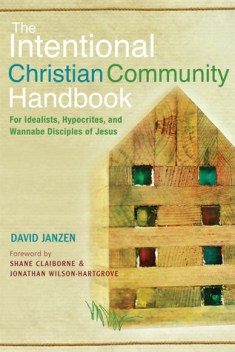
Half a year ago I cofounded an association here in Sweden called the Jerusalem Project, which promotes Christian community life and aspires to make community of goods like in the book of Acts more common in the churches. I and the others in the board have been planning for some months to start an intentional community if our own next year, and as a preparation we follow a common rule that outlines a simple lifestyle, prayer routines, Bible reading and ethics. We also read The Intentional Christian Community Handbook by David Janzen together and discuss it over Skype.
In Janzen’s book, Brandon Rhodes has contributed with some great chapters on how modern culture impacts the prospects for increasing Christian community life. In the West, people are more individualistic than they used to be, which is both an obstacle to community since such a life is very communal, as well as an opportunity since it may stir a longing for an alternative social way of living.
Rhodes also point out that more people than ever before come from divorced families, that the line between youth and adulthood has been completely blurred, and the fact that people are online more than ever. These things, and many more, pose challenges to community life that need to be taken seriously. (more…)
 Charismactivism