Home » 2013 (Page 3)
Yearly Archives: 2013
The author

Micael Grenholm, a Swedish charismactivist, apologist and author.
Human Rights and Fair Trade in the Power of the Spirit – Simon Adahl
I’ve written about my friend Simon Adahl previously, a Swedish musician who is passionate about Jesus and who has an amazing prophetic gift. Not only is he using this gift to lead people to Christ, but he has also used it to promote human rights and fair trade. Here’s how it happened:

Frank and Simon Adahl on stage at World Prayer Assembly 2012
On August 15, 2011, the Lord woke Simon up and told him to write a song about the reunification of North and South Korea. “Never!” Simon replied, “Do I look like a Korean to you?” “Write the song” “No, nobody will listen to an unknown Swede anyway.”
Then the Lord started to sing: “The one who walks with God can change nations. The one who walks with God can impact millions.” A song Simon himself had written.
Simon gave up, wrote the song “I’m gonna pray for Korea”, recorded it with his brother Frank and sent it to some South Korean publishing companies. They all said “thank you but no thank you”. It was too controversial.
But then things started to change. A friend of Simon’s said that she got an email from the International Prayer Center requesting prayer for North Korea, since one of their prophets said that Kim Jong Il was about to die (he did die in december 2011). Simon asked them if they wanted to use his song for their prayer meetings, and they said yes.
Shortly after, activist organizations promoting human rights in North Korea, like Stop Genocide in North Korea, wanted to use Simon’s song on events and demonstrations. Suddenly, it was played during a massive global manifestation in New York, London, Berlin, Tokyo and Seoul – at the same time! And finally, a South Korean publishing company published the song.
In 2012, Christians from Indonesia contacted Simon and invited him and Frank to come to World Prayer Assembly 2012 – the biggest prayer meeting in world history – not only to play that song but to write the theme song for the whole event. Simon said yes. And suddenly they were leading worship in front of 200 000 people, as well as millions that watched it through God TV.
And this is where the really cool things began to happen.
Christian Agnosticism vs Holy Spirit
Holy Spirit - not an agnostic
Christian agnosticism is when Christians claim that we cannot know what God wants. Some Christian agnostics apply their agnosticism to minor theological issues like what party we should vote for, or whether the church building should be white or brown. Others apply it to major theological issues, like what happens after we die or if Jesus really is the exclusive way to God. In the latter case, the line between Christian agnosticism and agnosticism, where you’re not even sure if God exists, is very thin.
I think that one of the major causes of Christian agnosticism is a lack of charismatic experience, i.e. Holy Spirit fire signs and wonders explosion BAM! I base this on the brilliant passage of 1 Corinthians 2:7-16:
We declare God’s wisdom, a mystery that has been hidden and that God destined for our glory before time began. None of the rulers of this age understood it, for if they had, they would not have crucified the Lord of glory. However, as it is written: “What no eye has seen, what no ear has heard, and what no human mind has conceived” — the things God has prepared for those who love him. (1 Cor 2:7-9)
Here, Paul does indeed talks about God’s mystery that He had hidden from humankind throughout the ages, referring to how Jesus is the Son of God who would save the world through a bloody death on the cross. Obviously, few had guessed that this was the way in which we would be saved, but now it is revealed. And how was it revealed? By the Holy Spirit!
These are the things God has revealed to us by his Spirit. The Spirit searches all things, even the deep things of God. For who knows a person’s thoughts except their own spirit within them? In the same way no one knows the thoughts of God except the Spirit of God. What we have received is not the spirit of the world, but the Spirit who is from God, so that we may understand what God has freely given us. (vv. 10-12)
Ron Sider: The Early Church on Killing
They will beat their swords into plowshares
and their spears into pruning hooks.
Nation will not take up sword against nation,
nor will they train for war anymore. (Micah 4:3)A soldier of the civil authority must be taught not to kill men and to refuse to do so if he is commanded, and to refuse to take an oath. If he is unwilling to comply, he must be rejected for baptism. A military commander or civic magistrate must resign or be rejected. If a believer seeks to become a soldier, he must be rejected, for he has despised God. — Hippolytus of Rome

Ron Sider
Ron Sider is one of the most influential activist theologians in the Western church; his 1977 book Rich Christians in an Age of Hunger has been read by over 400 000 people and has been ranked as one of the top 50 books that have shaped evangelicals by Christianity Today. This same magazine has now made an interview with Sider because of the publication of his new book The Early Church on Killing: A Comprehensive Sourcebook on War, Abortion, and Capital Punishment.
As the title suggests, Sider looks at the writings from the church fathers and other early Christian documents to see what they thought about killing. And as we previously have written on this blog, he found that they were pacifists. They were against all forms of killing; war, abortion and capital punishment – which should confuse the traditional left-right political paradigm a lot.
Just war-proponents sometimes argue that the reason most church fathers argued that Christians shouldn’t join the military was that idolatry was so common in the Roman army. This, Sider says, is not true:
Their most frequent statement is that killing is wrong. Killing a human being is simply something that Christians don’t do, and they’ll cite the Micah passage or Jesus’ “love your enemies” to support that. But the clear statement that Christians don’t kill is the foundation.
The most frequently stated reason that Christians didn’t join the army and go to war is that they didn’t kill. But it’s also true that in Tertullian, for example, idolatry in the Roman army is a second reason for not joining the military. But it’s not true that idolatry is the primary or exclusive reason that the early Christians refused to join the military. More often they just say killing is wrong.
An Economic Explanation to Speaking in Tongues
 I’m taking two courses right now, one in exegesis (Bible interpretation) and one in environmental economics. I see numerous parallells between them. In the exegesis course, I’m doing interpretations of Deut 15:7-11 and Luke 21:1-4 – about how the rich are sinning if they don’t give to the poor and how it’s not about how much you give but how much you have left that matters. And in the economics course, we were assigned to make a video where we try to answer a random question using economic theories. I chose the question “Why do Pentecostals speak in tongues?” Enjoy!
Related articles
- Whatever you need to know about Economics, get it here (edwardcollin742.wordpress.com)
- Lazarus and the Rich Man – Act 3 (friarmusings.wordpress.com)
- Speaking in Tongues: Medical Study proves it’s the Holy Spirit praying (discernthetime.wordpress.com)
- (1) What is the gift of speaking in tongues? (altruistico.wordpress.com)
God vs Poverty, part 1: Loving
As promised, here comes the first part of the new official sequel to God vs Wealth, creatively called God vs Poverty. While the former video series discussed whether a Christian should be rich or not (and found out that the answer was “not”), this series will look at what the Bible says about poverty reduction. It was filmed when I visited Iris South Africa (with a lot of wonderful children “helping” me with the shooting) and consists of five parts:
- Loving
- Giving
- Working
- Liberating
- Praying
In this first part, I argue that poverty reduction must be based on love and that one of the main economic problems in the world is that the rich don’t know the poor. South Africa is one of the most unequal countries in the world and the reason is of course that the rich separated themselves and refused to get to know the poor. When people from different socio-economic classes become friends, it will be impossible for the wealthy to ignore their needs and problems of the needy. Our generosity should not be excluded to people we know of course, but if we only know people with our own socio-economic status, something is terribly wrong. (more…)
The Forgotten Disaster: Help Me Send Relief to Earthquake-Struck Pakistan

Two earthquakes with the magnitude of 7.7 and 7.2 have hit the very poor districts of Awaran and Turbat in the Balochistan province, Pakistan. At least 375 people have died and 185 000 have been affected. Thousands are homeless and in need of immediate humanitarian relief.
Unfortunately, not many aid organizations are working in the area. It is a forgotten disaster. The only Christian NGO I could find was Christian Aid who cooperate with Muslim Hands to bring aid to the Balochistan victims. But then, we also have the grace of more relational international contact. (more…)
Capitalism and the Sin of Self-Interest

Yesterday, IPCC presented the first part of their new report about climate change in Stockholm, Sweden, and it was yet another reminder of the horrible catastrophy we have put ourselves into. The economic system that created climate change and other environmental problem is structurally wicked and needs to change quickly if we are going to save the lives of all the people that are in risk of dying because of environmental destruction and natural disasters. We have to challenge and change capitalism.
All the bishops of the Lutheran Church of Sweden wrote an article in our biggest newspaper today where they argued that changing our lives in response to climate change is a spiritual matter that the church has to adress. I completely agree. In fact, I think the reason why the capitalist economic system has put us into this mess is because it is detached from Christian holiness.
Of course, not everyone think this is the case. I once read an article by a Christian who claimed that the Bible supports capitalism, and he challenged the “misconception” that capitalism is based on greed and thus is sinful. This is not the case, he said, because self-interest does not equal greed, but is something all people base their lives on. Whenever we eat a sandwich we do it out of self interest, and there is nothing wrong with that, he said.
The problem with this argument is that the Bible actually says that self-interest is wrong:
“Do nothing out of selfish ambition or vain conceit. Rather, in humility value others above yourselves, not looking to your own interests but each of you to the interests of the others.” – Phil 2:3-4
Is the Church of Acts Abnormal?

In my pursuit for combining signs and wonders with peace and justice, I often get to see parallells between the Charismatic and activist streams of Christianity. One is that both want to get back to the original church; Pentecostals, as you probably know, want to resurrect the charismatic explosion of Acts 2, and radical Christian activists want to see the community of goods and the overflowing love and unity of Acts 2.
But then there’s a problem both parties face. Some Christians don’t want to return to Acts, basically because they argue that Acts was temporary – we’re not supposed to live like that any longer. You will find this among cessationists, who argue that the miracles in the book of Acts died with the apostles, and among most other Christians as well who argue that the community of goods and radical economic equality of the early church was just a temporary experiment. The church of Acts may have been good for that time but is not very relevant for our churches today. Guess we’re smarter now, or something.
This view has always surprised me since the very reason we value the New Testament as the Word of God is that it’s written by the apostles, or their direct disciples. The apostles had authority (Acts 2:42) since they were elected by Jesus and were the first church leaders. How come that we value their words more than their lives? If they were healing the sick and practicing community of goods, how could that possible be abnormal Christian living?
Jack Deere has written about this. He’s an ex-cessationist who became one of the main leaders in the Charismatic Vineyard movement after the Vineyard pastor John White went to his church and healed som people and drove out some demons. He really nails the problems with the theology of the abnormal Acts in his book Surprised by the Voice of God (Kingston 1996, ss. 61-63), which I qoute below: (more…)
Suffering, Worship and Glory: Iris Ministries in the Congo
Every now and then the amazing missionary organization Iris Global releases their video newsletters on Youtube. This week’s video covered their ministry in DR Congo, and I was just wrecked by it. So much pain. So much suffering. And yet so much love, dance and passionate worship. Not to speak about the amazing signs and wonders they experience.
I’ve written about Congo before, it’s a country the Lord has put on my heart. It began several years ago when I got so upset hearing about that our cell phones and computers have financed the devastating Congolese war that has killed 6 million people. Thousands of women have been raped, and every day aroung 1500 people die because of the malnutrition and diseases the war produces – half of them children. What does the Kingdom of Christ means in such a horrible situation?
Well, it means everything.

Worship at Iris Bukavu, DR Congo. Photo: Iris Global
The worship in the video above is amazing. The passion, the love, the zeal – it makes me breathless. Many of these people have experienced things that are unimaginable for me. And yet they do not question the goodness of God, instead they seek it more intensely.
Miracles in the Nazi Concentration Camp: Remembering Corrie and Betsie Ten Boom

Betsie, Corrie and Nollie Ten Boom
This year is 30 years since Corrie Ten Boom went to heaven. A Dutch charismatic Christian with a humanitarian passion, she saved many Jewish lives during the holocaust through hiding them in her house. She eventually was cought by the Nazis and put in the Ravensbrück concentration camp with her sister, Betsie. God did many miracles there in the midst of extreme suffering, and even if Betsie was martyred Corrie survived and could later on share her amazing story in her book The Hiding Place. Here’s an excerpt of a review of that book:
As the Germans sweep into Holland, lives are irrevocably and forever changed. The Ten Booms begin hiding Jews in their home…some temporarily, others semi-permanently. Working in “God’s underground,” Corrie finds a strength she never knew she possessed. We live with the Ten Booms through the changes WWII brings into their lives, the chances they take, but most of all, we see the guiding hand of the Lord every step of the way.
Betsie, the sister who has been sickly all her life, has the faith, the serenity, and the complete conviction that the Lord is always there in every circumstance. This faith takes Corrie and Betsie through the hardships they endure in the prisons and concentration camps where they are incarcerated. While Corrie tends to pray for their needs, Betsie prays for their enemies, whom she sees through God’s eyes…the guards, everyone who mistreats them, even thanking God for the fleas in their bunks.
Corrie was given a Bible, a sweater, and a bottle of liquid vitamins by their sister Nollie the last time they saw her before deportation. The Bible was never taken away. It was as though the guards did not see it. (more…)
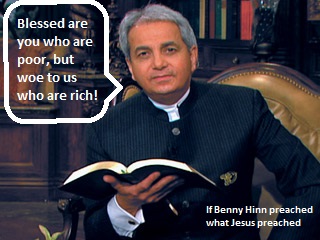
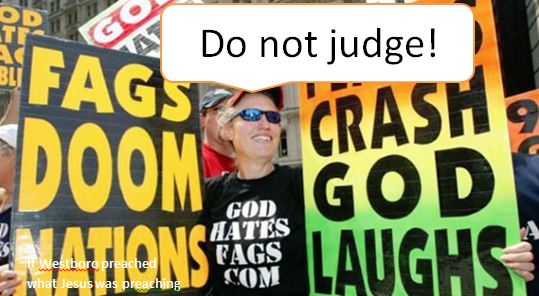
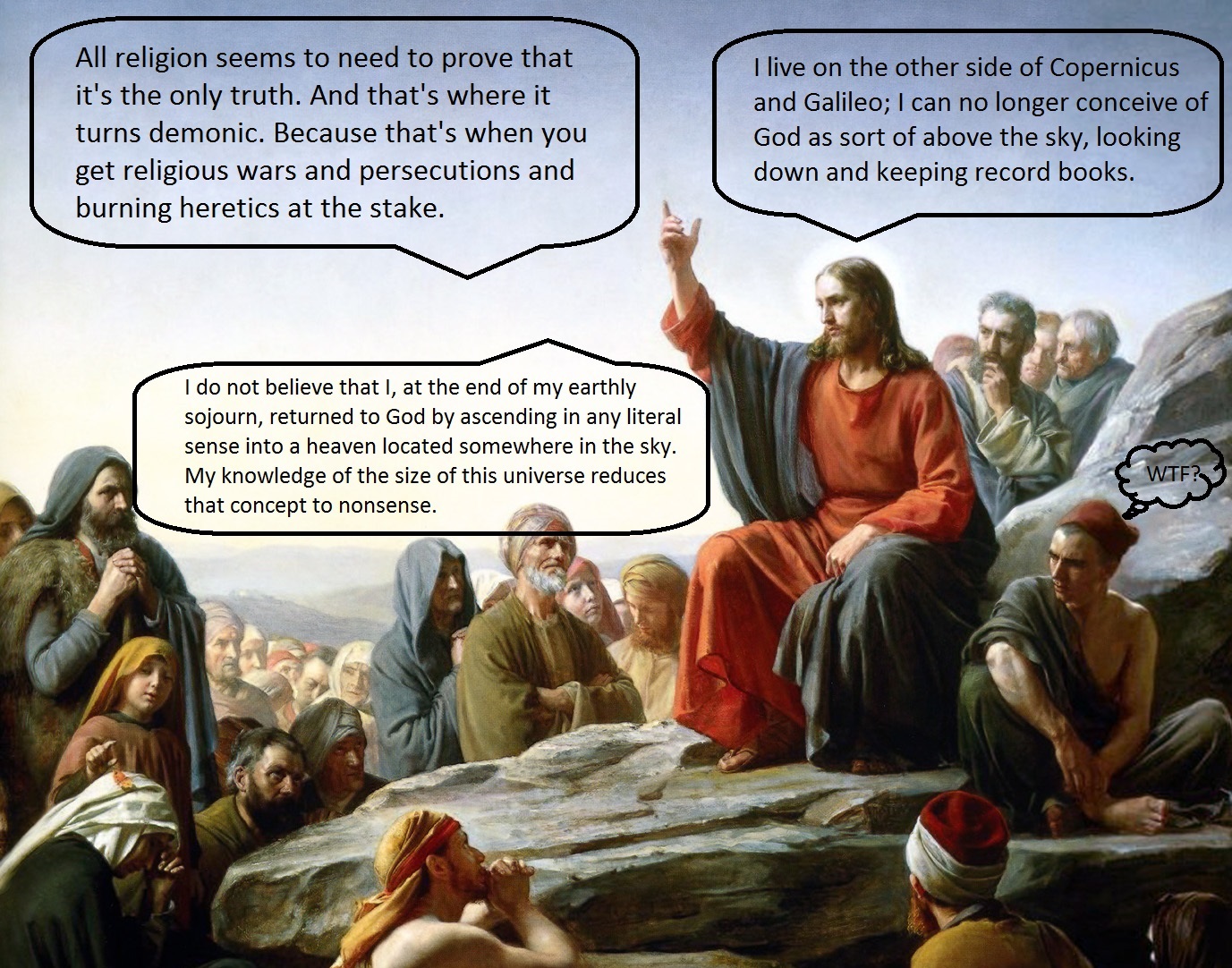
What if Modern Preachers Preached What Jesus was Preaching?
It’s finally here – the sequel to the extremely popular post What if Jesus Preached What Modern Preachers are Preaching! Get ready for…
What if Modern Preachers Preached What Jesus was Preaching?

The Happy Racists of Scandinavia

A 19th-century propaganda image of Norwegian, Danish and Swedish soldiers joining hands (Photo credit: Wikipedia)
The other day, my American friend Robert Martin tweeted “Hey, @micaelgrenholm… Sweden is 5th happiest country in the world… congrats!” I jokingly responded “5th?? Now I’m definitely not happy!!” and he wrote “Well, at least 4 of the top 10 are Scandinavian… check it out. US is # 17″ Yup, Denmark was in fact number 1, and Norway number 2. All I could think about at that moment was actually racism and xenophobia.
How come? Well, a couple of years ago a Swedish journalist published a book called “The Happiest People in the World“ about racism in Denmark. While citizens enjoy a high standard of living with extensive welfare and social security, it’s very, very hard for non-whites to become such citizens. In fact, Denmark is probably the most xenophobic country in northern Europe. Even though the racist Danish People’s Party has not been part of a government, other parties have used similar rhetoric and even policies in order to prevent more people from joining them. The result is of course that DPP’s ideas of a multiethnic Denmark being a “national disaster” has formed national policies.
How about Norway, then? The day before Martin tweeted his message to me Norway had their parlamentarian election, and as the Conservative Party won they proudly announced that they would govern together with the xenophobic Progress Party. This is the first time a racist party has entered a Scandinavian government.
How do I know that they are racist? Well, for instance, they want to ban Romani people from the country. Furthermore they have all the traditional charesteristics of xenophobia: they are hostile to islam, they want to decrease immigration, they are patriotic and wants to defend “Norwegian values” against multiculturalism, etcetera.
The Promised Land, part 3: Supersessionism = Antisemitism?
For the rest of the blog posts in this series, go here.

John Chrysostom, who used antisemitic rhetoric (Photo credit: Wikipedia)
As we’ve seen in the previous parts of this series, Christian Zionism is a new theology; it did not exist in the early church and has in its current version only existed for about 150 years. Before that, supersessionism was basically the universal teaching of the church. This is the teaching that Christ has fulfilled the promises to Israel and welcomed Gentiles into God’s people while those who do not believe in Him has been excluded from this people. Thus, the promise of the land does not refer to the Jewish people any more but to the church, which supersessionists interpret as the promise of Heaven.
We will look at the biblical foundation for this teaching in the next parts of this series. For now, I want to discuss whether this theology is antisemitic, which some Christian Zionist claim. When they talk about how the early church was “hijacked” by Gentiles that replaced Zionism with supersessionism (which was hard to do since there is no evidence for Christian Zionism in the early church to begin with), they often quote other church fathers, like John Chrysostom, who were downright antisemitic, and jump to other periods of church history when Christians have done horrible things towards Jews and argued that this is rooted in supersessionism. You can see example of this reasoning here and here.
The problem with this argument is that it fails to show how supersessionism would lead to antisemitism. All the texts I have read just assumes that this is the case rather than proving it. Instead of showing a logical connection between supersessionist and antisemitic thought, they merely point to antisemitic rhetoric and action through church history and say that since they were supersessionists, supersessionism causes antisemitism. (more…)


The Promised Land, part 2: The Men in Black Theory
For the rest of the blog posts in this series, go here.

The men in black using a neuralyzer
In the previous part of this series we looked at how the theology of Christian Zionism, which claims that the Jewish people must return to the land of Israel before the second coming of Christ, is very young. Its roots are found in the 16th century and its developed form didn’t appear until the 19th century. However, most Christian Zionists don’t view this as a problem, since they believe that this was not the birth of the theology but its resurrection – Christian Zionism was the original church teaching about the role of Israel, and the Puritans and Dispensationalists simply rediscovered it.
However, the early church did not believe in Christian Zionism. None of the church fathers, neither any anonymous early Christian writings, argued that the Jewish people must return to Israel before the second coming of Christ. On the contrary, they were supersessionists, teaching that Christ had fulfilled the covenant with and promises to Israel and that these now belonged to His followers, the church.
The non-existence of Christian Zionism in the early church is rather indesputable, even most Christian Zionists themselves acknowledge this. They claim that the apostles believed in Christian Zionism, but that it was immediately lost. I call this “The Men in Black Theory”. Just as the movie agents use their neuralyzer to erase people’s memories, Christian Zionism was suddenly deleted from the collective mind of the whole church right when the final pages of the New Testament was written.
 Charismactivism